 中文
中文 English
MOSFET Selection for High-Voltage and High-Current Applications: STB23N80K5, STP80NF70 vs. China Alternatives VBL18R15S, VBM1606
Number of views:9999
 Back to previous page
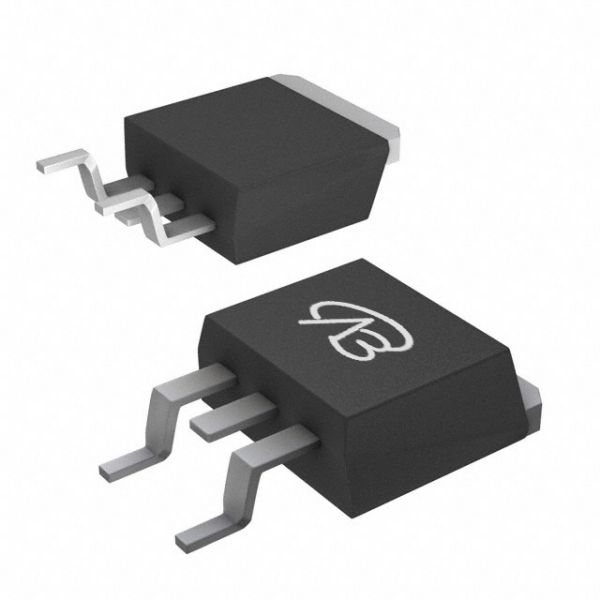
Comparative Analysis: STB23N80K5 (N-channel, 800V) vs. VBL18R15S
Analysis of the Original Model (STB23N80K5) Core:
This is an 800V N-channel MOSFET from STMicroelectronics, utilizing the MDmesh K5 technology in a D2PAK package. Its design core is to achieve efficient switching and robust performance in high-voltage applications. Key advantages include a high drain-source voltage (Vdss) of 800V, a continuous drain current (Id) of 16A, and a typical on-resistance (RDS(on)) of 0.23 Ohm (280mΩ @10V, 8A per datasheet). This makes it well-suited for off-line power supplies and other high-voltage circuits.
Compatibility and Differences of the Domestic Alternative (VBL18R15S):
VBsemi's VBL18R15S is also offered in a TO-263 (similar footprint to D2PAK) package and serves as a pin-to-pin compatible alternative. The main differences lie in the electrical parameters: VBL18R15S matches the 800V voltage rating but has a slightly lower continuous current rating of 15A and a higher on-resistance of 380mΩ @10V. It utilizes a Super Junction Multi-EPI process.
Key Application Areas:
Original Model STB23N80K5: Its high voltage rating and balanced current capability make it ideal for high-voltage switching applications.
Switch-Mode Power Supplies (SMPS): Used in PFC stages, flyback, or forward converters for AC-DC conversion.
Industrial Motor Drives: Inverters or drives for low to medium power motors.
Lighting: Electronic ballasts or LED driver circuits.
Alternative Model VBL18R15S: Suitable as a direct replacement in 800V applications where the current requirement is within 15A and a slightly higher conduction loss is acceptable, offering a cost-effective and supply chain resilient option.
Comparative Analysis: STP80NF70 (N-channel, 68V) vs. VBM1606
This comparison shifts focus from high voltage to high current and low loss. The design pursuit of the STP80NF70 is low on-resistance and minimized gate charge for high-efficiency switching.
Analysis of the Original Model (STP80NF70) Core:
Its core advantages are reflected in:
Very Low Conduction Loss: Features an ultra-low on-resistance of 9.8mΩ @10V, enabling high current handling (86A continuous drain current) with minimal power dissipation.
Optimized Switching Performance: Built with ST's unique STripFET process to minimize input capacitance and gate charge, making it excellent for fast switching applications.
Standard Package: Uses the common TO-220 package, offering good thermal performance for its power level.
The domestic alternative VBM1606 presents a "performance-enhanced" option: It achieves significant improvements in key parameters: a slightly lower voltage rating of 60V, but a much higher continuous current of 120A, and an exceptionally low on-resistance of 5mΩ @10V. This translates to potentially lower conduction losses and higher current capability in suitable applications.
Key Application Areas:
Original Model STP80NF70: Its low RDS(on) and optimized switching characteristics make it a strong candidate for high-current, medium-voltage switching.
DC-DC Converters: Synchronous rectification or switch in low-voltage, high-current buck/boost converters (e.g., for computing, telecom).
Motor Drives: Ideal for driving brushed DC or BLDC motors in power tools, automotive applications.
Power Management: Load switches or OR-ing circuits in server and industrial equipment.
Alternative Model VBM1606: More suitable for upgrade scenarios demanding even lower conduction loss and higher current capacity (up to 120A) within a 60V system, such as next-generation high-power DC-DC converters or motor drives where efficiency and thermal performance are paramount.
Summary
This analysis reveals two distinct selection paths:
For 800V high-voltage switching applications, the original STB23N80K5 offers a robust balance of 800V rating, 16A current, and MDmesh K5 technology. Its domestic alternative VBL18R15S provides a compatible, cost-effective option with a slightly derated current (15A) and higher RDS(on) (380mΩ), suitable for direct replacement in many 800V circuits.
For high-current, low-voltage switching, the original STP80NF70 excels with its 9.8mΩ RDS(on) and 86A current in a 68V rating. The domestic alternative VBM1606 pushes performance further with an ultra-low 5mΩ RDS(on) and a massive 120A current rating (at 60V), making it a powerful upgrade for designs prioritizing minimal conduction loss.
Core Conclusion: Selection is not about absolute superiority but precise requirement matching. In the context of supply chain diversification, domestic alternatives like VBL18R15S and VBM1606 not only provide viable backup options but also offer parameter enhancements in specific areas, giving engineers greater flexibility and resilience in design trade-offs and cost control. Understanding the design philosophy and parameter implications of each device is key to unlocking its full potential in your circuit.

Download PDF document
 Download now


