 中文
中文 English
MOSFET Selection for Power Switching Solutions: RFP70N06, FDMC510P vs. China Alternatives VBM1615, VBQF2207
Number of views:9999
 Back to previous page
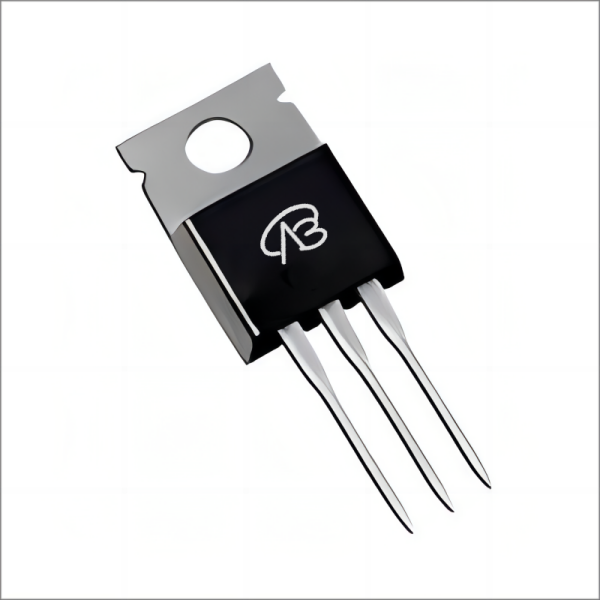
Comparative Analysis: RFP70N06 (N-channel) vs. VBM1615
Analysis of the Original Model (RFP70N06) Core:
This is a 60V N-channel MOSFET from onsemi, packaged in the classic TO-220AB. It is built using MegaFET technology, which utilizes feature sizes approaching LSI circuit dimensions to achieve optimized silicon utilization and outstanding performance. Its key advantages are a high continuous drain current rating of 70A and a low on-resistance of 14mΩ (measured at 70A). This combination makes it robust for high-current switching applications.
Compatibility and Differences of the Domestic Alternative (VBM1615):
VBsemi’s VBM1615 is a direct pin-to-pin compatible alternative in the TO-220 package. While the voltage rating (60V) matches the original, the VBM1615 offers improved conduction performance: a lower on-resistance of 11mΩ (@10V) and a still substantial continuous current rating of 60A. This results in potentially lower conduction losses.
Key Application Areas:
Original Model RFP70N06: Its high current capability and rugged TO-220 package make it ideal for high-power switching applications such as switch-mode power supplies, DC-DC converters, motor drives, and relay drivers in systems up to 60V.
Alternative Model VBM1615: Suitable for the same high-current applications as the RFP70N06, particularly where lower on-resistance and reduced conduction losses are desired, offering an efficient upgrade or replacement path.
Comparative Analysis: FDMC510P (P-channel) vs. VBQF2207
Analysis of the Original Model (FDMC510P) Core:
This is a 20V P-channel MOSFET from onsemi, utilizing advanced PowerTrench technology and housed in a compact WDFN-8 (3.3x3.3) package. It is designed for efficient power management in space-constrained applications. Its key features include a continuous drain current of 18A and a low on-resistance of 8mΩ (@4.5V, 12A), enabling efficient switching with minimal loss.
Compatibility and Differences of the Domestic Alternative (VBQF2207):
VBsemi’s VBQF2207 is a compatible alternative in a DFN8 (3x3) package. It significantly outperforms the original in key parameters: it supports a much higher continuous current of -52A and features a remarkably low on-resistance of 5mΩ (@4.5V) and 4mΩ (@10V). This represents a major performance enhancement for P-channel applications.
Key Application Areas:
Original Model FDMC510P: Its compact size and good performance make it suitable for load switching, power distribution, and battery management in portable devices, laptops, and other space-sensitive 12V/5V systems.
Alternative Model VBQF2207: Ideal for applications demanding very high current handling and minimal conduction loss from a P-channel MOSFET in a small footprint. It is an excellent choice for upgraded designs in high-efficiency DC-DC converters, advanced power path management, and other circuits where P-channel performance is critical.
Conclusion:
This analysis reveals two distinct selection paths:
For high-current N-channel applications in a standard TO-220 package, the original RFP70N06 offers proven 70A capability, while its domestic alternative VBM1615 provides a compatible solution with lower on-resistance for improved efficiency.
For compact P-channel applications, the original FDMC510P delivers solid performance in a small package, whereas the domestic alternative VBQF2207 offers a substantial performance boost with dramatically higher current rating and lower on-resistance, enabling more powerful and efficient designs.
The core takeaway is that selection depends on precise requirement matching. Domestic alternatives not only provide viable backup options but also offer performance enhancements in specific areas, giving engineers greater flexibility and resilience in design trade-offs and cost optimization. Understanding each device's parameters and design philosophy is key to maximizing its value in your circuit.

Download PDF document
 Download now


