 中文
中文 English
MOSFET Selection for High-Power and Compact Switching: PSMN5R0-100ES127, PSMN9R1-30YL,115 vs. China Alternatives VBN1101N, VBED1303
Number of views:9999
 Back to previous page
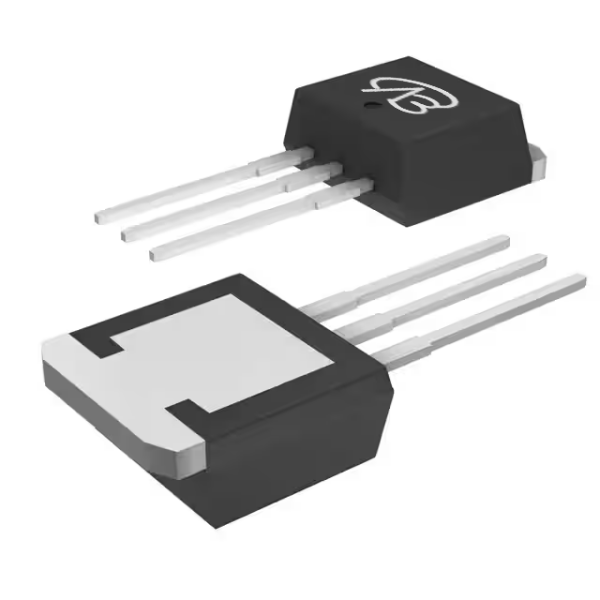
Comparative Analysis: PSMN5R0-100ES127 (N-channel) vs. VBN1101N
Analysis of the Original Model (PSMN5R0-100ES127) Core:
This is a 100V N-channel MOSFET from Nexperia in an I2PAK package, designed for high-power applications. Its core advantages are: a very low on-resistance of 5mΩ at 10V gate drive, a high continuous drain current rating of 120A, and a substantial power dissipation capability of 338W. This combination makes it ideal for circuits demanding minimal conduction loss and high current handling.
Compatibility and Differences of the Domestic Alternative (VBN1101N):
VBsemi's VBN1101N is an N-channel MOSFET in a TO-262 package. While not a direct pin-to-pin match for the I2PAK, it serves as a functional alternative for high-current 100V designs. The key differences are in electrical parameters: VBN1101N offers a comparable 100V rating and a high 100A continuous current. However, its on-resistance is higher, at 9mΩ (at 10V), compared to the original's 5mΩ. This results in slightly higher conduction losses.
Key Application Areas:
Original Model PSMN5R0-100ES127: Excels in high-power, high-efficiency applications such as:
Primary-side switches in high-power SMPS (Switched-Mode Power Supplies) and server PSUs.
Motor drives and inverters for industrial equipment.
High-current DC-DC converters and power stages in renewable energy systems.
Alternative Model VBN1101N: Suited for applications requiring a 100V, ~100A rating where the slightly higher RDS(on) is acceptable, offering a cost-effective alternative in systems like motor controllers and robust power supplies.
Comparative Analysis: PSMN9R1-30YL,115 (N-channel) vs. VBED1303
This comparison focuses on achieving high current density in a compact footprint.
Analysis of the Original Model (PSMN9R1-30YL,115) Core:
This Nexperia MOSFET in a space-saving SOT-669 (LFPAK) package is engineered for high-current performance in minimal space. Its core strengths are a 30V drain-source voltage, a very high continuous current of 57A for its size, and a low on-resistance of 9.1mΩ at 10V. This makes it a top choice for power-hungry circuits on densely packed PCBs.
Compatibility and Differences of the Domestic Alternative (VBED1303):
VBsemi's VBED1303 is also housed in an SOT-669 package, offering direct pin-to-pin compatibility. It presents a significant performance enhancement in key areas: it shares the same 30V rating but boasts a dramatically higher continuous current rating of 90A and a substantially lower on-resistance of 2.8mΩ (at 10V). This translates to potentially lower losses and higher efficiency in similar applications.
Key Application Areas:
Original Model PSMN9R1-30YL,115: Ideal for compact designs requiring high current, such as:
Synchronous rectification in low-voltage, high-current DC-DC converters (e.g., for CPUs/GPUs).
Load switches and power distribution in computing and telecom boards.
Motor drive circuits in compact robotics or drones.
Alternative Model VBED1303: An excellent upgrade choice for applications pushing the limits of current density and efficiency. Its superior current (90A) and lower RDS(on) (2.8mΩ) make it suitable for next-generation, high-efficiency point-of-load converters, advanced motor drives, and any design where minimizing loss in a small package is critical.
Summary
This analysis reveals two distinct selection paradigms:
For high-power 100V applications, the original PSMN5R0-100ES127, with its ultra-low 5mΩ RDS(on) and 120A current capability, remains a benchmark for efficiency in demanding circuits like server PSUs and industrial motor drives. Its alternative, VBN1101N, provides a viable 100V/100A solution with slightly higher resistance, suitable for cost-sensitive designs where peak efficiency is slightly less critical.
For compact, high-current 30V applications, the original PSMN9R1-30YL,115 offers an excellent balance of 57A current and 9.1mΩ RDS(on) in a tiny SOT-669 package. Its domestic alternative, VBED1303, emerges as a performance-driven upgrade, offering significantly higher current (90A) and lower on-resistance (2.8mΩ) in the same footprint, making it a compelling choice for maximizing power density and efficiency.
The core conclusion is that selection is defined by precise requirement matching. In the landscape of supply chain diversification, domestic alternatives like VBN1101N and VBED1303 not only provide reliable backup options but also, in the case of VBED1303, deliver marked performance gains. This gives engineers greater flexibility and resilience in navigating design trade-offs and cost optimization. Understanding the parameter implications of each device is key to unlocking its full potential in your circuit.

Download PDF document
 Download now


