 中文
中文 English
MOSFET Selection for Industrial & Automotive Power: PSMN034-100PS,127, BUK7227-100B,118 vs. China Alternatives VBM1104N, VBE1102N
Number of views:9999
 Back to previous page
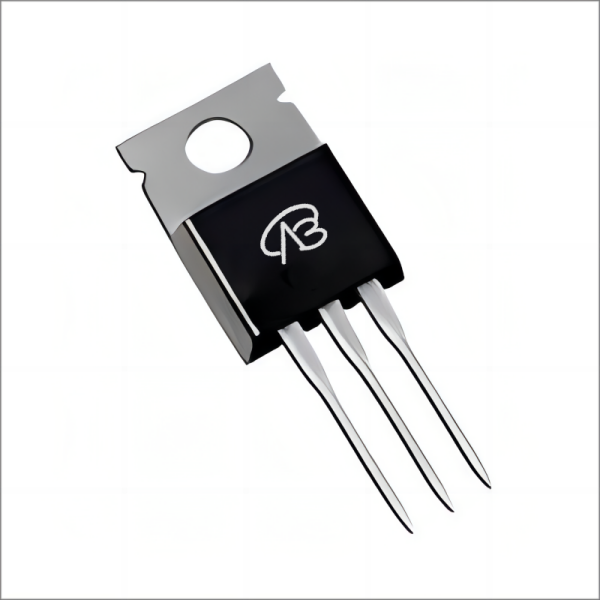
Comparative Analysis: PSMN034-100PS,127 (N-channel, TO-220) vs. VBM1104N
Analysis of the Original Model (PSMN034-100PS,127) Core:
This is a 100V N-channel MOSFET from Nexperia, housed in the classic TO-220AB-3 package. Its design core is to deliver high current handling and good thermal dissipation in a standard through-hole package. Key advantages include: a continuous drain current (Id) of 32A, an on-resistance (RDS(on)) of 34.5mΩ at 10V gate drive, and a 100V drain-source voltage rating. The TO-220 package facilitates easy mounting on heatsinks, making it suitable for applications requiring significant power dissipation.
Compatibility and Differences of the Domestic Alternative (VBM1104N):
VBsemi's VBM1104N is also offered in a TO-220 package, providing direct form-factor compatibility. The key differences lie in the electrical parameters: VBM1104N boasts a significantly higher continuous drain current of 55A compared to the original's 32A. Its on-resistance is comparable at 36mΩ (@10V), slightly higher than the original's 34.5mΩ. The gate threshold voltage is 1.8V, suitable for standard logic-level drive.
Key Application Areas:
Original Model PSMN034-100PS,127: Ideal for industrial power supplies, motor drives, and inverter circuits where 100V voltage rating, ~30A current capability, and the thermal advantage of a TO-220 package are required. Its robust construction suits applications needing through-hole mounting.
Alternative Model VBM1104N: With its superior 55A current rating, it is well-suited for upgrade scenarios or new designs demanding higher current capacity within the same 100V/TO-220 footprint, such as in higher-power DC-DC converters, UPS systems, or industrial motor controllers.
Comparative Analysis: BUK7227-100B,118 (N-channel, DPAK) vs. VBE1102N
This comparison focuses on surface-mount MOSFETs designed for high-current, high-reliability applications, particularly in the automotive sector.
Analysis of the Original Model (BUK7227-100B,118) Core:
This is an AEC-qualified 100V N-channel MOSFET from Nexperia in a DPAK (TO-252) package. Its design pursues an optimal balance of low on-resistance, high current capability, and automotive-grade reliability. Core advantages include: a very low on-resistance of 27mΩ at 10V, a high continuous drain current of 48A, and a 100V voltage rating. It is specifically designed and certified per AEC standards for critical automotive applications.
Compatibility and Differences of the Domestic Alternative (VBE1102N):
VBsemi's VBE1102N comes in a TO-252 (DPAK) package, ensuring pin-to-pin and footprint compatibility. Its parameters present a compelling alternative: it offers a slightly lower on-resistance of 18mΩ (@10V) versus the original's 27mΩ. The continuous drain current is 45A, very close to the original's 48A. It also features a standard 1.8V gate threshold.
Key Application Areas:
Original Model BUK7227-100B,118: Its primary strength is its AEC qualification, making it the preferred choice for automotive applications such as ECU power switching, motor control (e.g., fans, pumps), and LED driving where reliability is paramount. Its low RDS(on) and high current in a DPAK package also benefit high-efficiency industrial SMPS.
Alternative Model VBE1102N: With its lower 18mΩ on-resistance, it is an excellent performance-focused alternative for applications where minimizing conduction losses is critical. It suits high-current switching in automotive systems (where non-AEC parts are acceptable), server/telecom power supplies, and high-density DC-DC converters, offering potential efficiency gains.
Summary
This analysis reveals two distinct selection pathways based on package and application focus:
For through-hole TO-220 applications requiring a balance of voltage, current, and heatsink capability, the original PSMN034-100PS,127 offers proven 32A performance with 34.5mΩ RDS(on). Its domestic alternative VBM1104N provides a significant current boost to 55A with a similar RDS(on) of 36mΩ, making it a powerful upgrade for designs needing higher current within the same mechanical footprint.
For surface-mount DPAK applications, especially where automotive-grade reliability is essential, the AEC-qualified BUK7227-100B,118 with its 48A and 27mΩ is the benchmark. The domestic alternative VBE1102N competes strongly on electrical performance, offering a lower 18mΩ RDS(on) and 45A current, presenting an efficient option for industrial or other applications where ultimate conduction loss minimization is key.
Core Conclusion: Selection is not about absolute superiority but precise requirement matching. In the context of supply chain diversification, domestic alternatives like VBM1104N and VBE1102N not only provide viable backup options but also offer compelling performance characteristics—either higher current or lower resistance—giving engineers greater flexibility in design trade-offs and cost optimization. Understanding the design intent and parameter implications of each device is essential to unlocking its full value in the circuit.

Download PDF document
 Download now


