 中文
中文 English
MOSFET Selection for Automotive-Grade Low-Power Applications: NVR5198NLT3G, BVSS123LT1G vs. China Alternatives VB1695, VB1106K
Number of views:9999
 Back to previous page
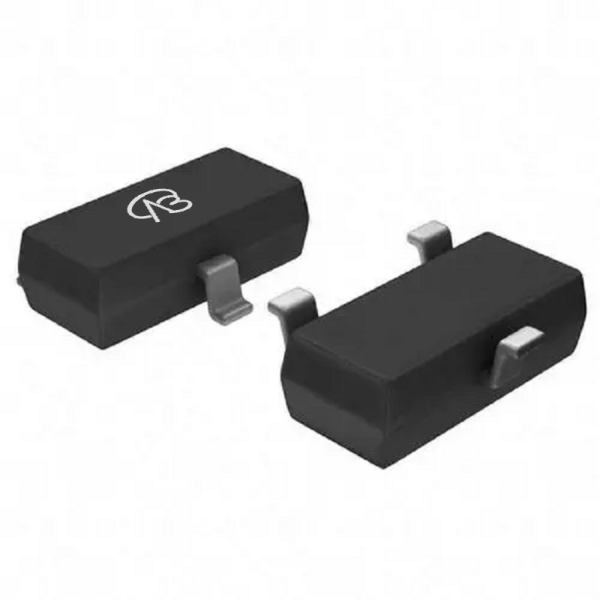
Comparative Analysis: NVR5198NLT3G (60V N-Channel) vs. VB1695
Analysis of the Original Model (NVR5198NLT3G) Core:
This is a 60V, single N-channel MOSFET from onsemi in a compact SOT-23 package. Its design core is to provide robust, automotive-qualified switching in a minimal footprint. Key advantages include: a continuous drain current (Id) of 2.2A, an on-resistance (RDS(on)) of 155mΩ at 10V gate drive, and full AEC-Q101 qualification with PPAP documentation support. It is a logic-level device, making it easy to drive directly from microcontrollers.
Compatibility and Differences of the Domestic Alternative (VB1695):
VBsemi's VB1695 is also housed in an SOT23-3 package, offering direct pin-to-pin compatibility. The key differences are in electrical performance: VB1695 offers a significantly lower on-resistance of 75mΩ at 10V (vs. 155mΩ) and a higher continuous current rating of 4A (vs. 2.2A), while maintaining the same 60V drain-source voltage rating. It also features a lower gate threshold voltage (Vgs(th)), enhancing its suitability for logic-level applications.
Key Application Areas:
Original Model NVR5198NLT3G: Ideal for automotive and industrial applications requiring AEC-Q101 certification and moderate current switching. Typical uses include:
ECU (Electronic Control Unit) load switching and solenoid driving.
Automotive sensor power management and low-side switches.
General-purpose switching in 12V/24V battery systems where reliability is paramount.
Alternative Model VB1695: Suited for applications demanding higher efficiency and current capacity within the same 60V range. Its lower RDS(on) reduces conduction losses, making it excellent for:
Upgraded designs needing higher power density and thermal performance.
DC-DC converter switches and motor drive circuits in consumer/industrial settings.
As a performance-enhanced, cost-effective alternative in non-automotive or automotive-aftermarket scenarios.
Comparative Analysis: BVSS123LT1G (100V N-Channel) vs. VB1106K
This comparison shifts focus to very low-current, high-voltage switching applications where leakage and voltage withstand are primary concerns.
Analysis of the Original Model (BVSS123LT1G) Core:
This onsemi part is a 100V, single N-channel MOSFET in SOT-23. Its design pursues reliable high-voltage blocking capability at very low power levels. Core parameters are a 100V drain-source voltage, a continuous current of only 170mA, and a relatively high on-resistance of 6Ω (measured at 10V, 100mA). It is fully AEC-Q101 qualified, targeting precise, low-power automotive signal switching.
Compatibility and Differences of the Domestic Alternative (VB1106K):
VBsemi's VB1106K offers a pin-to-pin compatible SOT23-3 alternative. It matches the 100V voltage rating but provides a different performance profile: a slightly higher continuous current rating of 0.26A (260mA vs. 170mA) and a significantly lower on-resistance of 2800mΩ (2.8Ω) at 10V (vs. 6Ω). This translates to lower conduction losses in similar very low-current applications.
Key Application Areas:
Original Model BVSS123LT1G: Designed for specialized automotive and industrial applications requiring high-voltage isolation with minimal current flow. Examples include:
Signal line isolation and switching in high-voltage sensor interfaces.
Protection circuits and load switching in battery management systems (BMS) for high-cell-count packs.
Any application where 100V blocking is needed for signals or very light loads (<200mA).
Alternative Model VB1106K: Provides a viable alternative for similar high-voltage, low-current circuits where improved conduction efficiency (lower RDS(on)) or a slight current margin is beneficial. Suitable for:
Cost-sensitive designs requiring 100V capability.
Signal switching and protection in power supplies, telecommunication equipment.
As a functional alternative in non-automotive or prototyping phases.
Conclusion
In summary, this analysis reveals two distinct selection paths based on voltage and current needs:
For 60V logic-level automotive switching, the original NVR5198NLT3G offers certified reliability for moderate-current (2.2A) applications. Its domestic alternative, VB1695, presents a compelling "performance-upgraded" option with significantly lower on-resistance (75mΩ) and higher current capability (4A), making it excellent for efficiency-driven designs, even if full automotive qualification is not mandatory.
For 100V very low-current switching, the original BVSS123LT1G is tailored for specialized automotive applications requiring strict 100V blocking at currents below 200mA. The domestic alternative VB1106K provides a compatible part with better conduction characteristics (2.8Ω vs. 6Ω RDS(on)) and a slightly higher current rating, offering an efficiency advantage in similar high-voltage, micro-power circuits.
The core takeaway is that selection hinges on precise requirement matching. In the landscape of supply chain diversification, domestic alternatives like VB1695 and VB1106K not only provide reliable backup options but can also offer enhanced performance in key parameters, giving engineers greater flexibility in design optimization and cost management. Understanding the specific design intent behind each device is crucial to unlocking its full value in the circuit.

Download PDF document
 Download now


