 中文
中文 English
MOSFET Selection for Automotive and High-Efficiency Power Applications: NVD5C684NLT4G, NTTFS003N04CTAG vs. China Alternatives VBE1615, VBQF1402
Number of views:9999
 Back to previous page
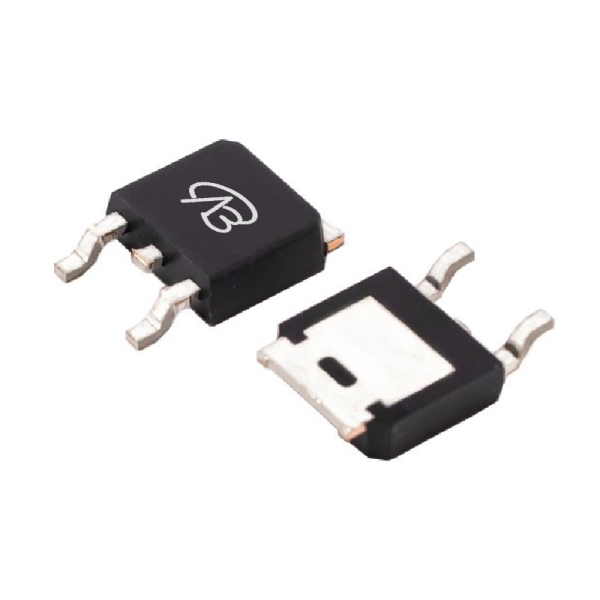
Comparative Analysis: NVD5C684NLT4G (Automotive N-Channel) vs. VBE1615
Analysis of the Original Model (NVD5C684NLT4G) Core:
This is an AEC-Q101 qualified, PPAP-capable N-channel MOSFET from onsemi in a DPAK package. Its design core is to provide reliable, high-current switching for automotive applications within a compact footprint. Key advantages include a robust 60V drain-source voltage rating, a high continuous drain current of 38A, and a low on-resistance of 16.5mΩ at 10V gate drive. The DPAK package offers superior thermal performance essential for the harsh environment of automotive electronics.
Compatibility and Differences of the Domestic Alternative (VBE1615):
VBsemi's VBE1615, offered in a TO-252 package (similar footprint to DPAK), serves as a pin-to-pin compatible alternative. The key differences are in electrical parameters: VBE1615 features significantly lower on-resistance (10mΩ @10V vs. 16.5mΩ) and a higher continuous current rating (58A vs. 38A) while maintaining the same 60V voltage rating. However, it is crucial to verify its specific qualification status for automotive applications against the AEC-Q101 and PPAP compliance of the original part.
Key Application Areas:
Original Model NVD5C684NLT4G: Ideal for automotive applications requiring certified reliability and robust performance. Typical uses include:
Automotive Power Distribution: Load switches, solenoid drivers, and motor control modules.
Engine Management Systems: Switching in fuel injector drivers or ignition systems.
Compact DC-DC Converters: Within infotainment or ADAS systems where space and thermal management are constrained.
Alternative Model VBE1615: Suited for applications demanding lower conduction loss and higher current capability in a similar package. It is an excellent candidate for:
High-Current Non-Automotive Switches: Power supplies, industrial motor drives, or battery management systems (BMS) where ultra-low RDS(on) is prioritized.
Potential Automotive Upgrades: For designs where its superior electrical parameters can be leveraged, pending necessary qualification verification.
Comparative Analysis: NTTFS003N04CTAG (Ultra-Low RDS(on) N-Channel) vs. VBQF1402
This comparison focuses on achieving maximum efficiency and power density in a small form factor through minimal conduction loss.
Analysis of the Original Model (NTTFS003N04CTAG) Core:
This onsemi MOSFET in a WDFN-8 (3x3) package is engineered for extreme efficiency. Its core advantage is an exceptionally low on-resistance of 2.9mΩ at 10V gate drive, coupled with an impressively high continuous current rating of 103A. This combination minimizes I²R losses in high-current paths, making it a powerhouse for space-constrained, high-efficiency applications.
Compatibility and Differences of the Domestic Alternative (VBQF1402):
VBsemi's VBQF1402, also in a DFN8(3x3) package, is a direct footprint-compatible alternative. While its continuous current rating (60A) is lower than the original's 103A, it offers a competitive and even slightly lower on-resistance of 2mΩ at 10V. This makes it a compelling "performance-optimized" alternative for many high-efficiency scenarios that do not require the full 100A+ current capability.
Key Application Areas:
Original Model NTTFS003N04CTAG: The ultimate choice for applications where minimizing conduction loss is paramount in a compact space. Examples include:
High-Current Synchronous Rectification: In server VRMs, telecom rectifiers, or high-power DC-DC converters.
Motor Drive Inverters: For high-performance drones, robotics, or electric vehicle auxiliary systems.
Power Distribution in Computing: High-current load point (POL) converters on motherboards or GPUs.
Alternative Model VBQF1402: An excellent fit for high-efficiency applications where the current requirement is within 60A, and the lowest possible RDS(on) is desired. It is suitable for:
Upgraded Medium/High-Current DC-DC Converters: Where VBQF1402's 2mΩ RDS(on) can reduce losses compared to standard alternatives.
Compact Motor Drives and Power Switches: In applications like e-bikes, power tools, or industrial automation where size, efficiency, and cost are balanced.
Conclusion
This analysis reveals two distinct selection pathways based on application priorities:
For automotive-grade or high-reliability compact designs, the original NVD5C684NLT4G, with its AEC-Q101 certification, robust 38A/60V rating, and DPAK thermal performance, remains the benchmark for qualified automotive applications. Its domestic alternative VBE1615 offers superior electrical performance (58A, 10mΩ) in a compatible package, presenting a powerful option for non-automotive uses or as a potential performance-upgrade candidate after thorough qualification assessment.
For ultra-high-efficiency, high-power-density applications, the original NTTFS003N04CTAG sets a high bar with its 103A current and ultra-low 2.9mΩ RDS(on) in a tiny 3x3mm package. The domestic alternative VBQF1402 provides a highly competitive solution, matching the package and undercutting the on-resistance (2mΩ) while offering a substantial 60A current capability, making it a versatile and efficient choice for a broad range of demanding power circuits.
The core takeaway is that selection hinges on precise requirement matching. In an era of supply chain diversification, domestic alternatives like VBE1615 and VBQF1402 not only provide viable backups but also offer compelling performance advantages in key parameters, granting engineers greater flexibility and resilience in design trade-offs and cost optimization.

Download PDF document
 Download now


