 中文
中文 English
MOSFET Selection for Compact Automotive & Low-Power Applications: NTRV4101PT1G, NTR4003NT3G vs. China Alternatives VB2290, VB1330
Number of views:9999
 Back to previous page
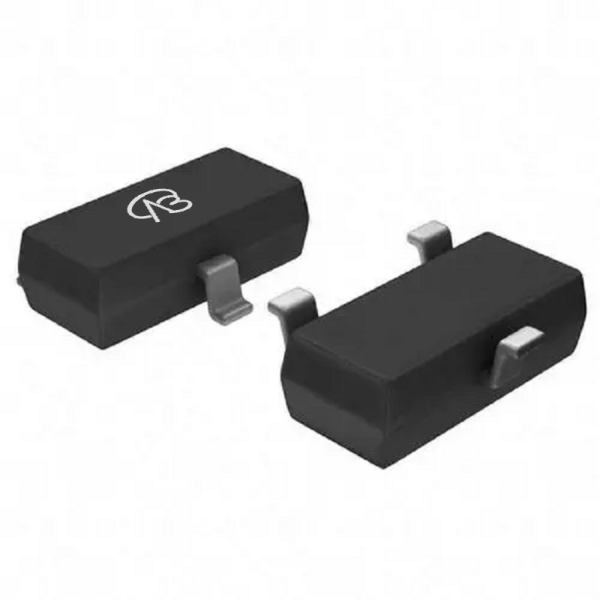
Comparative Analysis: NTRV4101PT1G (P-channel) vs. VB2290
Analysis of the Original Model (NTRV4101PT1G) Core:
This is a -20V P-channel MOSFET from onsemi, packaged in the compact SOT-23. Its design core is to provide reliable, automotive-qualified switching in low-power applications. Key advantages include: AEC-Q101 certification and PPAP compliance for automotive use, a continuous drain current of -3.2A, and an on-resistance (RDS(on)) of 85mΩ (typical). It is optimized for low-voltage gate drive.
Compatibility and Differences of the Domestic Alternative (VB2290):
VBsemi's VB2290 is a pin-to-pin compatible alternative in SOT-23-3 package. The main differences are in electrical parameters: VB2290 offers significantly lower on-resistance across various gate drives: 80mΩ @2.5V, 65mΩ @4.5V, and 60mΩ @10V. It also supports a slightly higher continuous current of -4A. However, it is not specified as AEC-Q101 certified in the provided parameters.
Key Application Areas:
Original Model NTRV4101PT1G: Ideal for automotive low-power applications requiring formal qualification, such as sensor power switching, LED control, or low-current load switches in body control modules.
Alternative Model VB2290: Better suited for general-purpose or industrial low-power applications where lower conduction loss and higher current capability are prioritized over automotive certification. Excellent for space-constrained power management in portable devices, IoT modules, or as a high-side switch in low-voltage DC-DC circuits.
Comparative Analysis: NTR4003NT3G (N-channel) vs. VB1330
This comparison highlights a shift from a very low-current signal-level MOSFET to a significantly more powerful alternative.
Analysis of the Original Model (NTR4003NT3G) Core:
This is a 30V N-channel MOSFET from onsemi in SOT-23 package. Its design is focused on very low-current switching or amplification. Key parameters are a continuous drain current of 560mA and a relatively high on-resistance of 2Ω (measured at 2.5V, 10mA), indicating its use for signal-level or light-load applications.
Compatibility and Differences of the Domestic Alternative (VB1330):
VBsemi's VB1330 represents a substantial "performance upgrade" while maintaining the SOT-23-3 footprint. It features a much higher continuous current of 6.5A and dramatically lower on-resistance: 33mΩ @4.5V and 30mΩ @10V. Its voltage rating is a comparable 30V.
Key Application Areas:
Original Model NTR4003NT3G: Suitable for signal switching, level shifting, or driving very small loads (e.g., tiny relays, LEDs) where current demand is below 600mA.
Alternative Model VB1330: Targets power applications where the SOT-23 footprint is required but current needs are far greater. Ideal for low-side switching in compact DC-DC converters (e.g., synchronous buck converters), motor drive for small fans, or as a power switch in USB power distribution, offering much lower conduction loss and higher power density.
Summary
This analysis reveals two distinct replacement strategies:
1. For qualified automotive P-channel applications, the onsemi NTRV4101PT1G remains the necessary choice due to its AEC-Q101 certification. For non-automotive or prototyping needs where lower RDS(on) and higher current are desired, the VB2290 is a strong, footprint-compatible performance upgrade.
2. For low-power N-channel applications, the NTR4003NT3G serves specific ultra-low-current roles. In contrast, the VB1330 is not a direct parametric substitute but a transformative upgrade, enabling robust power switching (6.5A, ~30mΩ) in the same tiny SOT-23 space, perfect for space-constrained, efficiency-sensitive designs.
Core Conclusion: Selection is driven by precise requirement matching. The domestic alternatives VB2290 and VB1330 provide compelling options, offering superior electrical performance in standard packages. VB1330, in particular, demonstrates how alternative components can dramatically expand capability within the same board footprint, giving engineers greater flexibility in design optimization and cost management. Understanding each device's intended application is key to leveraging its full value in your circuit.

Download PDF document
 Download now


