 中文
中文 English
MOSFET Selection for Automotive and General-Purpose Switching: NTMD6N03R2G, NVD3055-094T4G-VF01 vs. China Alternatives VBA3328, VBE1695
Number of views:9999
 Back to previous page
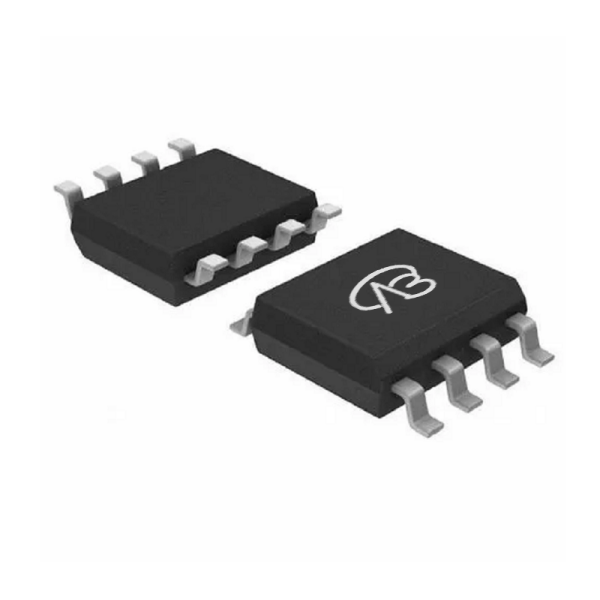
Comparative Analysis: NTMD6N03R2G (Dual N-channel) vs. VBA3328
Analysis of the Original Model (NTMD6N03R2G) Core:
This is a 30V, dual N-channel MOSFET from onsemi in a standard SOIC-8 package. Its design core is to provide a compact, dual-switch solution for space-constrained board designs requiring moderate current handling. Key advantages include a continuous drain current rating of 6A per channel and a low gate threshold voltage (Vgs(th)) of 2.5V, ensuring good compatibility with low-voltage logic and microcontroller GPIOs. Its dissipation capability is suited for low-to-medium power applications.
Compatibility and Differences of the Domestic Alternative (VBA3328):
VBsemi's VBA3328 is a direct pin-to-pin compatible alternative in the SOP8 package. It matches the voltage rating (30V) and offers similar current capability (6.8A/6.0A). A key parametric difference is its lower typical gate threshold voltage (1.7V), which can enhance driveability in low-voltage circuits. Its on-resistance is competitive, rated at 22mΩ @ 10V gate drive.
Key Application Areas:
Original Model NTMD6N03R2G: Ideal for general-purpose switching, signal routing, or load management in consumer electronics, IoT devices, and low-power DC-DC converters where a dual N-channel configuration saves board space.
Alternative Model VBA3328: A suitable domestic replacement for the same application spaces, offering potential benefits in lower-threshold drive and supply chain diversification. Its Trench technology ensures robust switching performance.
Comparative Analysis: NVD3055-094T4G-VF01 (Automotive N-channel) vs. VBE1695
This comparison shifts to higher-power, high-reliability applications. The original model is designed with automotive rigor in mind.
Analysis of the Original Model (NVD3055-094T4G-VF01) Core:
This is an AEC-Q101 qualified, PPAP-capable N-channel MOSFET from onsemi in a DPAK (TO-252) package. Its design pursues reliable high-speed switching in demanding environments. Core advantages are its 60V drain-source voltage rating, 12A continuous current capability, and an on-resistance of 94mΩ @ 10V. The automotive-grade certification makes it a trusted choice for under-hood and in-cabin applications.
Compatibility and Differences of the Domestic Alternative (VBE1695):
VBsemi's VBE1695, in a TO-252 package, presents a "performance-enhanced" alternative. While matching the 60V voltage rating, it offers a significantly higher continuous current rating of 18A and a lower on-resistance (73mΩ @ 10V). It also features a lower gate threshold voltage (1.7V). It provides a robust alternative for applications requiring higher current margins or improved conduction losses.
Key Application Areas:
Original Model NVD3055-094T4G-VF01: Specifically engineered for automotive applications such as power supply switches, converter circuits, power motor control (e.g., window lifts, fans), and bridge circuits where AEC-Q101 certification is mandatory.
Alternative Model VBE1695: An excellent choice for both automotive and industrial applications demanding higher current handling (up to 18A) and lower on-state losses. Its parameters make it suitable for upgraded designs in motor drives, power tools, and more robust DC-DC converters.
Conclusion
In summary, this analysis reveals two distinct selection pathways:
For general-purpose, space-saving dual N-channel applications, the original NTMD6N03R2G offers a proven solution in a standard package. Its domestic alternative VBA3328 provides solid electrical compatibility with potential advantages in lower gate drive requirements, serving as a viable alternative for supply chain resilience.
For automotive-grade or higher-power single N-channel switching, the AEC-Q101 certified NVD3055-094T4G-VF01 is the benchmark for reliability in harsh environments. The domestic alternative VBE1695 emerges as a compelling "performance-enhanced" option, offering superior current capability and lower on-resistance for applications that can benefit from these margins or where specific automotive qualifications are negotiable.
The core takeaway is that selection is driven by precise requirement matching. In an era of supply chain diversification, domestic alternatives like VBA3328 and VBE1695 not only provide feasible backups but also offer parametric advancements in key areas, giving engineers greater flexibility in design trade-offs and cost optimization. Understanding the design intent and parameter implications of each device is crucial to unlocking its full value within your circuit.

Download PDF document
 Download now


