 中文
中文 English
MOSFET Selection for High-Voltage Power and Low-Voltage Dual-Channel Applications: NTHL190N65S3HF, NTGD3148NT1G vs. China Alternatives VBP165R20S, VB3222
Number of views:9999
 Back to previous page
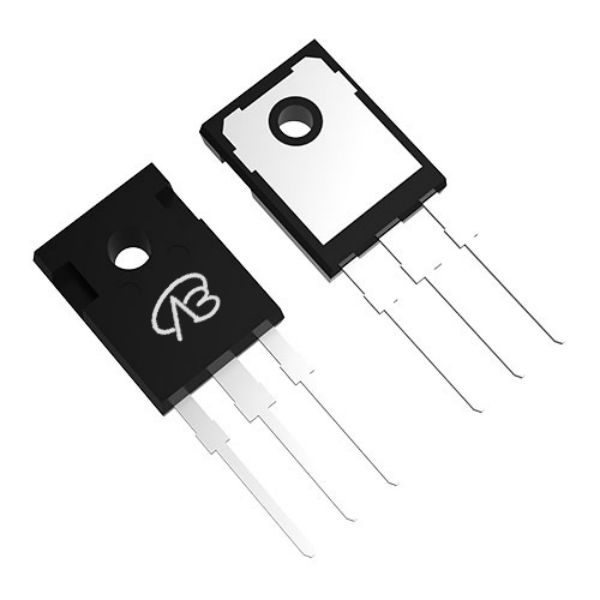
Comparative Analysis: NTHL190N65S3HF (650V Single N-Channel) vs. VBP165R20S
Analysis of the Original Model (NTHL190N65S3HF) Core:
This is a 650V N-channel SUPERFET III MOSFET from onsemi in a TO-247 package. Its design core leverages charge-balanced superjunction (SJ) technology to achieve exceptional low on-resistance and reduced gate charge. Key advantages include: a low on-resistance of 190mΩ at 10V gate drive, a continuous drain current of 20A, and optimized switching performance with a robust body diode capable of high dv/dt. This makes it ideal for high-efficiency, high-density power supplies.
Compatibility and Differences of the Domestic Alternative (VBP165R20S):
VBsemi's VBP165R20S is a direct pin-to-pin compatible alternative in a TO-247 package. The main differences lie in enhanced electrical parameters: it features a lower on-resistance of 160mΩ (at 10V), while maintaining the same 650V voltage rating and 20A continuous current. This indicates potentially lower conduction losses.
Key Application Areas:
Original Model NTHL190N65S3HF: Its high-voltage capability and efficient switching make it suitable for high-power, high-frequency applications. Typical uses include:
Server/Telecom SMPS (Switch-Mode Power Supplies): Primary-side switches in PFC (Power Factor Correction) and LLC resonant converters.
Industrial Power Systems: Motor drives, UPS (Uninterruptible Power Supplies), and solar inverters.
High-Density Power Converters: Where efficiency and thermal performance are critical.
Alternative Model VBP165R20S: With its lower on-resistance, it is an excellent performance-enhanced alternative for the same high-voltage applications, potentially offering higher efficiency and lower operating temperatures in systems like PFC stages, motor drives, and high-power DC-DC converters.
Comparative Analysis: NTGD3148NT1G (20V Dual N-Channel) vs. VB3222
This dual N-channel MOSFET focuses on providing compact integration and efficient power management in space-constrained, low-voltage applications.
Analysis of the Original Model (NTGD3148NT1G) Core:
This onsemi part integrates two 20V N-channel MOSFETs in a tiny TSOP-6 package. Its core advantages are:
Space-Saving Integration: Dual dies in one package save significant PCB area.
Good Conduction Performance: On-resistance of 70mΩ at 4.5V gate drive per channel, with a continuous current rating of 3.5A per channel.
Low-Voltage Optimization: Designed for efficient power switching and load management in battery-powered or low-voltage rail systems.
Compatibility and Differences of the Domestic Alternative (VB3222):
VBsemi's VB3222 is a pin-to-pin compatible alternative in an SOT23-6 package. It offers significant performance enhancements:
Much Lower On-Resistance: 22mΩ at 4.5V gate drive, which is substantially lower than the original's 70mΩ.
Higher Current Capability: A continuous drain current rating of 6A (total or per channel, depending on configuration), compared to 3.5A.
Wider Gate Drive Range: Supports gate voltages from 0.5V to 1.5V for logic-level drive, and ±12V gate-source voltage.
Key Application Areas:
Original Model NTGD3148NT1G: Ideal for compact designs requiring dual low-side switches or load switches. Typical applications include:
Power Management in Portable Devices: Load switching for peripherals, battery protection circuits.
Motherboard/Server Point-of-Load (POL) Converters: For secondary-side synchronous rectification or power distribution.
Automotive LED Driving: As a compact dual-channel switch.
Alternative Model VB3222: With its superior on-resistance and higher current rating, it is perfectly suited for upgraded scenarios demanding higher efficiency and greater power handling in the same compact footprint. Applications include high-current load switches, more efficient synchronous rectification in low-voltage DC-DC converters, and motor drive modules for small brushed motors.
Conclusion
In summary, this analysis reveals two distinct selection paths:
For high-voltage (650V) power applications, the original model NTHL190N65S3HF, with its robust SUPERFET III technology and reliable 190mΩ on-resistance, is a strong choice for high-efficiency SMPS and industrial systems. Its domestic alternative VBP165R20S provides a compelling "performance-enhanced" option with a lower 160mΩ on-resistance, offering the potential for reduced conduction losses and improved thermal performance in similar applications like PFC circuits and motor drives.
For compact, low-voltage (20V) dual-channel applications, the original model NTGD3148NT1G offers a space-saving TSOP-6 solution for basic dual switching needs. Its domestic alternative VB3222 stands out as a significantly "upgraded" choice, featuring dramatically lower on-resistance (22mΩ vs. 70mΩ) and higher current capacity (6A vs. 3.5A), making it ideal for designs where maximizing efficiency and power density within a minimal footprint is paramount.
The core takeaway is that selection hinges on precise requirement matching. In the context of supply chain diversification, domestic alternatives like VBP165R20S and VB3222 not only provide viable backup options but also demonstrate parameter surpassing in key areas. They offer engineers greater flexibility and resilience in design trade-offs, cost control, and performance optimization. Understanding the design philosophy and parameter implications of each device is essential to unlocking its full potential in your circuit.

Download PDF document
 Download now


