 中文
中文 English
MOSFET Selection for High-Power and Automotive Applications: NTHL080N120SC1A, NVTFS5C460NLTAG vs. China Alternatives VBP112MC30, VBQF1402
Number of views:9999
 Back to previous page
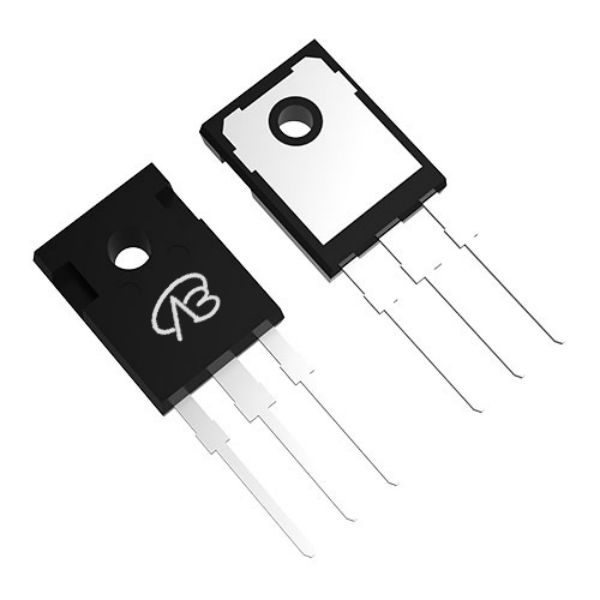
Comparative Analysis: NTHL080N120SC1A (High-Voltage SiC) vs. VBP112MC30
Analysis of the Original Model (NTHL080N120SC1A) Core:
This is a 1200V, 31A Silicon Carbide (SiC) MOSFET from onsemi in a TO-247-3 package. Its design core is to enable high-efficiency switching at high voltages and frequencies, leveraging the superior material properties of SiC. Key advantages include a high voltage rating of 1200V, a continuous drain current of 31A, and an on-resistance (RDS(on)) of 80mΩ (measured at 20V, 20A). SiC technology offers lower switching losses, higher temperature operation, and faster switching speeds compared to traditional silicon, making it ideal for demanding high-power applications.
Compatibility and Differences of the Domestic Alternative (VBP112MC30):
VBsemi's VBP112MC30 is also a 1200V SiC MOSFET in a TO-247 package, offering a direct form-factor alternative. The key parameters show strong alignment: both share the same 1200V drain-source voltage (Vdss) and a comparable on-resistance of 80mΩ (measured at 18V). The continuous drain current for VBP112MC30 is specified at 30A, which is highly similar to the original's 31A. This indicates that VBP112MC30 is designed as a performance-equivalent domestic alternative for high-voltage SiC applications.
Key Application Areas:
Original Model NTHL080N120SC1A: Its high-voltage and SiC characteristics make it suitable for high-efficiency power conversion systems. Typical applications include:
Solar inverters and energy storage systems: For DC-AC or DC-DC conversion stages.
Server & telecom power supplies: In high-density PFC (Power Factor Correction) and LLC resonant converter stages.
Industrial motor drives: For high-power inverter bridges.
Alternative Model VBP112MC30: Serves as a viable domestic alternative for the same high-voltage SiC application spaces, such as renewable energy inverters and high-efficiency industrial power supplies, providing a supply chain-resilient option with closely matched electrical performance.
Comparative Analysis: NVTFS5C460NLTAG (Automotive N-channel) vs. VBQF1402
This comparison shifts focus to high-current, low-voltage switching in space-constrained, reliability-critical automotive environments.
Analysis of the Original Model (NVTFS5C460NLTAG) Core:
This is a 40V, 74A automotive-grade N-channel MOSFET from onsemi in a compact WDFN-8 (3x3mm) package with wettable flanks. Its design pursues an exceptional balance of ultra-low on-resistance, very high current capability, and superior thermal performance in a minimal footprint, all while meeting stringent automotive qualifications. Core advantages are:
Exceptional Current Density: A continuous drain current (Id) of 74A in a 3x3mm package.
Ultra-Low Conduction Losses: Extremely low on-resistance, typically around a few milliohms (exact value from datasheet), minimizing power loss.
Automotive Robustness: AEC-Q101 qualified and suitable for PPAP, ensuring reliability for automotive applications like motor control, load switching, and LED driving.
Compatibility and Differences of the Domestic Alternative (VBQF1402):
VBsemi's VBQF1402 is also an N-channel MOSFET in a DFN8 (3x3) package, targeting similar high-current, compact applications. It presents a "performance-competitive" alternative:
It matches the 40V voltage rating.
It offers a very high continuous drain current of 60A.
Its standout feature is an extremely low on-resistance: 3mΩ at 4.5V gate drive and 2mΩ at 10V gate drive. This ultra-low RDS(on) can lead to lower conduction losses and potentially better thermal performance compared to many counterparts in its class.
Key Application Areas:
Original Model NVTFS5C460NLTAG: Its combination of high current, low resistance, small size, and automotive certification makes it ideal for:
Automotive BLDC motor drives: For pumps, fans, window lifters.
High-current load switches & power distribution: In ADAS modules, infotainment systems.
LED driving: For high-power automotive lighting.
Alternative Model VBQF1402: Is highly suitable for upgrade or alternative scenarios in compact, high-efficiency designs demanding ultra-low conduction losses, such as:
High-current DC-DC converters: For point-of-load (POL) conversion in servers, telecom, or automotive.
Motor drives requiring minimized heat generation.
Battery protection circuits and power switches in portable equipment.
Summary
This comparative analysis reveals two distinct selection pathways:
For high-voltage (1200V) SiC applications like industrial inverters and server PSUs, the original model NTHL080N120SC1A sets a benchmark with its 31A current and 80mΩ RDS(on). Its domestic alternative VBP112MC30 provides a strong, performance-matched (30A, 80mΩ) and package-compatible option, enhancing supply chain flexibility for these critical systems.
For compact, high-current, automotive-grade applications, the original NVTFS5C460NLTAG excels with its 74A current rating, ultra-low RDS(on), and AEC-Q101 qualification in a tiny 3x3mm footprint. The domestic alternative VBQF1402 emerges as a compelling "performance-focused" choice, offering an exceptionally low RDS(on) of 2mΩ @10V and 60A current in the same package size, suitable for designs prioritizing minimal conduction loss and high power density.
The core conclusion is: Selection is driven by precise requirement matching. In the context of supply chain diversification, domestic alternatives like VBP112MC30 and VBQF1402 not only provide reliable backup options but also demonstrate competitive or superior performance in key parameters (like RDS(on)), offering engineers greater flexibility in design optimization, cost control, and sourcing resilience. Understanding the design philosophy and parametric implications of each device is essential to unlock its full potential in the circuit.

Download PDF document
 Download now


