 中文
中文 English
MOSFET Selection for Automotive and Power Switching: NTD3055L104T4G, NVMFS5C423NLAFT1G vs. China Alternatives VBE1695, VBQA1402
Number of views:9999
 Back to previous page
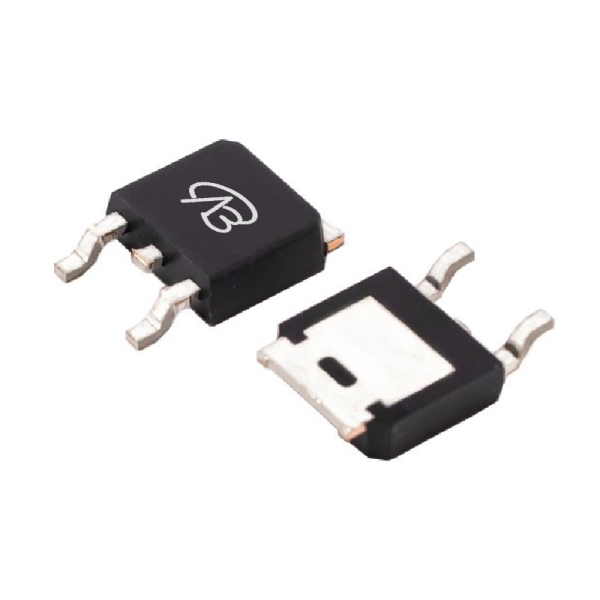
Comparative Analysis: NTD3055L104T4G (Standard N-Channel) vs. VBE1695
Analysis of the Original Model (NTD3055L104T4G) Core:
This is a 60V N-channel MOSFET from onsemi in a DPAK (TO-252) package. Its design core is to provide a reliable and cost-effective solution for general-purpose, medium-current switching. Key features include a 12A continuous drain current and an on-resistance (RDS(on)) of 104mΩ at 5V gate drive. It is characterized by robustness and suitability for various low-voltage, high-speed switching applications.
Compatibility and Differences of the Domestic Alternative (VBE1695):
VBsemi's VBE1695 is offered in a TO-252 package, making it a form-factor compatible alternative. The key differences are in enhanced electrical performance: while maintaining the same 60V voltage rating, the VBE1695 offers a significantly lower on-resistance—85mΩ @ 4.5V and 73mΩ @ 10V—and a higher continuous current rating of 18A. This indicates potentially lower conduction losses and higher current-handling capability in similar applications.
Key Application Areas:
Original Model NTD3055L104T4G: Well-suited for standard power switching needs where cost and availability are primary concerns. Typical applications include:
Power supplies and DC-DC converters.
Motor control circuits for brushed DC motors.
General bridge circuits and load switching.
Alternative Model VBE1695: A suitable "performance-enhanced" drop-in replacement for the NTD3055L104T4G. It is ideal for designs where upgrading to lower RDS(on) and higher current capability within the same footprint is desired, potentially improving efficiency and thermal performance in existing circuit topologies.
Comparative Analysis: NVMFS5C423NLAFT1G (Automotive N-Channel) vs. VBQA1402
This comparison shifts to high-performance, automotive-grade MOSFETs where ultra-low resistance, high current, and reliability are paramount.
Analysis of the Original Model (NVMFS5C423NLAFT1G) Core:
This is a high-end 40V N-channel MOSFET from onsemi, featuring an SO-8FL (5x6mm) package with wettable flanks for enhanced optical inspection in automotive manufacturing. Its design core is to deliver maximum power density and efficiency in space-constrained, thermally challenging automotive environments. Its standout features are an extremely low RDS(on) of 2mΩ at 10V gate drive and a very high continuous drain current of 150A. It is AEC-Q101 qualified and supports PPAP, making it a cornerstone for automotive applications.
Compatibility and Differences of the Domestic Alternative (VBQA1402):
VBsemi's VBQA1402 is also housed in a DFN8(5x6) package, offering direct pin-to-pin compatibility. The parameters show a highly competitive alternative: it matches the 40V voltage rating and the critical 2mΩ RDS(on) at 10V gate drive. The continuous current rating is 120A, which is substantial and suitable for most high-current automotive paths. It presents itself as a viable domestic alternative for automotive and other high-reliability applications seeking a second source.
Key Application Areas:
Original Model NVMFS5C423NLAFT1G: The benchmark for compact, high-efficiency, and high-reliability automotive power switching. Ideal applications include:
Automotive BLDC motor drives (e.g., pumps, fans, window lifts).
High-current DC-DC converters in infotainment and ADAS systems.
Battery management system (BMS) load switches and protection circuits.
Alternative Model VBQA1402: Serves as a strong domestic alternative for the same high-performance automotive and industrial applications. It is particularly relevant for designs requiring a qualified, high-current MOSFET with ultra-low conduction loss in a compact 5x6mm footprint, offering supply chain diversification.
Conclusion:
This analysis reveals two distinct substitution strategies:
1. For standard industrial switching applications, the domestic VBE1695 offers a compelling upgrade over the NTD3055L104T4G, providing significantly better conduction performance (lower RDS(on)) and higher current rating in the same TO-252 package, enabling efficiency improvements in existing designs.
2. For advanced automotive and high-density power applications, the domestic VBQA1402 emerges as a serious contender against the benchmark NVMFS5C423NLAFT1G. It matches the crucial ultra-low 2mΩ RDS(on) and offers a high 120A current capability in the same compact package, providing a viable alternative for AEC-Q101 oriented designs and enhancing supply chain resilience.
The core takeaway is that domestic alternatives are no longer just pin-compatible backups; they are increasingly performance-competitive. Models like VBE1695 and VBQA1402 provide engineers with effective options for performance upgrades or supply chain diversification without compromising on key electrical parameters, offering greater flexibility in design and cost optimization.

Download PDF document
 Download now


