 中文
中文 English
MOSFET Selection for Automotive & Compact Power: NDT451AN, NVTFS5C466NLTAG vs. China Alternatives VBJ1322, VBQF1410
Number of views:9999
 Back to previous page
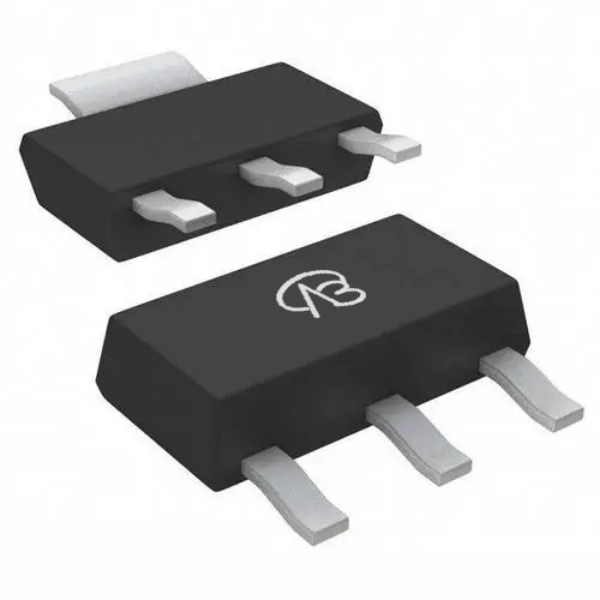
Comparative Analysis: NDT451AN (N-channel) vs. VBJ1322
Analysis of the Original Model (NDT451AN) Core:
This is a 30V N-channel MOSFET from onsemi in a Power SOT-223 package. It utilizes high-density DMOS technology to minimize on-resistance (50mΩ @ 4.5V) while offering a continuous drain current of 7.2A. Its design core is optimized for fast switching, low conduction loss, and robustness in low-voltage applications.
Compatibility and Differences of the Domestic Alternative (VBJ1322):
VBsemi’s VBJ1322 is a pin-to-pin compatible alternative in the same SOT-223 package. It shows significant performance improvements: lower on-resistance (21mΩ @ 4.5V, 19mΩ @ 10V) and a comparable continuous current rating of 7A. This makes it a stronger performer in conduction loss and efficiency.
Key Application Areas:
- Original Model NDT451AN: Ideal for low-voltage applications requiring reliable switching and moderate current, such as DC motor control, DC-DC conversion, and low-side switching in portable electronics.
- Alternative Model VBJ1322: Suited for the same applications but with enhanced efficiency due to lower on-resistance, offering a direct upgrade path for designs seeking better thermal performance and reduced power loss.
Comparative Analysis: NVTFS5C466NLTAG (N-channel) vs. VBQF1410
Analysis of the Original Model (NVTFS5C466NLTAG) Core:
This automotive-grade 40V N-channel MOSFET from onsemi comes in a compact WDFN-5 (3.3x3.3mm) package with wettable flanks for optical inspection. It features a low on-resistance of 6.1mΩ @ 10V and a high continuous current of 51A. AEC-Q101 certified, it is designed for high-reliability automotive applications where thermal performance and power density are critical.
Compatibility and Differences of the Domestic Alternative (VBQF1410):
VBsemi’s VBQF1410 is offered in a DFN8 (3x3mm) package. While electrically compatible for many designs, key differences exist: it has a lower continuous current rating of 28A but offers very competitive on-resistance (15mΩ @ 4.5V, 13mΩ @ 10V). It provides a balance of performance and cost for applications not requiring the full 51A capability.
Key Application Areas:
- Original Model NVTFS5C466NLTAG: Targeted at high-current automotive applications such as motor drives, LED lighting, power distribution, and DC-DC converters in 12V/24V systems, where high current, low loss, and reliability are paramount.
- Alternative Model VBQF1410: A suitable alternative for space-constrained automotive or industrial applications requiring good efficiency and thermal performance at currents up to 28A, offering a cost-effective solution with solid electrical characteristics.
Conclusion:
This analysis reveals two distinct selection strategies:
- For low-voltage, cost-sensitive applications like DC motor control, the original NDT451AN provides reliable performance, while its domestic alternative VBJ1322 offers a compelling upgrade with significantly lower on-resistance for improved efficiency.
- For high-current, automotive-grade applications, the original NVTFS5C466NLTAG sets a high benchmark with its 51A capability and AEC-Q101 certification. The domestic alternative VBQF1410 serves as a viable option for designs with moderate current requirements (up to 28A), delivering good performance in a similar footprint.
The core takeaway is that selection depends on precise requirement matching. Domestic alternatives like VBJ1322 and VBQF1410 not only provide supply chain resilience but also offer competitive or enhanced parameters in specific areas, giving engineers greater flexibility in design and cost optimization. Understanding each device's strengths ensures optimal performance in your circuit.

Download PDF document
 Download now


