 中文
中文 English
MOSFET Selection for Power Switching Applications: NDT3055L, NTD360N80S3Z vs. China Alternatives VBJ1695, VBE18R11S
Number of views:9999
 Back to previous page
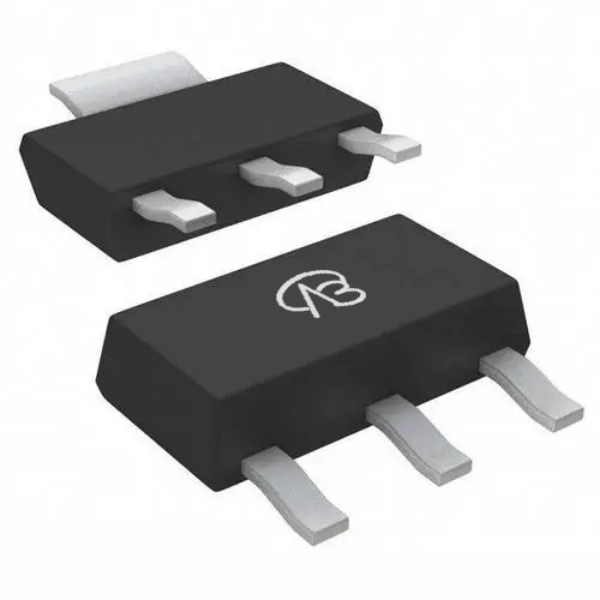
Comparative Analysis: NDT3055L (N-channel) vs. VBJ1695
Original Model (NDT3055L) Core Analysis:
This is a logic-level N-channel MOSFET from onsemi in a compact SOT-223 package. It is built with proprietary high-cell-density DMOS technology, targeting low-voltage applications requiring fast switching and robust transient protection. Key advantages include a 60V drain-source voltage (Vdss), 4A continuous current, and an on-resistance (RDS(on)) of 120mΩ at 4.5V gate drive. It is designed for minimal conduction loss and high energy endurance in avalanche and commutation modes.
Compatibility and Differences of the Domestic Alternative (VBJ1695):
VBsemi’s VBJ1695 is a direct pin-to-pin compatible alternative in the same SOT-223 package. It offers a similar 60V Vdss but with improved electrical performance: a lower on-resistance of 85mΩ at 4.5V (and 76mΩ at 10V) and a higher continuous drain current rating of 4.5A. This results in lower conduction losses and potentially better efficiency in switching applications.
Key Application Areas:
- Original Model NDT3055L: Ideal for low-voltage DC motor control, DC-DC converters, and load switching where logic-level drive, fast switching, and transient robustness are critical.
- Alternative Model VBJ1695: Suited for the same low-voltage applications but offers enhanced efficiency due to lower RDS(on) and higher current handling, making it a strong upgrade for space-constrained designs seeking better thermal performance and lower power loss.
Comparative Analysis: NTD360N80S3Z (N-channel) vs. VBE18R11S
Original Model (NTD360N80S3Z) Core Analysis:
This 800V SUPERFET III MOSFET from onsemi, in a TO-252 (DPAK) package, is engineered for high-voltage switching efficiency. It features an 800V Vdss, 13A continuous current, and an on-resistance of 360mΩ at 10V gate drive. Optimized for flyback converter primary-side switching, it reduces switching losses and case temperature without compromising EMI performance. An integrated Zener diode enhances ESD protection.
Compatibility and Differences of the Domestic Alternative (VBE18R11S):
VBsemi’s VBE18R11S is a compatible alternative in the TO-252 package. It matches the 800V Vdss closely and offers a slightly lower continuous current of 11A. Its on-resistance is 380mΩ at 10V, comparable to the original. Built with SJ_Multi-EPI technology, it provides robust high-voltage switching performance suitable for similar applications.
Key Application Areas:
- Original Model NTD360N80S3Z: Optimized for high-efficiency, high-voltage applications such as flyback converters, SMPS (switch-mode power supplies), LED drivers, and industrial power systems where low switching loss and thermal management are priorities.
- Alternative Model VBE18R11S: A viable alternative for 800V switching applications like AC-DC converters, power adapters, and industrial controls, offering reliable performance with a focus on cost-effectiveness and supply chain diversification.
Conclusion
This comparison highlights two distinct selection pathways:
- For low-voltage, logic-level applications, the original NDT3055L provides reliable performance with good switching robustness. Its alternative, VBJ1695, offers a compatible package with lower on-resistance and higher current capability, making it an efficient upgrade for designs seeking improved conduction loss and thermal performance.
- For high-voltage power switching, the original NTD360N80S3Z delivers optimized performance for flyback and high-voltage converters with low switching losses. The alternative VBE18R11S matches key parameters like voltage rating and on-resistance, providing a cost-effective and accessible option for similar high-voltage applications.
The core takeaway is that selection depends on precise application requirements—voltage, current, switching speed, and thermal needs. Domestic alternatives like VBJ1695 and VBE18R11S not only offer compatibility and supply chain resilience but also present opportunities for enhanced performance or cost savings. By understanding each device’s design strengths and parameter trade-offs, engineers can effectively leverage these options to optimize power designs for efficiency, size, and reliability.

Download PDF document
 Download now


