 中文
中文 English
MOSFET Selection for Power Management: MVGSF1N03LT1G, FDPF18N50 vs. China Alternatives VB1240, VBMB165R20S
Number of views:9999
 Back to previous page
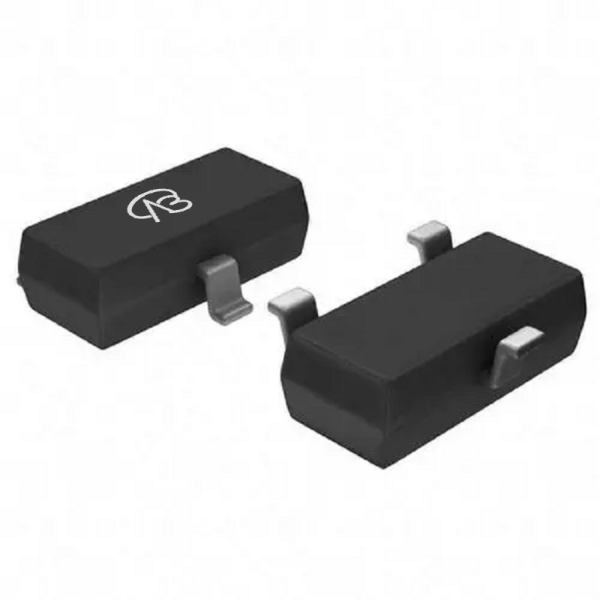
Comparative Analysis: MVGSF1N03LT1G (N-channel) vs. VB1240
Analysis of the Original Model (MVGSF1N03LT1G) Core:
This is a 30V N-channel automotive-grade MOSFET from onsemi in a compact SOT-23 package. Its design focuses on efficient power management in space-constrained applications. Key advantages include a continuous drain current of 2.1A and an on-resistance of 80mΩ at 10V drive, ensuring minimal power loss and energy savings in space-sensitive circuits.
Compatibility and Differences of the Domestic Alternative (VB1240):
VBsemi’s VB1240 is also offered in an SOT-23 package and serves as a pin-to-pin compatible alternative. The main differences lie in electrical parameters: VB1240 has a slightly lower voltage rating (20V) but significantly better on-resistance—28mΩ at 4.5V—and a higher continuous current of 6A, providing lower conduction loss and higher current capability.
Key Application Areas:
- Original Model MVGSF1N03LT1G: Ideal for automotive and space-sensitive low-voltage power management, such as load switching, DC-DC converters, and battery-powered modules in 12V/24V systems.
- Alternative Model VB1240: Better suited for applications requiring lower on-resistance and higher current (up to 6A) within 20V systems, such as portable devices, IoT power switches, and efficient power distribution circuits.
Comparative Analysis: FDPF18N50 (N-channel) vs. VBMB165R20S
Unlike the low-voltage model, this high-voltage MOSFET emphasizes low on-resistance and robust switching performance.
Core Advantages of the Original Model (FDPF18N50):
- High Voltage Capability: Rated at 500V with a continuous current of 18A, suitable for high-power switching applications.
- Optimized Switching Performance: Features an on-resistance of 265mΩ at 10V, supporting efficient power conversion with good avalanche energy strength.
- Package Design: Uses a TO-220F package for effective heat dissipation in medium-to-high-power scenarios.
The domestic alternative VBMB165R20S is a “performance-enhanced” option: It offers a higher voltage rating of 650V, a continuous current of 20A, and a significantly lower on-resistance of 160mΩ at 10V. This translates to reduced conduction losses and improved efficiency in high-voltage applications.
Key Application Areas:
- Original Model FDPF18N50: Excellent for high-voltage switching applications like power factor correction (PFC), FPD TV power supplies, ATX power supplies, and electronic ballasts.
- Alternative Model VBMB165R20S: Ideal for upgraded high-power scenarios requiring higher voltage tolerance and lower losses, such as industrial SMPS, solar inverters, and high-efficiency motor drives.
Summary:
This comparison highlights two clear selection paths:
- For low-voltage, space-constrained applications, the original MVGSF1N03LT1G offers reliable performance for automotive and compact power management. Its domestic alternative VB1240 provides lower on-resistance and higher current, making it a strong choice for efficiency-focused designs within 20V systems.
- For high-voltage power switching, the original FDPF18N50 delivers robust performance for industrial and consumer power supplies. The alternative VBMB165R20S enhances voltage rating, current capability, and on-resistance, enabling higher efficiency and power density in demanding applications.
The core conclusion: Selection depends on precise requirement matching. Domestic alternatives not only offer reliable backups but also provide performance advantages in specific parameters, giving engineers greater flexibility in design trade-offs and cost control. Understanding each device’s design philosophy and parameter implications is key to maximizing its value in your circuit.

Download PDF document
 Download now


