 中文
中文 English
MOSFET Selection for Automotive and High-Voltage Power Applications: MVGSF1N02LT1G, FCP20N60 vs. China Alternatives VB1330, VBM165R20S
Number of views:9999
 Back to previous page
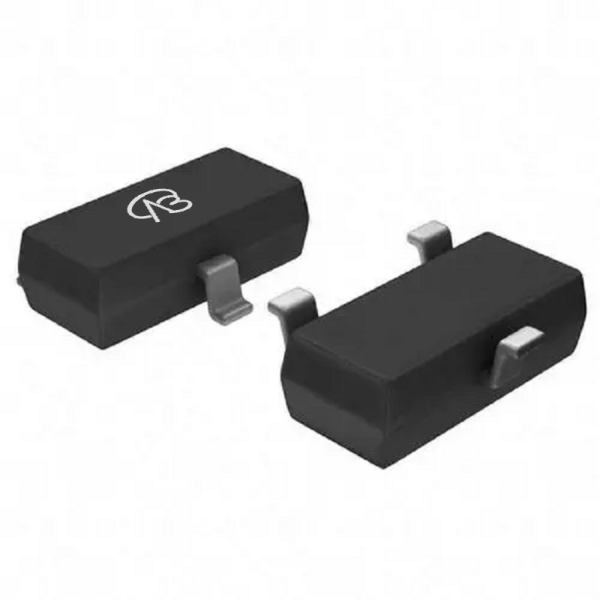
Comparative Analysis: MVGSF1N02LT1G (Automotive N-channel) vs. VB1330
Analysis of the Original Model (MVGSF1N02LT1G) Core:
This is a 20V N-channel MOSFET from onsemi, in a compact SOT-23 package. Its design core is to provide reliable, efficient power switching in space-constrained, automotive-grade applications. Key advantages include: an on-resistance (RDS(on)) of 90mΩ at 10V gate drive, a continuous drain current (Id) of 750mA, and full compliance with AEC-Q101 standards, including PPAP documentation. This makes it ideal for automotive power management where minimal power loss, energy savings, and high reliability are paramount.
Compatibility and Differences of the Domestic Alternative (VB1330):
VBsemi's VB1330 is also offered in an SOT23-3 package and serves as a pin-to-pin compatible alternative. The main differences are in the electrical parameters: VB1330 features a higher voltage rating (30V vs. 20V) and a significantly lower on-resistance of 30mΩ at 10V. Its continuous current rating is also much higher at 6.5A. However, it is crucial to verify its specific automotive qualification status against the application's requirements.
Key Application Areas:
Original Model MVGSF1N02LT1G: Its AEC-Q101 certification and balanced parameters make it the preferred choice for automotive power management circuits, such as:
Low-side switches in ECUs (Engine Control Units), body control modules.
Power distribution and load switching in infotainment/display systems.
Sensor power management and low-current motor control in automotive applications.
Alternative Model VB1330: More suitable for applications requiring higher current capability (up to 6.5A) and lower conduction loss (30mΩ) in a similar compact footprint. It is an excellent upgrade for industrial or consumer space-sensitive designs, and a potential alternative for automotive if proper qualification is confirmed.
Comparative Analysis: FCP20N60 (High-Voltage N-channel) vs. VBM165R20S
This comparison shifts focus to high-voltage power conversion, where the design pursuit is optimizing the trade-off between breakdown voltage, conduction loss, and switching performance.
Analysis of the Original Model (FCP20N60) Core:
This 600V, 20A N-channel SuperFET MOSFET from onsemi utilizes first-generation superjunction (SJ) technology. Its core advantages are:
Excellent High-Voltage Performance: The charge-balanced technology provides low specific on-resistance (150mΩ at 10V) and low gate charge for its voltage class.
Optimized for Switching: Delivers low conduction and switching losses, good dv/dt capability, and high avalanche energy robustness.
Proven Package: The TO-220 package offers good thermal performance for power dissipation in offline power supplies.
Compatibility and Differences of the Domestic Alternative (VBM165R20S):
VBsemi's VBM165R20S is a direct form-fit alternative in a TO-220 package and represents a highly competitive alternative. Key parameters are closely matched: a slightly higher voltage rating (650V vs. 600V), the same continuous current rating (20A), and a nearly identical on-resistance (160mΩ vs. 150mΩ at 10V). It also utilizes advanced superjunction multi-epitaxial technology.
Key Application Areas:
Original Model FCP20N60: A proven solution for high-efficiency, high-voltage switch-mode power supplies (SMPS), including:
Power Factor Correction (PFC) stages.
Server, telecom, and industrial power supplies.
ATX power supplies and flat-panel TV power boards.
Alternative Model VBM165R20S: Serves as a robust, performance-matched domestic alternative for the same high-voltage SMPS applications. Its comparable on-resistance, current rating, and higher voltage margin make it a viable choice for enhancing supply chain resilience without sacrificing performance in PFC, server/telecom power, and industrial power applications.
Conclusion
In summary, this analysis reveals two distinct selection pathways:
For automotive-grade, low-voltage switching in compact spaces, the original model MVGSF1N02LT1G, with its AEC-Q101 certification and proven reliability, remains the default choice for qualified automotive designs. Its domestic alternative VB1330 offers a compelling performance upgrade in terms of current (6.5A) and on-resistance (30mΩ) in the same package, suitable for industrial upgrades or as a potential automotive alternative after qualification review.
For high-voltage power conversion applications, the original model FCP20N60 has established itself as a reliable workhorse in SMPS designs using superjunction technology. The domestic alternative VBM165R20S provides a nearly drop-in replacement with equivalent current capability (20A), very similar on-resistance (160mΩ), and a slightly higher voltage rating (650V), making it a strong candidate for diversifying the supply chain in PFC, server, and industrial power supplies.
The core takeaway is that selection is driven by precise requirement matching. In an era of supply chain diversification, domestic alternatives like VB1330 and VBM165R20S not only provide feasible backup options but also offer performance parity or even advantages in specific areas, giving engineers greater flexibility and resilience in design trade-offs and cost management. Understanding the design philosophy and parameter implications of each device is essential to unlock its full value within the circuit.

Download PDF document
 Download now


