 中文
中文 English
MOSFET Selection for Compact Power Applications: MMBF0201NLT1G, IRFM120ATF vs. China Alternatives VB1240, VBJ1101M
Number of views:9999
 Back to previous page
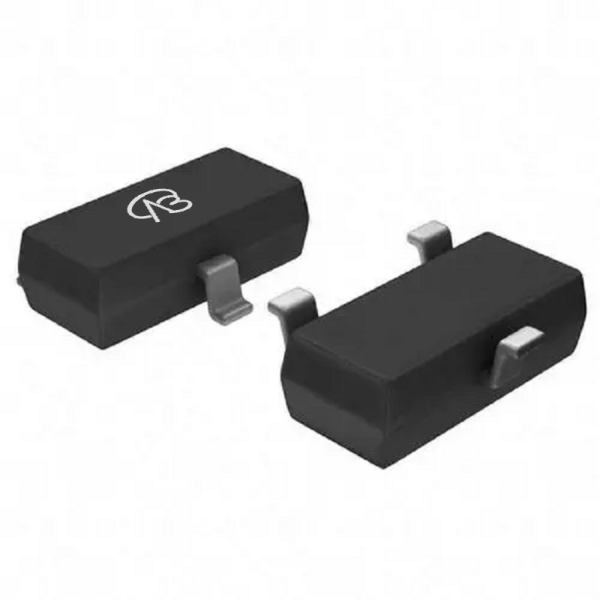
Comparative Analysis: MMBF0201NLT1G (N-channel) vs. VB1240
Analysis of the Original Model (MMBF0201NLT1G) Core:
This is a 20V N-channel MOSFET from onsemi, using a compact SOT-23 package. Its design core is to achieve efficient power management in minimal space with very low current requirements. The key advantages are: a low on-resistance of 1.4Ω at a 4.5V drive voltage and 100mA, and a continuous drain current of 300mA. Its low RDS(on) ensures minimal power loss and energy savings.
Compatibility and Differences of the Domestic Alternative (VB1240):
VBsemi's VB1240 also uses a small SOT23-3 package and is a direct pin-to-pin compatible alternative. The main differences lie in the significantly enhanced electrical parameters: VB1240 shares the same 20V voltage rating but offers a vastly higher continuous current (6A) and a dramatically lower on-resistance (28mΩ@4.5V).
Key Application Areas:
Original Model MMBF0201NLT1G: Its characteristics are very suitable for space-constrained, low-current signal switching and power management. Typical applications include:
Load switches and power management in portable/battery-powered products like computers, printers, PCMCIA cards, mobile phones.
Signal path switching and low-power DC-DC converters.
Alternative Model VB1240: Is more suitable for applications requiring significantly higher current capability and much lower conduction loss within the same voltage and footprint, enabling miniaturization of more powerful circuits.
Comparative Analysis: IRFM120ATF (N-channel) vs. VBJ1101M
Analysis of the Original Model (IRFM120ATF) Core:
This is a 100V N-channel MOSFET from onsemi in a SOT-223 package. Its design pursuit is balanced performance for Power over Ethernet (PoE) and medium-voltage switching. The core advantages are reflected in:
Compliance with IEEE 802.3af PoE standards.
Avalanche rugged technology and extended safe operating area (SOA).
Low on-resistance of 200mΩ at 10V gate drive, with a continuous current of 2.3A.
Low gate charge and input capacitance for good switching performance.
Compatibility and Differences of the Domestic Alternative (VBJ1101M):
The domestic alternative VBJ1101M, also in a SOT223 package, represents a 'performance-enhanced' choice. It matches the 100V voltage rating but offers superior key parameters: a higher continuous current of 5A and a significantly lower on-resistance of 100mΩ (@10V).
Key Application Areas:
Original Model IRFM120ATF: Its features make it an ideal choice for PoE applications, telecom interfaces, and general-purpose medium-voltage switching where ruggedness is valued.
Alternative Model VBJ1101M: Is more suitable for upgraded scenarios demanding higher current capability, lower conduction loss, and higher efficiency in similar 100V applications, such as more demanding switching power supplies or motor drives.
Conclusion
This comparative analysis reveals two clear selection paths:
For ultra-compact, low-current N-channel applications, the original model MMBF0201NLT1G, with its SOT-23 footprint and 300mA rating, is suited for basic signal and low-power switching. Its domestic alternative VB1240 offers a dramatic performance boost in the same package, making it ideal for miniaturized designs needing higher current (6A) and much lower RDS(on).
For 100V N-channel applications focusing on ruggedness and PoE compatibility, the original model IRFM120ATF is a proven solution. The domestic alternative VBJ1101M provides significant 'performance enhancement' with lower RDS(on) and higher current, offering an upgrade path for higher efficiency and power density.
The core conclusion is: Selection depends on precise requirement matching. Domestic alternatives not only provide backup options but also offer performance advantages, giving engineers more flexibility in design trade-offs and cost control.

Download PDF document
 Download now


