 中文
中文 English
MOSFET Selection for Compact Power Applications: FQT5P10TF, NTR4503NT1G vs. China Alternatives VBJ2102M, VB1330
Number of views:9999
 Back to previous page
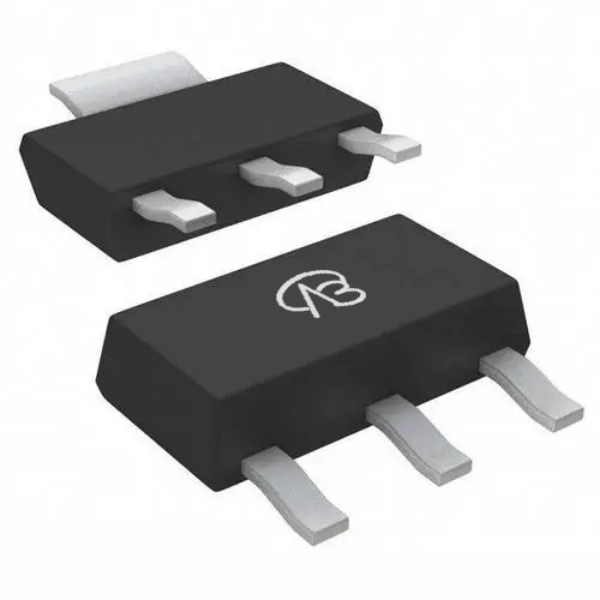
Comparative Analysis: FQT5P10TF (P-channel) vs. VBJ2102M
Analysis of the Original Model (FQT5P10TF) Core:
This is a 100V P-channel MOSFET from onsemi, using an SOT-223 package. Its design core is to provide a robust high-voltage switching solution in a compact footprint. Key advantages are: a high drain-source voltage (Vdss) of 100V, a continuous drain current (Id) of 1A, and an on-resistance (RDS(on)) of 1.05Ω @10V, 0.5A. It is built using planar stripe DMOS technology for good switching performance and high avalanche energy strength, making it suitable for switch-mode power supplies, audio amplifiers, DC motor control, and variable switching power applications.
Compatibility and Differences of the Domestic Alternative (VBJ2102M):
VBsemi's VBJ2102M also uses an SOT-223 package and is a direct pin-to-pin compatible alternative. The main differences lie in the electrical parameters: VBJ2102M has a similar voltage rating (-100V) but offers a significantly higher continuous current (-3A) and a much lower on-resistance (200mΩ @10V) compared to the original model.
Key Application Areas:
Original Model FQT5P10TF: Its characteristics are very suitable for 100V systems requiring compact high-voltage P-channel switching at moderate currents (around 1A). Typical applications include:
High-side switches in offline auxiliary power supplies.
Polarity protection and load switching in audio and industrial control circuits.
Motor control and power management in applications up to 100V.
Alternative Model VBJ2102M: More suitable for P-channel application scenarios requiring similar high-voltage rating but significantly higher current capability (up to 3A) and lower conduction loss, offering a performance-enhanced drop-in replacement.
Comparative Analysis: NTR4503NT1G (N-channel) vs. VB1330
Unlike the P-channel model focusing on high voltage, the design pursuit of this N-channel MOSFET is efficient low-voltage switching in a minimal package.
Analysis of the Original Model (NTR4503NT1G) Core:
The core advantages of this onsemi N-channel MOSFET are reflected in its compact SOT-23 package and balanced performance for low-power applications:
Good conduction performance: With a 30V drain-source voltage, it supports a continuous current of 1.5A and features an on-resistance of 110mΩ @10V.
Ultra-compact size: The SOT-23 package is ideal for space-constrained designs.
Versatile utility: Suitable for a wide range of low-power switching and amplification tasks.
Compatibility and Differences of the Domestic Alternative (VB1330):
The domestic alternative VB1330 belongs to a 'performance-enhanced' choice in the same SOT-23-3 package: It achieves comprehensive surpassing in key parameters: the same voltage rating of 30V, but a continuous current as high as 6.5A, and the on-resistance is significantly reduced to 30mΩ (@10V). This means it can provide much lower conduction loss and higher current handling in a pin-to-pin compatible form factor.
Key Application Areas:
Original Model NTR4503NT1G: Its compact size and adequate performance make it a classic choice for space-constrained, low-to-medium current switching applications. For example:
Load switching and power management in portable electronics.
Signal switching and amplification in consumer devices.
Driver stages for small motors or relays.
Alternative Model VB1330: Is more suitable for upgraded scenarios requiring significantly higher current capability and lower on-resistance within the same tiny footprint, such as more demanding power switches, battery protection circuits, or higher-current DC-DC converter stages.
Conclusion
In summary, this comparative analysis reveals two clear selection paths:
For P-channel applications requiring 100V rating, the original model FQT5P10TF provides a reliable, compact solution for currents around 1A. Its domestic alternative VBJ2102M offers a direct pin-to-pin replacement with significantly enhanced current capability (3A) and lower on-resistance, making it an excellent choice for performance upgrades or new designs needing more robust switching.
For N-channel applications in ultra-compact SOT-23 packages, the original model NTR4503NT1G is a well-established option for currents up to 1.5A. The domestic alternative VB1330 provides dramatic performance enhancement with its 6.5A current rating and ultra-low 30mΩ on-resistance, enabling higher power density and efficiency in the same minimal space.
The core conclusion is: There is no absolute superiority or inferiority in selection; the key lies in precise matching of requirements. In the context of supply chain diversification, domestic alternative models not only provide feasible backup options but also achieve significant surpassing in specific parameters, offering engineers more flexible and resilient choice space in design trade-offs and cost control. Understanding the design philosophy and parameter implications of each device is essential to maximize its value in the circuit.

Download PDF document
 Download now


