 中文
中文 English
MOSFET Selection for High-Voltage and Automotive Power Applications: FQPF27N25, NVD5117PLT4G-VF01 vs. China Alternatives VBMB1254N, VBE2609
Number of views:9999
 Back to previous page
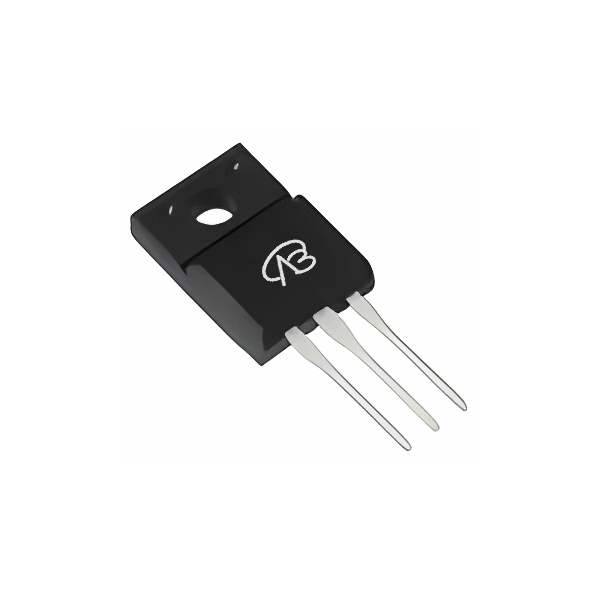
Comparative Analysis: FQPF27N25 (N-channel) vs. VBMB1254N
Analysis of the Original Model (FQPF27N25) Core:
This is a 250V N-channel MOSFET from onsemi, in a TO-220F package. Its design core leverages planar stripe and DMOS technology to achieve a balance of high-voltage capability, switching performance, and avalanche ruggedness. Key advantages are a high drain-source voltage (Vdss) of 250V and a continuous drain current (Id) of 14A, making it suitable for off-line power applications. Its on-resistance is 110mΩ @ 10V, 7A.
Compatibility and Differences of the Domestic Alternative (VBMB1254N):
VBsemi's VBMB1254N is a direct pin-to-pin compatible alternative in the same TO-220F package. The key differences are in electrical parameters: VBMB1254N offers the same 250V voltage rating but significantly outperforms the original in current handling and conduction loss. It features a much higher continuous current of 40A and a drastically lower on-resistance of 40mΩ @ 10V.
Key Application Areas:
Original Model FQPF27N25: Its high-voltage rating and robust process make it well-suited for:
Switch-Mode Power Supplies (SMPS)
Active Power Factor Correction (PFC) circuits
Electronic lamp ballasts
Alternative Model VBMB1254N: This is a "performance-enhanced" alternative, ideal for applications requiring the same high voltage but much higher current capacity and lower conduction loss. It is an excellent upgrade for high-power SMPS, PFC stages, or industrial switching where efficiency and thermal performance are critical.
Comparative Analysis: NVD5117PLT4G-VF01 (P-channel) vs. VBE2609
Analysis of the Original Model (NVD5117PLT4G-VF01) Core:
This is an AEC-Q101 qualified, PPAP-capable automotive-grade P-channel MOSFET from onsemi in a DPAK package. Its design pursuit is high-current switching with high reliability for automotive environments. Core advantages include a -60V voltage rating, a very high continuous current of -61A, and a low on-resistance of 16mΩ @ 10V.
Compatibility and Differences of the Domestic Alternative (VBE2609):
VBsemi's VBE2609, in a TO-252 (DPAK compatible) package, serves as a high-performance alternative. It matches the -60V voltage rating but offers superior conduction characteristics: a higher continuous current of -70A and significantly lower on-resistance of 5.5mΩ @ 10V (and 8mΩ @ 4.5V, indicating good logic-level performance).
Key Application Areas:
Original Model NVD5117PLT4G-VF01: Its automotive qualification and high-current P-channel capability make it ideal for:
Automotive power management systems (load switches, reverse polarity protection)
High-current switching in 12V/24V vehicle battery systems
Alternative Model VBE2609: This model provides a "performance-enhanced" choice, suitable for automotive or industrial applications demanding even lower conduction loss and higher current handling from a P-channel MOSFET, such as in next-generation high-efficiency power distribution or motor control modules.
Summary:
This analysis reveals two distinct selection paths based on application priorities:
For high-voltage N-channel applications like SMPS and PFC, the original FQPF27N25 provides reliable 250V/14A capability. Its domestic alternative VBMB1254N offers a substantial upgrade in current (40A) and conduction loss (40mΩ), making it a powerful choice for designs seeking higher power density and efficiency within the same voltage class.
For automotive-grade, high-current P-channel applications, the AEC-Q101 certified NVD5117PLT4G-VF01 is a robust solution. The domestic alternative VBE2609 emerges as a compelling "performance-enhanced" option, delivering higher current (-70A) and dramatically lower on-resistance (5.5mΩ) for applications where minimizing loss and maximizing current capacity are paramount.
The core conclusion is: Selection hinges on precise requirement matching. In the context of supply chain diversification, domestic alternatives like VBMB1254N and VBE2609 not only provide viable backups but also offer significant performance advantages in key parameters, giving engineers greater flexibility and resilience in design trade-offs and cost control. Understanding the design philosophy and parameter implications of each device is essential to unlocking its full value in the circuit.

Download PDF document
 Download now


