 中文
中文 English
MOSFET Selection for Power and Compact Designs: FQPF15P12, NTLUS3A18PZTCG vs. China Alternatives VBMB2102M, VBQG2216
Number of views:9999
 Back to previous page
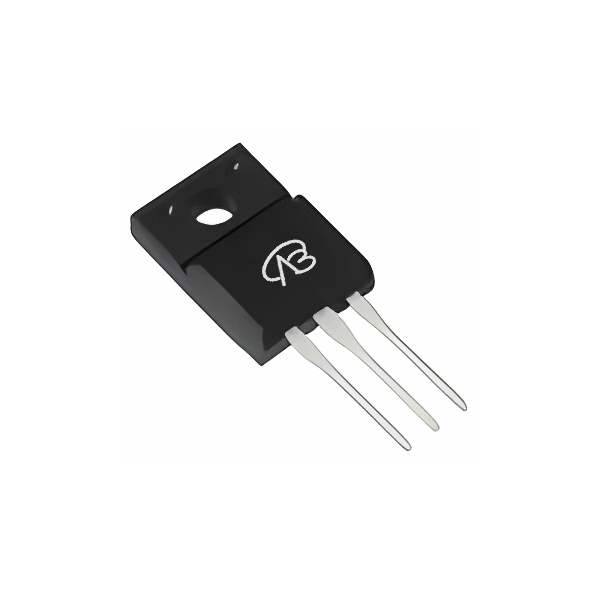
Comparative Analysis: FQPF15P12 (P-channel, TO-220F) vs. VBMB2102M
Analysis of the Original Model (FQPF15P12) Core:
This is a 120V P-channel MOSFET from onsemi in a TO-220F package. Its design core is to provide reliable high-voltage switching with good power dissipation capability. Key advantages are: a high drain-source voltage (Vdss) of 120V, a continuous drain current (Id) of 15A, and an on-resistance (RDS(on)) of 200mΩ at 10V gate drive. Its TO-220F package offers a robust thermal path for applications requiring significant power handling.
Compatibility and Differences of the Domestic Alternative (VBMB2102M):
VBsemi's VBMB2102M is a direct pin-to-pin compatible alternative in the same TO-220F package. The main differences lie in the electrical parameters: VBMB2102M has a slightly lower voltage rating (-100V vs. -120V) but offers a very comparable on-resistance of 200mΩ at 10V. Its continuous current rating is -12A.
Key Application Areas:
Original Model FQPF15P12: Ideal for applications requiring high-voltage blocking capability and moderate current in a standard through-hole package. Typical uses include:
High-side switching in 48V-100V+ systems (e.g., industrial controls, telecom).
Polarity protection and load switching in automotive auxiliary systems.
Power supplies and motor drives where 120V rating provides a safety margin.
Alternative Model VBMB2102M: A suitable domestic alternative for P-channel applications where a -100V rating is sufficient and the design prioritizes package compatibility and similar RDS(on). It fits well in upgrades or cost-optimized versions of designs originally using the FQPF15P12.
Comparative Analysis: NTLUS3A18PZTCG (P-channel, UDFN-6) vs. VBQG2216
This comparison focuses on ultra-compact, low-voltage P-channel MOSFETs for space-constrained modern electronics.
Analysis of the Original Model (NTLUS3A18PZTCG) Core:
This is a -20V, -8.2A P-channel MOSFET from onsemi in a tiny UDFN-6 (2x2mm) package. Its design pursuit is maximizing performance within a minimal footprint. Core advantages include a small 2.0x2.0x0.55 mm size, a continuous current of -8.2A, and a power dissipation of 1.7W for its size.
Compatibility and Differences of the Domestic Alternative (VBQG2216):
VBsemi's VBQG2216 is a pin-to-pin compatible alternative in a DFN6(2x2) package. It demonstrates a "performance-enhanced" profile: it matches the -20V voltage rating but offers a higher continuous current of -10A. Crucially, it features a significantly lower on-resistance: 28mΩ at 4.5V and 20mΩ at 10V, compared to the original's typical performance.
Key Application Areas:
Original Model NTLUS3A18PZTCG: Perfect for space-critical, low-voltage applications where board area and height are premium. Typical applications include:
Load switches and power management in smartphones, tablets, and wearables.
Battery-powered IoT devices for module power rail control.
Portable medical devices and compact consumer electronics.
Alternative Model VBQG2216: An excellent upgrade choice for designs requiring even lower conduction loss and higher current capability in the same tiny footprint. It is ideal for next-generation portable devices where efficiency and thermal performance are pushed further.
Conclusion
In summary, this analysis reveals two clear selection paths based on package and voltage needs:
For high-voltage, through-hole applications, the original FQPF15P12 offers a robust 120V solution. Its domestic alternative VBMB2102M provides a highly compatible -100V option with similar RDS(on), serving as a reliable backup or cost-effective choice.
For ultra-compact, low-voltage surface-mount applications, the original NTLUS3A18PZTCG delivers proven performance in a minimal UDFN package. The domestic alternative VBQG2216 stands out as a performance-enhanced substitute, offering lower RDS(on) and higher current in the same footprint, enabling more efficient and powerful compact designs.
The core conclusion is that selection hinges on precise requirement matching. Domestic alternatives like VBMB2102M and VBQG2216 not only provide supply chain resilience but also offer competitive or superior parameters, giving engineers greater flexibility in design trade-offs and cost optimization. Understanding each device's design philosophy and parameter implications is key to unlocking its full potential in your circuit.

Download PDF document
 Download now


