 中文
中文 English
MOSFET Selection for Medium-Voltage Switching Applications: FQP5N60C, FQPF2N60C vs. China Alternatives VBM165R04 and VBMB165R02
Number of views:9999
 Back to previous page
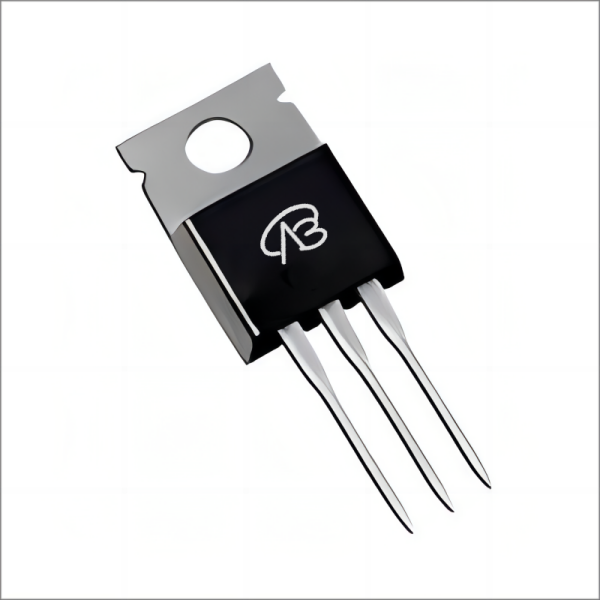
Comparative Analysis: FQP5N60C (N-channel) vs. VBM165R04
Analysis of the Original Model (FQP5N60C) Core:
This is a 600V N-channel MOSFET from onsemi, in a TO-220F-3 package. Its design focuses on providing robust medium-voltage switching capability. Key advantages are: a 600V drain-source voltage (Vdss) rating, a continuous drain current (Id) of 4.5A, and an on-resistance (RDS(on)) of 2.5Ω at 10V gate drive. This combination suits applications requiring reliable blocking voltage and moderate current handling.
Compatibility and Differences of the Domestic Alternative (VBM165R04):
VBsemi's VBM165R04 is a pin-to-pin compatible alternative in a TO-220 package. The main differences are: a higher voltage rating (650V vs. 600V), a slightly lower continuous current (4A vs. 4.5A), but a significantly improved on-resistance (2.2Ω @10V vs. 2.5Ω). This results in lower conduction loss.
Key Application Areas:
Original Model FQP5N60C: Well-suited for 600V-class applications needing ~4.5A current, such as offline switch-mode power supplies (SMPS) auxiliary circuits, lighting ballasts, and low-power motor drives.
Alternative Model VBM165R04: Ideal for applications requiring a higher voltage margin (650V) and slightly lower conduction loss, suitable for similar SMPS and motor control circuits where efficiency improvement is desired.
Comparative Analysis: FQPF2N60C (N-channel) vs. VBMB165R02
Analysis of the Original Model (FQPF2N60C) Core:
This is another 600V N-channel MOSFET from onsemi, also in a TO-220F-3 package. It targets applications with lower current demand. Its key parameters are: 600V Vdss, 2A continuous drain current, a threshold voltage (Vgs(th)) of 4V, and an on-resistance typically around 3-4Ω (exact value for FQPF2N60C at 10V not fully specified in input, but implied higher than FQP5N60C). It offers a cost-effective solution for lower-power switching.
Compatibility and Differences of the Domestic Alternative (VBMB165R02):
VBsemi's VBMB165R02 is a direct pin-to-pin alternative in a TO-220F package. It offers a higher voltage rating (650V), the same 2A current rating, and a notably lower on-resistance of 1.7Ω @10V. This provides a clear advantage in reducing conduction losses.
Key Application Areas:
Original Model FQPF2N60C: Suitable for lower-current 600V applications like small SMPS (e.g., charger adapters), snubber circuits, and low-power auxiliary power switches.
Alternative Model VBMB165R02: A performance-enhanced choice for 2A, 650V applications where lower RDS(on) is critical for efficiency, such as in compact, higher-efficiency power supplies.
Conclusion:
This analysis reveals two distinct selection paths:
For medium-current (~4.5A) 600V applications, the original FQP5N60C offers a reliable balance. Its domestic alternative VBM165R04 provides a higher voltage rating (650V) and lower on-resistance, making it a strong candidate for efficiency-focused upgrades or designs needing extra voltage headroom.
For lower-current (2A) 600V applications, the original FQPF2N60C is a cost-effective choice. Its domestic alternative VBMB165R02 significantly outperforms it in on-resistance (1.7Ω vs. ~3-4Ω) while also offering a 650V rating, making it an excellent choice for efficiency improvements in next-generation designs.
The core takeaway is that selection depends on precise requirement matching. In the context of supply chain diversification, these domestic alternatives not only provide reliable backup options but also offer performance enhancements in key parameters like voltage rating and conduction loss, giving engineers greater flexibility and resilience in design and cost optimization. Understanding each device's design philosophy and parameter implications is essential to maximize its value in the circuit.

Download PDF document
 Download now


