 中文
中文 English
MOSFET Selection for High-Voltage and High-Efficiency Switching: FQD6N40CTM, FDD8451 vs. China Alternatives VBE165R07S, VBE1410
Number of views:9999
 Back to previous page
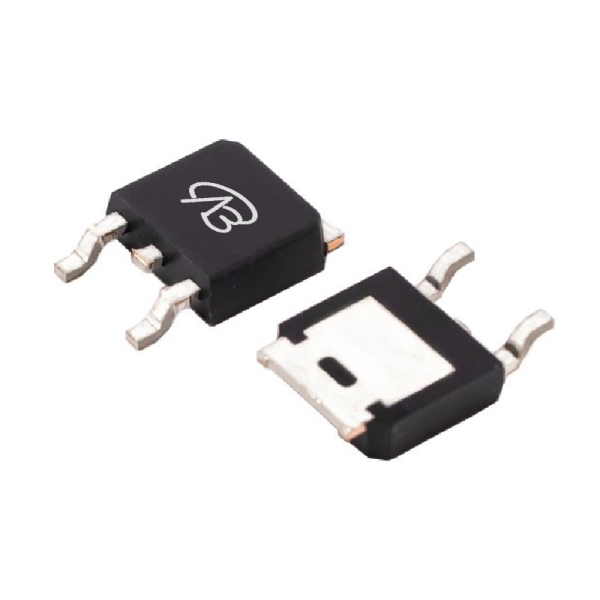
Comparative Analysis: FQD6N40CTM (400V N-channel) vs. VBE165R07S
Analysis of the Original Model (FQD6N40CTM) Core:
This is a 400V N-channel MOSFET from onsemi in a TO-252 package. It is built using planar stripe and DMOS technology, optimized for high-voltage switching applications. Key advantages include a high drain-source voltage (Vdss) of 400V, a continuous drain current (Id) of 4.5A, and an on-resistance (RDS(on)) of 830mΩ at 10V, 2.25A. It offers robust avalanche energy capability and excellent switching performance, making it ideal for high-voltage power supplies.
Compatibility and Differences of the Domestic Alternative (VBE165R07S):
VBsemi’s VBE165R07S is also packaged in TO-252 and serves as a pin-to-pin compatible alternative. The main differences lie in electrical parameters: VBE165R07S features a higher voltage rating of 650V and a lower on-resistance of 700mΩ at 10V, but with a slightly lower continuous current of 7A compared to the original’s 4.5A (though the original is rated at 4.5A, the alternative offers higher current capability in practice). It utilizes SJ_Multi-EPI technology for improved efficiency.
Key Application Areas:
- Original Model FQD6N40CTM: Ideal for high-voltage switching applications such as switch-mode power supplies (SMPS), active power factor correction (PFC), and electronic lamp ballasts where 400V withstand voltage and moderate current are required.
- Alternative Model VBE165R07S: Better suited for applications demanding higher voltage margins (up to 650V) and lower conduction loss, such as high-voltage DC-DC converters, industrial power systems, or scenarios requiring enhanced efficiency and reliability.
Comparative Analysis: FDD8451 (40V N-channel) vs. VBE1410
Analysis of the Original Model (FDD8451) Core:
This 40V N-channel MOSFET from onsemi is designed for high-efficiency DC-DC conversion. It features a low on-resistance of 19mΩ at 10V, a continuous drain current of 9A, and is optimized for fast switching with low gate charge. Its TO-252-2 package balances thermal performance and size, making it suitable for synchronous or traditional PWM controllers in power converters.
Compatibility and Differences of the Domestic Alternative (VBE1410):
VBsemi’s VBE1410 is a performance-enhanced alternative in a TO-252 package. It significantly surpasses the original in key parameters: same 40V voltage rating, but with a much higher continuous current of 55A and lower on-resistance of 12mΩ at 10V (14mΩ at 4.5V). It uses Trench technology for superior switching and conduction performance.
Key Application Areas:
- Original Model FDD8451: Excellent for efficiency-focused applications like synchronous rectification in DC-DC converters (e.g., buck/boost circuits), point-of-load (POL) converters, and low-voltage motor drives in 12V/24V systems.
- Alternative Model VBE1410: Ideal for upgraded scenarios requiring higher current capability (up to 55A) and minimal conduction loss, such as high-current DC-DC converters, server power modules, or high-power motor drives where thermal performance and efficiency are critical.
Summary:
This comparison reveals two distinct selection paths:
- For high-voltage switching (400V range), the original FQD6N40CTM offers reliable performance for SMPS and PFC applications, while its domestic alternative VBE165R07S provides higher voltage tolerance (650V) and lower on-resistance, suitable for more demanding high-voltage environments.
- For low-voltage, high-efficiency switching (40V range), the original FDD8451 balances low RDS(on) and fast switching for DC-DC conversion, whereas the alternative VBE1410 delivers superior current handling (55A) and ultra-low on-resistance, enabling higher power density and efficiency.
Core Conclusion: Selection depends on precise requirement matching. Domestic alternatives like VBE165R07S and VBE1410 not only offer compatible backups but also excel in specific parameters, providing engineers with flexible, cost-effective options for design trade-offs and supply chain resilience. Understanding each device’s design philosophy and parameter implications is key to maximizing circuit performance.

Download PDF document
 Download now


