 中文
中文 English
MOSFET Selection for High-Voltage Power Applications: FQD4N25TM-WS, FDB28N30TM vs. China Alternatives VBE1251K, VBL15R30S
Number of views:9999
 Back to previous page
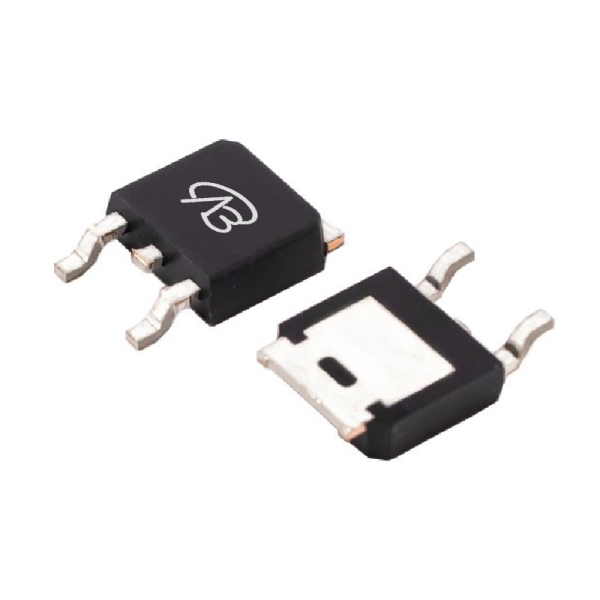
Comparative Analysis: FQD4N25TM-WS (N-channel) vs. VBE1251K
Analysis of the Original Model (FQD4N25TM-WS) Core:
This is a 250V N-channel MOSFET from onsemi, packaged in TO-252AA. It is designed for medium-voltage switching applications where compact footprint and reliable performance are required. Its key features include a drain-source voltage (Vdss) of 250V, a continuous drain current (Id) of 3A, and an on-resistance (RDS(on)) of 1.75Ω at 10V gate drive. The device suits applications needing moderate current handling and high-voltage blocking in a cost-effective package.
Compatibility and Differences of the Domestic Alternative (VBE1251K):
VBsemi’s VBE1251K is offered in a compatible TO-252 package and serves as a pin-to-pin alternative. Electrically, it matches the 250V voltage rating but offers improved conduction characteristics: a significantly lower on-resistance of 640mΩ at 10V and a higher continuous current rating of 4.5A. This results in lower conduction losses and better current-handling capability in similar applications.
Key Application Areas:
Original Model FQD4N25TM-WS: Suitable for medium-voltage, low-to-moderate current switching applications such as:
- Switching power supplies in consumer electronics (e.g., adapters, LED drivers).
- Auxiliary power switches in industrial controls.
- High-voltage load switching in offline converters.
Alternative Model VBE1251K: Ideal for upgrades where lower conduction loss and higher current capacity (up to 4.5A) are desired within the same 250V rating, offering enhanced efficiency and thermal performance in similar circuits.
Comparative Analysis: FDB28N30TM (N-channel) vs. VBL15R30S
Analysis of the Original Model (FDB28N30TM) Core:
This UniFET™ MOSFET from onsemi is a 300V N-channel device in a D2PAK package, designed for high-power switching applications. It leverages planar stripe and DMOS technology to achieve low on-resistance (129mΩ at 10V), high continuous current (28A), and robust avalanche energy capability. It targets demanding power conversion stages where efficiency, switching performance, and reliability are paramount.
Compatibility and Differences of the Domestic Alternative (VBL15R30S):
VBsemi’s VBL15R30S is a high-performance alternative in a TO-263 package. It not only matches but exceeds key parameters: a higher voltage rating of 500V, a comparable continuous current of 30A, and a lower on-resistance of 140mΩ at 10V. Utilizing SJ_Multi-EPI technology, it offers enhanced switching performance and lower losses for high-voltage, high-current applications.
Key Application Areas:
Original Model FDB28N30TM: Optimized for high-power switching applications requiring 300V operation and high current capability, such as:
- Power Factor Correction (PFC) stages.
- Flat Panel Display (FPD) TV power supplies.
- ATX power supplies and electronic lamp ballasts.
- Industrial power converters.
Alternative Model VBL15R30S: Suited for even more demanding applications requiring higher voltage blocking (500V) and improved efficiency due to lower RDS(on). Ideal for next-generation high-power PFC, server power supplies, high-density industrial converters, and energy-efficient motor drives.
Conclusion:
This comparison reveals two distinct selection pathways for high-voltage MOSFETs:
For medium-voltage applications around 250V, the original FQD4N25TM-WS provides a reliable, cost-effective solution in a compact TO-252AA package. Its domestic alternative VBE1251K offers a direct upgrade with significantly lower on-resistance and higher current rating, enabling improved efficiency and power density in similar circuit topologies.
For high-power applications requiring 300V–500V operation, the original FDB28N30TM delivers robust performance with low RDS(on) and high current capability, making it a trusted choice for PFC, ATX, and industrial power supplies. The domestic alternative VBL15R30S steps further with higher voltage rating, lower on-resistance, and advanced SJ_Multi-EPI technology, providing a performance-enhanced option for designs demanding higher efficiency, greater voltage margin, and superior switching characteristics.
The core insight is that selection depends on precise application requirements—voltage, current, switching frequency, thermal constraints, and cost. Domestic alternatives like VBE1251K and VBL15R30S not only offer reliable compatibility but also bring performance advantages in key parameters, giving engineers greater flexibility and resilience in design trade-offs and supply chain strategy. Understanding each device’s design philosophy and parametric strengths is essential to maximizing its value in your power circuit.

Download PDF document
 Download now


