 中文
中文 English
MOSFET Selection for Power Switching Applications: FQD2N60CTM-WS, HUF75345S3ST vs. China Alternatives VBE16R02, VBL1606
Number of views:9999
 Back to previous page
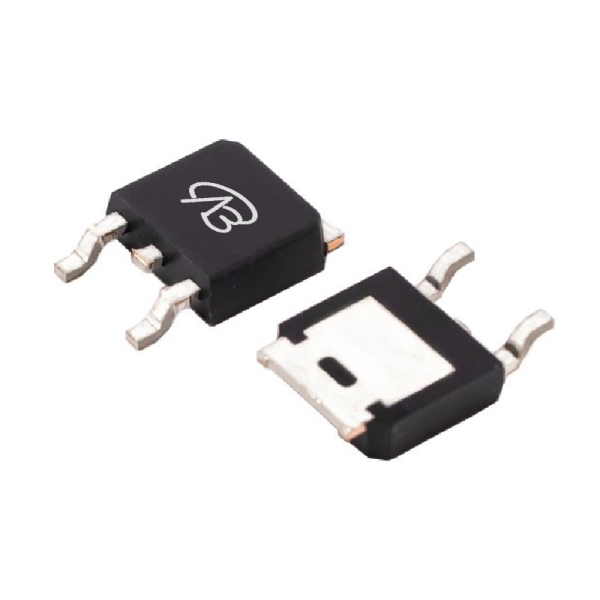
Comparative Analysis: FQD2N60CTM-WS (600V N-channel) vs. VBE16R02
Analysis of the Original Model (FQD2N60CTM-WS) Core:
This is a 600V N-channel MOSFET from onsemi in a TO-252AA package. It is designed for high-voltage, low-to-medium current switching applications. Key features include a high drain-source voltage rating of 600V, a threshold voltage (Vgs(th)) of 4V, and a power dissipation of 2.5W. It offers reliable performance in high-voltage off-line or power supply circuits where voltage withstand capability is critical.
Compatibility and Differences of the Domestic Alternative (VBE16R02):
VBsemi’s VBE16R02 is a pin-to-pin compatible alternative in a TO-252 package. The main differences are in electrical parameters: VBE16R02 has a similar 600V voltage rating and a slightly lower threshold voltage of 3.5V. Its on-resistance is higher (RDS(on) of 3560mΩ @10V vs. the original's typically lower RDS(on) for its current range), and it has a continuous drain current rating of 2A. This makes it suitable for applications where the original's current capability is sufficient but a cost-effective or sourcing alternative is needed.
Key Application Areas:
Original Model FQD2N60CTM-WS: Ideal for high-voltage, low-to-medium power switching. Typical applications include:
Off-line switch-mode power supplies (SMPS) for AC-DC conversion.
Power factor correction (PFC) stages.
Lighting ballasts and electronic transformers.
Alternative Model VBE16R02: Suitable as a direct replacement in similar high-voltage applications where the 2A current rating meets the design requirement, offering a viable alternative for supply chain diversification.
Comparative Analysis: HUF75345S3ST (55V N-channel) vs. VBL1606
This comparison shifts to higher-current, lower-voltage applications where low conduction loss is paramount.
Analysis of the Original Model (HUF75345S3ST) Core:
This onsemi N-channel MOSFET in a D2PAK-3 package is built using UltraFET technology. Its core advantages are:
Excellent Current Handling: A continuous drain current (Id) of 75A.
Low Conduction Loss: Very low on-resistance of 7mΩ @10V.
Fast Switching Performance: Features low reverse recovery charge and time, beneficial for efficiency.
It is designed for applications where high efficiency and high current are critical.
Compatibility and Differences of the Domestic Alternative (VBL1606):
VBsemi’s VBL1606, in a TO-263 package (similar footprint to D2PAK), presents a performance-enhanced alternative. It matches the voltage class (60V vs. 55V) but offers significantly higher current capability (150A vs. 75A) and a lower on-resistance (4mΩ @10V vs. 7mΩ). This translates to potentially lower conduction losses and higher power density in demanding applications.
Key Application Areas:
Original Model HUF75345S3ST: An excellent choice for high-efficiency, high-current applications. Typical uses include:
Synchronous rectification in low-voltage, high-current DC-DC converters (e.g., for servers, telecom).
Motor drive circuits for power tools, robotics, or automotive systems.
High-current load switches and power management in battery-powered equipment.
Alternative Model VBL1606: Ideal for upgrade scenarios or new designs demanding even higher current capacity and lower RDS(on). Suitable for:
Next-generation high-power DC-DC converters.
High-performance motor drives requiring minimal losses.
Applications where thermal performance and efficiency margins are prioritized.
Summary and Selection Insight
This analysis reveals two distinct substitution strategies:
For high-voltage (600V) switching needs, the original FQD2N60CTM-WS provides a robust solution for off-line power applications. Its domestic alternative VBE16R02 offers a compatible, cost-effective option for designs where its specific current rating (2A) is adequate.
For high-current, low-voltage switching applications, the original HUF75345S3ST sets a high standard with its 75A capability and 7mΩ RDS(on). The domestic alternative VBL1606 emerges as a compelling performance-upgrade option, boasting superior specifications (150A, 4mΩ) for engineers seeking to push efficiency and power density limits in new designs or replacements.
The core conclusion remains: selection is driven by precise requirement matching. Domestic alternatives like VBE16R02 and VBL1606 not only provide supply chain resilience but also offer competitive or enhanced parameters, giving engineers greater flexibility in design optimization and cost management. Understanding each device's parameter implications is key to unlocking its full potential in the circuit.

Download PDF document
 Download now


