 中文
中文 English
MOSFET Selection for High-Power Automotive and Industrial Applications: FQB34P10TM, FDWS86068-F085 vs. China Alternatives VBL2106N, VBGQA1105
Number of views:9999
 Back to previous page
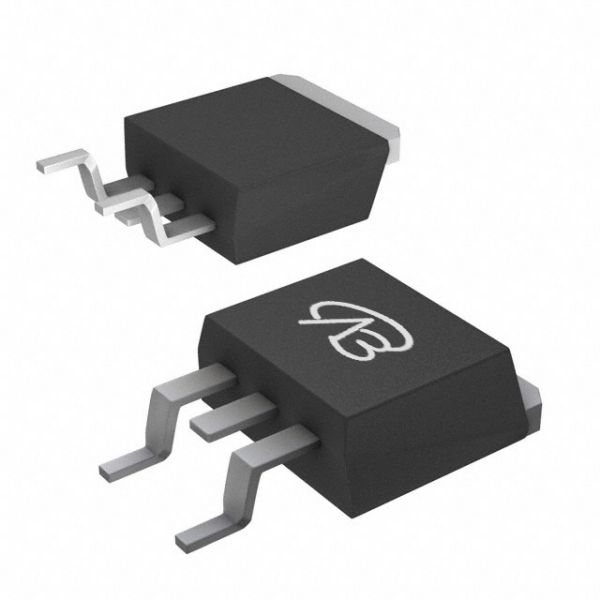
Comparative Analysis: FQB34P10TM (P-channel) vs. VBL2106N
Analysis of the Original Model (FQB34P10TM) Core:
This is a 100V P-channel MOSFET from onsemi, housed in a robust D2PAK (TO-263) package. Its design core leverages Fairchild's proprietary planar stripe DMOS technology, optimized to deliver a balance of low conduction loss, good switching performance, and high avalanche energy capability. Key advantages include a high continuous drain current rating of 33.5A and an on-resistance (RDS(on)) of 60mΩ at 10V gate drive.
Compatibility and Differences of the Domestic Alternative (VBL2106N):
VBsemi's VBL2106N is a direct form-fit alternative in a TO-263 package. It presents a compelling "performance-enhanced" profile. While maintaining the same -100V voltage rating, it offers a significantly lower on-resistance of 40mΩ (@10V) compared to the original's 60mΩ, and a higher continuous current rating of -37A versus 33.5A. This indicates potentially lower conduction losses and higher current handling in a pin-to-pin compatible package.
Key Application Areas:
Original Model FQB34P10TM: Its ruggedness and balanced performance make it suitable for various high-side switching applications in industrial and automotive contexts, such as switch-mode power supplies (SMPS), audio amplifiers, DC motor control, and variable switching power supplies.
Alternative Model VBL2106N: With its superior on-resistance and current rating, it is an excellent upgrade choice for applications demanding higher efficiency and power density within the same footprint. It is particularly suitable for enhancing the performance of existing designs using FQB34P10TM or for new designs where lower conduction loss is paramount.
Comparative Analysis: FDWS86068-F085 (N-channel) vs. VBGQA1105
This N-channel MOSFET is designed for high-current, high-reliability applications, particularly in the automotive sector, where efficiency and robustness are non-negotiable.
Analysis of the Original Model (FDWS86068-F085) Core:
This onsemi 100V N-channel MOSFET in the Power56-8 package is engineered for demanding automotive environments (AEC-Q101 qualified). Its core advantages are:
Exceptional Current Handling: A very high continuous drain current rating of 80A.
Low Conduction Loss: An ultra-low on-resistance of 5.2mΩ at 10V gate drive and 80A.
Fast Switching: A low typical total gate charge (Qg) of 31nC.
Robustness: Features like UIS capability and AOI-compatible solderable side wings enhance reliability for automotive engine control and powertrain management applications.
Compatibility and Differences of the Domestic Alternative (VBGQA1105):
VBsemi's VBGQA1105, in a compact DFN8(5x6) package, offers a different balance. While the package differs (surface-mount DFN vs. through-hole/wave-solderable Power56), it targets similar high-performance realms. It matches the 100V voltage rating and pushes the current capability even higher to 105A. The on-resistance is slightly higher at 5.6mΩ (@10V) compared to the original's 5.2mΩ but remains in the same excellent range. Its use of SGT (Shielded Gate Trench) technology promises good switching performance.
Key Application Areas:
Original Model FDWS86068-F085: Its combination of ultra-low RDS(on), very high current, automotive-grade qualification, and a package designed for power and inspectability makes it an ideal choice for mission-critical automotive applications like engine control units and powertrain management systems.
Alternative Model VBGQA1105: This model is a powerful alternative for space-constrained, high-current applications where the highest possible current rating (105A) is needed, and a surface-mount solution is acceptable or preferred. It is well-suited for high-density power stages in industrial SMPS, server power, or high-performance motor drives where its SGT technology can contribute to efficiency.
Conclusion:
This analysis reveals two distinct selection and upgrade paths:
For P-channel high-side switching in industrial/automotive power stages, the original FQB34P10TM offers proven ruggedness and balanced performance in a standard D2PAK package. Its domestic alternative VBL2106N provides a significant performance upgrade in the same package with lower RDS(on) and higher current capability, making it an excellent choice for efficiency-focused redesigns or new projects.
For N-channel high-current, high-reliability applications, the automotive-grade FDWS86068-F085 stands out with its exceptional 80A/5.2mΩ performance, qualified reliability, and manufacturability features in a Power56 package. The domestic alternative VBGQA1105 takes a different approach, offering an even higher 105A current rating in a compact DFN package, catering to designs where maximizing current density in a small footprint is critical.
The core conclusion is that selection depends on precise requirement matching: package type, current level, thermal environment, and qualification needs. In the context of supply chain diversification, domestic alternatives like VBL2106N and VBGQA1105 not only provide viable backup options but also offer compelling performance characteristics—either as enhanced drop-in replacements or as solutions enabling new levels of power density—giving engineers greater flexibility and resilience in design trade-offs and cost control.

Download PDF document
 Download now


