 中文
中文 English
MOSFET Selection for Medium-High Power Applications: FQB22P10TM, FDD3860 vs. China Alternatives VBL2106N, VBE1104N
Number of views:9999
 Back to previous page
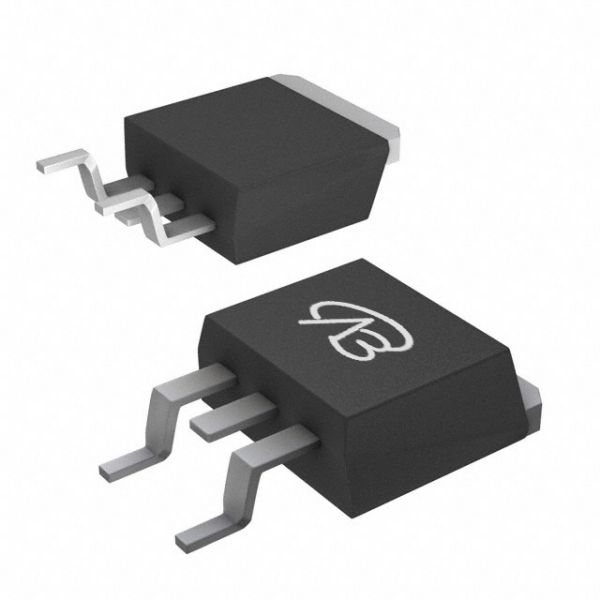
Comparative Analysis: FQB22P10TM (P-channel) vs. VBL2106N
Analysis of the Original Model (FQB22P10TM) Core:
This is a 100V P-channel MOSFET from onsemi, in a D2PAK (TO-263) package. Its design core leverages planar stripe and DMOS technology to achieve a balance of low conduction resistance, excellent switching performance, and high avalanche energy ruggedness. Key advantages include a continuous drain current (Id) of 22A and an on-resistance (RDS(on)) of 125mΩ at 10V gate drive. It is well-suited for demanding switching applications.
Compatibility and Differences of the Domestic Alternative (VBL2106N):
VBsemi's VBL2106N is also a P-channel MOSFET in a TO-263 package, offering a potential pin-to-pin compatible alternative. The main differences are in electrical parameters: VBL2106N has a comparable voltage rating (-100V) but offers significantly better performance in key areas. It features a much lower on-resistance of 40mΩ (at 10V) and a higher continuous current rating of -37A.
Key Application Areas:
Original Model FQB22P10TM: Its ruggedness and balanced performance make it suitable for various medium-power switching applications, including switch-mode power supplies (SMPS), audio amplifiers, DC motor control, and variable switching power supplies.
Alternative Model VBL2106N: With its superior on-resistance and current handling, it is an excellent performance-enhanced alternative for applications requiring lower conduction losses and higher current capacity within the same voltage class, such as upgraded SMPS designs or more demanding motor drives.
Comparative Analysis: FDD3860 (N-channel) vs. VBE1104N
This N-channel MOSFET focuses on achieving low on-resistance and low gate charge for efficient switching.
Analysis of the Original Model (FDD3860) Core:
This 100V N-channel MOSFET from onsemi uses a proprietary high-density trench process. Its core advantages are a low RDS(on) of 36mΩ (at 10V) and a continuous drain current of 29A, packaged in the TO-252 (DPAK) format. It is designed for low switching loss and good avalanche ruggedness in various applications.
Compatibility and Differences of the Domestic Alternative (VBE1104N):
VBsemi's VBE1104N is an N-channel MOSFET in a TO-252 package, serving as a direct pin-to-pin compatible alternative. It presents a "performance-enhanced" profile: while maintaining the same 100V voltage rating, it offers a lower on-resistance of 30mΩ (at 10V) and a significantly higher continuous current rating of 40A.
Key Application Areas:
Original Model FDD3860: Its combination of low RDS(on) and ruggedness makes it a reliable choice for efficient switching in applications like SMPS (particularly as a primary-side switch or synchronous rectifier), motor drives, and DC-DC converters.
Alternative Model VBE1104N: With its lower on-resistance and higher current capability, it is ideal for upgrade scenarios demanding higher efficiency, higher power density, or handling larger currents, such as next-generation SMPS, high-current motor controllers, or power stages in inverters.
Summary
In summary, this comparison reveals two distinct selection paths with compelling domestic alternatives:
For P-channel applications requiring 100V rating and good ruggedness, the original FQB22P10TM offers reliable performance. Its domestic alternative, VBL2106N, provides a significant performance upgrade with much lower on-resistance (40mΩ vs. 125mΩ) and higher current capability (37A vs. 22A), making it a superior choice for enhancing efficiency and power handling in compatible designs.
For N-channel applications prioritizing low conduction loss and switching efficiency at 100V, the original FDD3860 is a solid performer. Its domestic alternative, VBE1104N, delivers enhanced performance with lower on-resistance (30mΩ vs. 36mΩ) and a higher current rating (40A vs. 29A), positioning it as an excellent upgrade for achieving higher efficiency and current capacity.
The core conclusion is that selection hinges on precise requirement matching. In the context of supply chain diversification, these domestic alternatives not only provide viable backup options but also offer performance advantages in key parameters, giving engineers greater flexibility and resilience in design trade-offs and cost control. Understanding the design philosophy and parameter implications of each device is essential to maximize its value in the circuit.

Download PDF document
 Download now


