 中文
中文 English
MOSFET Selection for High-Voltage Switching and Automotive Power: FQB11N40CTM, NVMFS5C442NLAFT1G vs. China Alternatives VBL15R10S, VBQA1402
Number of views:9999
 Back to previous page
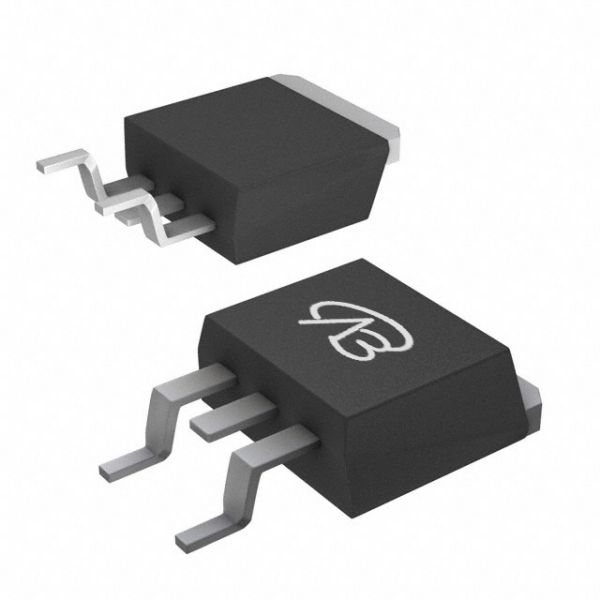
Comparative Analysis: FQB11N40CTM (High-Voltage N‑Channel) vs. VBL15R10S
Analysis of the Original Model (FQB11N40CTM) Core:
This is a 400V N‑channel MOSFET from onsemi in a D2PAK package. It is built using a planar stripe DMOS technology designed to minimize on‑resistance while offering robust switching performance and high energy capability in avalanche and commutation modes. Key advantages include a high voltage rating of 400V, a continuous drain current of 10.5A, and an on‑resistance of 530mΩ at 10V drive. It is especially suited for high‑voltage switching applications where reliability and ruggedness are critical.
Compatibility and Differences of the Domestic Alternative (VBL15R10S):
VBsemi’s VBL15R10S is a high‑voltage alternative in a TO‑263 package. It offers a higher voltage rating of 500V and a lower on‑resistance of 380mΩ at 10V, while maintaining a similar continuous current rating of 10A. The device utilizes a Multi‑EPI SJ (Super Junction) structure, which typically provides better efficiency and lower switching losses in high‑voltage applications.
Key Application Areas:
Original Model FQB11N40CTM: Ideal for high‑voltage switching applications requiring proven ruggedness and avalanche capability, such as:
- Switch‑mode power supplies (SMPS) and active power factor correction (PFC) stages.
- Electronic ballasts for lighting based on half‑bridge topologies.
- Industrial power converters where 400V rating and robust performance are needed.
Alternative Model VBL15R10S: Suitable for applications that demand higher voltage margin (500V) and lower conduction loss, such as:
- Higher‑voltage offline SMPS and PFC circuits.
- Industrial motor drives and inverter stages requiring enhanced voltage headroom.
- Power supplies where improved efficiency through lower RDS(on) is a priority.
Comparative Analysis: NVMFS5C442NLAFT1G (Automotive N‑Channel) vs. VBQA1402
Analysis of the Original Model (NVMFS5C442NLAFT1G) Core:
This automotive‑grade MOSFET from onsemi comes in a thermally enhanced SO‑8FL (5x6mm) package with wettable flanks for improved optical inspection. It is AEC‑Q101 qualified and supports PPAP, making it suitable for demanding automotive environments. The device offers a 40V rating, an exceptionally low on‑resistance of 2mΩ at 10V, and high current capability (29A continuous, 130A pulsed). Its design focuses on high power density, excellent thermal performance, and reliability in compact automotive modules.
Compatibility and Differences of the Domestic Alternative (VBQA1402):
VBsemi’s VBQA1402 is a direct footprint‑compatible alternative in a DFN8(5x6) package. It matches the 40V rating and offers an equally low on‑resistance of 2mΩ at 10V, while providing a higher continuous current rating of 120A. The device uses Trench technology, which typically delivers low RDS(on) and good switching performance in a small footprint.
Key Application Areas:
Original Model NVMFS5C442NLAFT1G: Optimized for automotive and compact high‑efficiency designs where space, thermal performance, and reliability are critical, such as:
- Automotive DC‑DC converters, battery management systems (BMS), and motor control modules.
- High‑current point‑of‑load (POL) converters in infotainment, ADAS, and power distribution.
- Any automotive or industrial application requiring AEC‑Q101 qualification and robust thermal performance in a small package.
Alternative Model VBQA1402: A performance‑enhanced alternative suitable for applications demanding even higher continuous current (120A) in the same compact footprint, such as:
- High‑power automotive POL converters and motor drives.
- Server VRM, telecom power modules, and high‑density DC‑DC converters.
- Designs where maximum current capability and low conduction loss are prioritized.
Conclusion
This comparison reveals two distinct selection paths:
For high‑voltage switching applications, the original FQB11N40CTM offers proven 400V ruggedness and avalanche capability, making it a reliable choice for industrial SMPS, PFC, and lighting ballasts. Its domestic alternative VBL15R10S provides a higher voltage rating (500V) and lower on‑resistance (380mΩ), offering an upgraded option for designs requiring extra voltage margin and improved conduction efficiency.
For automotive and compact high‑current applications, the original NVMFS5C442NLAFT1G delivers automotive‑grade reliability, low 2mΩ RDS(on), and excellent thermal performance in a small SO‑8FL package, making it ideal for qualified automotive power modules. The domestic alternative VBQA1402 matches the low RDS(on) and package size while significantly raising the continuous current to 120A, providing a performance‑boosted solution for higher‑power automotive or industrial designs.
The core insight is that selection is not about absolute superiority, but about precise requirement matching. In an era of supply‑chain diversification, domestic alternatives not only offer viable backup options but also provide parameter enhancements in key areas, giving engineers greater flexibility and resilience in design trade‑offs and cost control. Understanding the design philosophy and parameter implications of each device is essential to maximize its value in your circuit.

Download PDF document
 Download now


