 中文
中文 English
MOSFET Selection for High-Power and Automotive Applications: FQA90N15-F109, NVTFS5C673NLWFTAG vs. China Alternatives VBPB1152N, VBQF1606
Number of views:9999
 Back to previous page
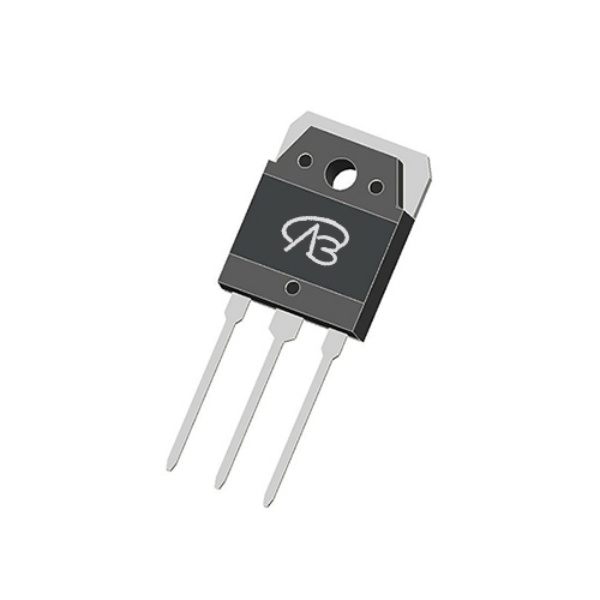
Comparative Analysis: FQA90N15-F109 (N-channel) vs. VBPB1152N
Analysis of the Original Model (FQA90N15-F109) Core:
This is a 150V N-channel MOSFET from onsemi, housed in a robust TO-3P package. Its design core is to provide high-current capability and power handling in demanding applications. Key advantages include: a high continuous drain current (Id) of 90A and a low on-resistance of 14mΩ measured at 10V, 45A. This combination ensures minimal conduction loss under high load conditions, making it suitable for high-power circuits.
Compatibility and Differences of the Domestic Alternative (VBPB1152N):
VBsemi's VBPB1152N is a direct pin-to-pin compatible alternative in the TO3P package. The main differences are in electrical parameters: while it matches the voltage rating (150V) and continuous current rating (90A) of the original, its on-resistance is slightly higher at 17mΩ (@10V). This indicates a marginally higher conduction loss compared to the original model.
Key Application Areas:
Original Model FQA90N15-F109: Its high current (90A) and low RDS(on) make it ideal for high-power switching applications such as:
Power supplies and inverters
Motor drives and controllers for industrial equipment
High-current DC-DC converters
Alternative Model VBPB1152N: Suitable as a reliable alternative in the same high-power applications where the original is used, particularly when supply chain diversification or cost is a consideration, and the slight increase in RDS(on) is acceptable within the system's thermal design.
Comparative Analysis: NVTFS5C673NLWFTAG (N-channel) vs. VBQF1606
This comparison focuses on compact, high-efficiency automotive-grade MOSFETs.
Analysis of the Original Model (NVTFS5C673NLWFTAG) Core:
This is an AEC-Q101 qualified 60V N-channel MOSFET from onsemi, featuring a compact WDFN-8 (3.3x3.3mm) package with wettable flanks for enhanced optical inspection. Its design pursues a balance of high current density, low resistance, and excellent thermal performance in a minimal footprint. Core advantages include: a continuous drain current of 50A, a low on-resistance of 9.8mΩ (@10V, 25A), and automotive-grade reliability.
Compatibility and Differences of the Domestic Alternative (VBQF1606):
VBsemi's VBQF1606 is offered in a DFN8(3x3) package. The key parameter differences are notable: while it has a lower voltage rating (60V) and a lower continuous current rating (30A) compared to the original, it boasts a significantly lower on-resistance of 5mΩ (@10V). This indicates superior conduction efficiency within its specified current range.
Key Application Areas:
Original Model NVTFS5C673NLWFTAG: Its automotive qualification, compact size, and high current capability make it ideal for:
Automotive applications (e.g., engine control units, LED lighting, power distribution)
Compact, high-efficiency DC-DC converters in space-constrained designs
Any application requiring AEC-Q101 compliance and high thermal performance from a small package.
Alternative Model VBQF1606: More suitable for applications where ultra-low on-resistance is prioritized over the highest current rating, and where automotive qualification is not mandatory. It is an excellent choice for compact, high-efficiency power management in consumer electronics, IoT devices, or non-automotive industrial systems where minimizing conduction loss is critical.
Summary:
This analysis reveals two distinct selection pathways:
For high-power industrial applications requiring 150V breakdown and currents up to 90A, the original FQA90N15-F109, with its very low 14mΩ RDS(on), offers excellent performance. Its domestic alternative VBPB1152N provides a compatible, viable option with slightly higher resistance (17mΩ), suitable for scenarios where supply chain flexibility is valued.
For compact, high-efficiency designs, particularly in automotive environments, the original NVTFS5C673NLWFTAG stands out with its AEC-Q101 qualification, 50A current rating, and good RDS(on) (9.8mΩ) in a tiny 3.3x3.3mm package. The domestic alternative VBQF1606 takes a different approach, offering dramatically lower on-resistance (5mΩ) but with a reduced current rating (30A), making it a compelling choice for efficiency-first designs in non-automotive or lower-current automotive subsystems.
The core conclusion is: Selection is not about absolute superiority but precise requirement matching. In the context of supply chain diversification, domestic alternatives like VBPB1152N and VBQF1606 not only provide feasible backups but also offer distinct parameter advantages in specific areas, giving engineers greater flexibility in design trade-offs and cost control. Understanding the design philosophy and parameter implications of each device is key to maximizing its value in your circuit.

Download PDF document
 Download now


