 中文
中文 English
MOSFET Selection for Medium-Voltage Switching: FDT86246, FQD3P50TM vs. China Alternatives VBJ1152M, VBE25R04
Number of views:9999
 Back to previous page
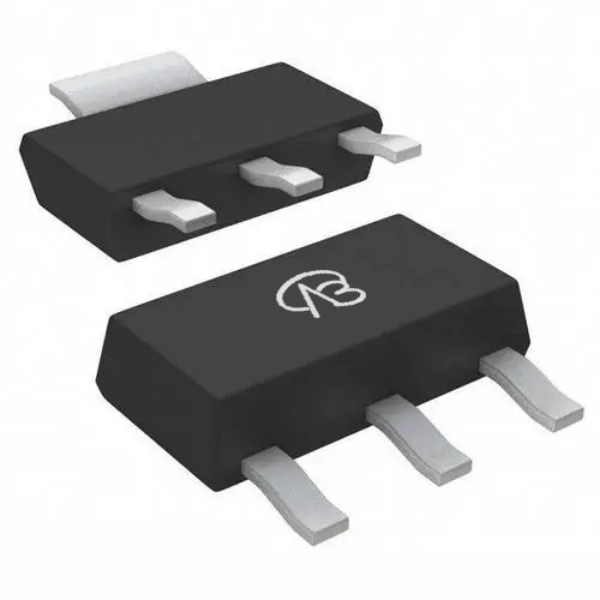
Comparative Analysis: FDT86246 (N-channel) vs. VBJ1152M
Analysis of the Original Model (FDT86246) Core:
This is a 150V N-channel MOSFET from onsemi, packaged in SOT-223. It is built using advanced Power Trench technology, optimized for low on-resistance, good switching performance, and robustness. Its key parameters include a continuous drain current of 2A and an on-resistance of 236mΩ at 10V gate drive.
Compatibility and Differences of the Domestic Alternative (VBJ1152M):
VBsemi’s VBJ1152M is also offered in an SOT-223 package and is a pin-to-pin compatible alternative. Electrically, it shares the same 150V voltage rating. While its rated continuous current is slightly higher at 3A, its on-resistance is moderately higher at 283mΩ (at 10V). This represents a trade-off between current handling and conduction loss.
Key Application Areas:
Original Model FDT86246: Ideal for medium-voltage, low-to-moderate current switching applications where a balance of low RDS(on) and cost is important. Typical uses include:
Switching power supplies (SMPS) for consumer electronics.
Power management and DC-DC conversion in industrial controls.
Motor drive and solenoid control circuits.
Alternative Model VBJ1152M: Suitable as a direct replacement in the same applications, particularly where a slight increase in current capability is beneficial, and the moderate increase in on-resistance is acceptable within the system's power loss budget.
Comparative Analysis: FQD3P50TM (P-channel) vs. VBE25R04
This comparison shifts to higher-voltage P-channel MOSFETs, where the design focus is on high voltage blocking capability and switching reliability.
Analysis of the Original Model (FQD3P50TM) Core:
The FQD3P50TM from onsemi is a -500V P-channel MOSFET in a TO-252 (DPAK) package. It utilizes planar stripe and DMOS technology, offering a good balance of on-resistance (4.9Ω at -10V gate drive), switching performance, and high avalanche energy capability. It is designed for demanding off-line switching applications.
Compatibility and Differences of the Domestic Alternative (VBE25R04):
VBsemi’s VBE25R04 is a pin-to-pin compatible alternative in a TO-252 package. It matches the -500V voltage rating and -2A continuous current of the original. Its key parameter is the on-resistance: 3.9Ω at -10V gate drive, which is notably lower than the original's 4.9Ω. This indicates potentially lower conduction losses in operation.
Key Application Areas:
Original Model FQD3P50TM: Engineered for high-voltage switching applications requiring robustness. Its primary uses include:
Off-line switching mode power supplies (SMPS).
Active Power Factor Correction (PFC) stages.
Electronic lamp ballasts and industrial power controllers.
Alternative Model VBE25R04: Serves as a strong alternative for the same high-voltage P-channel applications. Its lower on-resistance can lead to improved efficiency and reduced heat generation, making it suitable for performance-enhanced or efficiency-critical designs within the same voltage and current range.
Conclusion
This analysis outlines two distinct substitution paths:
For 150V N-channel applications using FDT86246, the domestic alternative VBJ1152M offers a compatible package and similar voltage/current ratings, with a trade-off of slightly higher on-resistance for a marginally higher current rating. It is a viable replacement where this balance meets system requirements.
For 500V P-channel applications using FQD3P50TM, the domestic alternative VBE25R04 presents a compelling option. It provides direct package compatibility, identical voltage and current ratings, and the advantage of a lower on-resistance, which can translate directly into efficiency gains.
The core takeaway is that selection depends on precise requirement matching. Domestic alternatives like VBJ1152M and VBE25R04 not only provide supply chain resilience but also offer competitive and sometimes enhanced parameters, giving engineers greater flexibility in design optimization and cost management. Understanding the specific parameter implications of each device is crucial to leveraging its full potential in the circuit.

Download PDF document
 Download now


