 中文
中文 English
MOSFET Selection for Signal Switching and Power Management: FDS8958A, MMBF170LT1G vs. China Alternatives VBA5325, VB162K
Number of views:9999
 Back to previous page
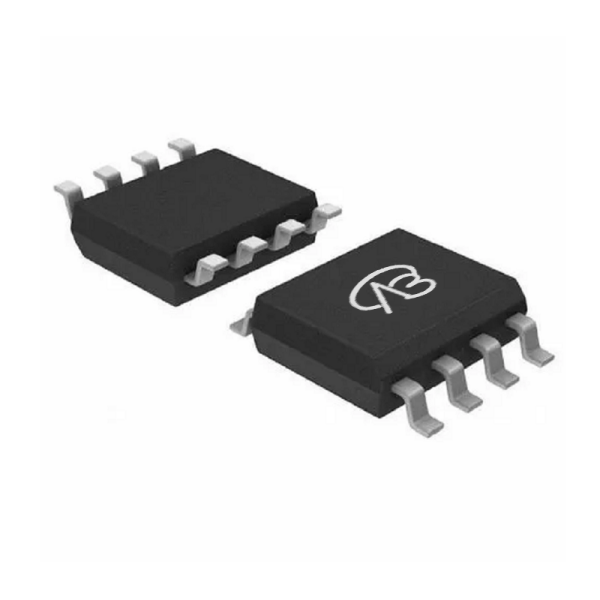
Comparative Analysis: FDS8958A (Dual N+P-Channel) vs. VBA5325
Analysis of the Original Model (FDS8958A) Core:
This is a 30V dual N+P-channel MOSFET from onsemi, in an SOIC-8 package. Its design core is to provide complementary switching in a single package for space-efficient power management. Key advantages include: a continuous drain current of 7A, on-resistance of 80mΩ (@4.5V) for the N-channel, and a power dissipation of 2W. It integrates both channel types, simplifying circuit design in applications like load switching and motor control.
Compatibility and Differences of the Domestic Alternative (VBA5325):
VBsemi’s VBA5325 is a dual N+P-channel MOSFET in an SOP8 package, offering pin-to-pin compatibility. It shows significant performance improvements: higher voltage ratings (±30V/±20V), lower on-resistance (24mΩ for N-channel @4.5V, 50mΩ for P-channel @4.5V), and higher continuous current (±8A). This makes it a superior choice in terms of conduction loss and current handling.
Key Application Areas:
- Original Model FDS8958A: Suitable for space-constrained designs requiring complementary MOSFET pairs, such as:
- H-bridge motor drivers for small DC motors.
- Power management in portable devices.
- Load switching in 12V–24V systems.
- Alternative Model VBA5325: Ideal for upgraded applications demanding lower resistance, higher current, and better efficiency, such as:
- Enhanced motor drives or synchronous rectification.
- Compact power systems where thermal performance is critical.
Comparative Analysis: MMBF170LT1G (N-Channel) vs. VB162K
This small-signal N-channel MOSFET focuses on high-voltage, low-current switching in minimal space.
Analysis of the Original Model (MMBF170LT1G) Core:
From onsemi in SOT-23 package, it features a 60V drain-source voltage, 500mA continuous current, and on-resistance of 5Ω (@10V, 200mA). Its design emphasizes reliable switching in high-voltage, low-power circuits, such as signal isolation or protection.
Compatibility and Differences of the Domestic Alternative (VB162K):
VBsemi’s VB162K, in SOT23-3 package, is a direct alternative with similar ratings: 60V drain-source voltage, 0.3A continuous current, and on-resistance of 2.8Ω (@10V). While current rating is slightly lower, its reduced on-resistance offers better conduction efficiency for low-power applications.
Key Application Areas:
- Original Model MMBF170LT1G: Fits high-voltage, low-current switching needs, such as:
- Signal switching in communication interfaces.
- Protection circuits in industrial controls.
- Low-power load switching in automotive or consumer electronics.
- Alternative Model VB162K: Suitable for similar applications where lower on-resistance is beneficial, like:
- Efficient signal routing or level shifting.
- Compact designs requiring reliable 60V switching.
Conclusion:
This comparison highlights two selection paths:
- For dual-channel power management, the original FDS8958A offers a balanced solution, while VBA5325 provides enhanced performance with lower resistance and higher current, ideal for efficiency-critical upgrades.
- For small-signal high-voltage switching, MMBF170LT1G is a reliable choice, and VB162K offers a compatible alternative with improved conduction characteristics.
The core takeaway: Selection depends on precise requirement matching. Domestic alternatives like VBA5325 and VB162K not only provide backup options but also deliver performance gains in key parameters, giving engineers flexible, cost-effective choices in design trade-offs. Understanding each device’s design intent and parameters ensures optimal circuit performance.

Download PDF document
 Download now


