 中文
中文 English
MOSFET Selection for High-Efficiency and Automotive Applications: FDS3590, NVTFS002N04CLTAG vs. China Alternatives VBA1104N, VBQF1402
Number of views:9999
 Back to previous page
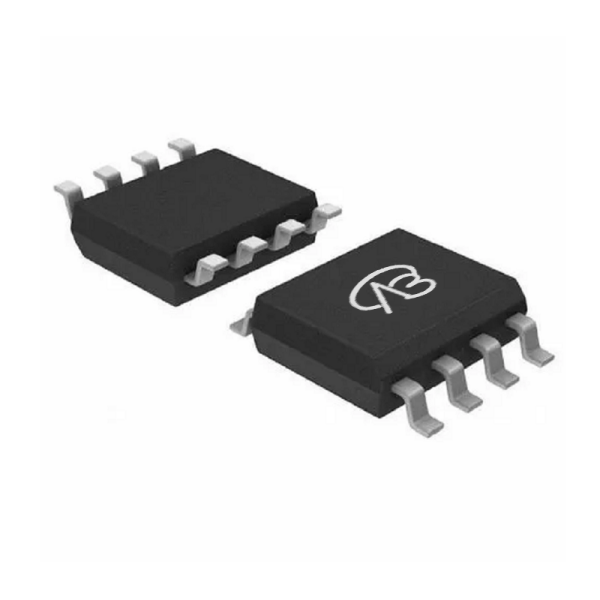
Comparative Analysis: FDS3590 (N-channel) vs. VBA1104N
Analysis of the Original Model (FDS3590) Core:
This is an 80V N-channel MOSFET from onsemi, in a standard SO-8 package. Its design core is to maximize total energy efficiency in DC/DC converters. Key advantages include: a low on-resistance of 39mΩ at 10V gate drive and a continuous drain current of 6.5A. Crucially, it features faster switching speeds and lower gate charge compared to MOSFETs with similar RDS(ON), enabling simpler, safer driving even at very high frequencies and contributing to higher overall efficiency in DC/DC power designs.
Compatibility and Differences of the Domestic Alternative (VBA1104N):
VBsemi's VBA1104N, also in an SOP8 package, serves as a potential alternative. The main differences lie in the electrical parameters: VBA1104N offers a higher voltage rating (100V vs. 80V) and significantly lower on-resistance (32mΩ @10V vs. 39mΩ). Its continuous current rating (9A) is also higher than the original's 6.5A, suggesting potentially lower conduction losses and higher current handling capability.
Key Application Areas:
Original Model FDS3590: Ideal for high-frequency, high-efficiency DC/DC conversion in various power supplies, including those using synchronous or traditional PWM controllers, where a balance of switching performance and RDS(ON) is key.
Alternative Model VBA1104N: Suited for applications requiring a higher voltage margin (up to 100V) and improved conduction performance (lower RDS(ON), higher current), potentially offering an upgrade path for designs where efficiency and power handling are paramount.
Comparative Analysis: NVTFS002N04CLTAG (N-channel) vs. VBQF1402
Analysis of the Original Model (NVTFS002N04CLTAG) Core:
This is an AEC-Q101 qualified, 40V N-channel Automotive-grade MOSFET from onsemi, in a compact WDFN-8 (3.3x3.3mm) package with wettable flanks for enhanced optical inspection. Its design pursues high power density and thermal performance for rugged automotive applications. Core advantages include: an extremely low on-resistance of 1.8mΩ at 10V, a high continuous drain current of 28A (up to 142A under pulse conditions), and the reliability demanded by automotive standards.
Compatibility and Differences of the Domestic Alternative (VBQF1402):
VBsemi's VBQF1402, in a DFN8(3x3) package, presents a "performance-enhanced" alternative. It matches the 40V voltage rating but offers dramatically superior key parameters: a continuous drain current of 60A and an ultra-low on-resistance of 2mΩ @10V (comparable to the original's 1.8mΩ). This translates to potentially lower conduction losses and significantly higher current capability in a similarly compact footprint.
Key Application Areas:
Original Model NVTFS002N04CLTAG: Tailored for compact, efficient, and reliable automotive applications such as motor drives, solenoid control, and power distribution, where AEC-Q101 qualification, thermal performance, and package robustness are critical.
Alternative Model VBQF1402: An excellent choice for applications demanding extreme current handling (up to 60A continuous) and minimal conduction loss in a small form factor. It is suitable for high-current DC/DC converters, motor drives, or power switches where the original's automotive certification is not a strict requirement but performance and size are.
Conclusion:
This analysis reveals two distinct selection paths based on application priority:
1. For high-efficiency DC/DC conversion where switching performance and a balance of parameters are key, the original FDS3590 offers proven performance. Its domestic alternative VBA1104N provides a compelling option with higher voltage rating, lower RDS(ON), and higher current, suitable for performance-upgraded or higher-voltage designs.
2. For compact, high-current applications, especially in automotive or similar demanding environments, the AEC-Q101 certified NVTFS002N04CLTAG is the benchmark. For designs where automotive certification is secondary but ultra-low resistance and very high current capacity are paramount, the domestic alternative VBQF1402 offers a significant performance boost in a compatible package.
The core takeaway is that selection hinges on precise requirement matching. Domestic alternatives not only provide viable backup options but can offer superior performance in specific parameters, giving engineers greater flexibility in design trade-offs and cost optimization. Understanding each device's design philosophy and parameter implications is essential to unlock its full potential in your circuit.

Download PDF document
 Download now


