 中文
中文 English
MOSFET Selection for High-Voltage Switching Applications: FDPF13N50FT, FDD5N50NZTM vs. China Alternatives VBMB155R18 and VBE165R05S
Number of views:9999
 Back to previous page
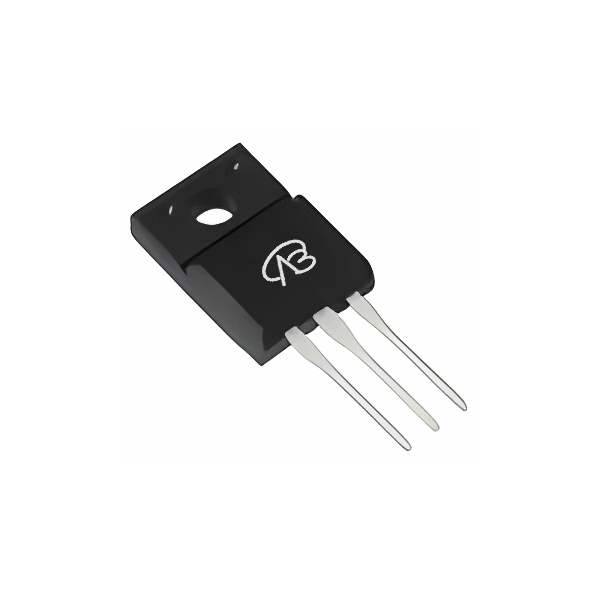
Comparative Analysis: FDPF13N50FT (N-channel, TO-220F) vs. VBMB155R18
Analysis of the Original Model (FDPF13N50FT) Core:
This is a 500V N-channel MOSFET from onsemi, utilizing UniFET™ technology based on planar stripe and DMOS processes. It is housed in a TO-220F package, offering good thermal performance. Its design core focuses on reducing conduction resistance, improving switching performance, and enhancing avalanche energy capability. Key parameters include a continuous drain current (Id) of 12A and an on-resistance (RDS(on)) of 420mΩ at 10V gate drive. The device also features improved body diode reverse recovery characteristics through lifetime control, making it suitable for high-voltage switching applications.
Compatibility and Differences of the Domestic Alternative (VBMB155R18):
VBsemi’s VBMB155R18 is a direct pin-to-pin compatible alternative in the same TO-220F package. The main differences lie in electrical parameters: VBMB155R18 offers a higher voltage rating (550V vs. 500V), a significantly higher continuous current (18A vs. 12A), and a lower on-resistance (260mΩ @10V vs. 420mΩ). This indicates that the domestic alternative provides enhanced current-handling capability and reduced conduction losses.
Key Application Areas:
Original Model FDPF13N50FT: Well-suited for medium-power high-voltage switching applications such as switch-mode power supplies (SMPS), power factor correction (PFC) stages, and electronic ballasts, where a balance of 500V rating, 12A current, and moderate RDS(on) is required.
Alternative Model VBMB155R18: Ideal for applications demanding higher voltage margins (550V), higher current capability (up to 18A), and lower conduction loss. It is a strong candidate for upgraded designs in SMPS, PFC, industrial power converters, or any application where improved efficiency and higher power density are desired.
Comparative Analysis: FDD5N50NZTM (N-channel, TO-252AA) vs. VBE165R05S
Analysis of the Original Model (FDD5N50NZTM) Core:
This is a 500V N-channel MOSFET from onsemi, part of the UniFET™ II series, and comes in a compact TO-252AA (DPAK) package. It is built on advanced planar stripe and DMOS technology, aiming for low on-resistance among planar MOSFETs, good switching performance, and high avalanche energy strength. It also integrates an internal gate-source ESD diode, providing robust protection against HBM surges above 2kV. Key specifications include a 4A continuous drain current and an RDS(on) of 1.38Ω at 10V gate drive. Its compact package makes it suitable for space-constrained applications.
Compatibility and Differences of the Domestic Alternative (VBE165R05S):
VBsemi’s VBE165R05S is a pin-to-pin compatible alternative in the TO-252 package. It uses a Super Junction Multi-EPI process. The domestic model offers a significantly higher voltage rating (650V vs. 500V) and a slightly higher continuous current (5A vs. 4A). However, its on-resistance is higher (1000mΩ @10V vs. 1.38Ω). This trade-off positions it for applications where higher voltage withstand capability is the primary concern over ultra-low conduction resistance.
Key Application Areas:
Original Model FDD5N50NZTM: Excellent for compact high-voltage applications where board space is limited, such as in flat-panel display (FPD) TV power supplies, ATX power supplies, LED lighting drivers, and electronic ballasts, benefiting from its 500V/4A rating, integrated ESD protection, and DPAK footprint.
Alternative Model VBE165R05S: More suitable for applications requiring a higher voltage safety margin (650V) and moderate current (5A), such as in certain offline SMPS, lighting systems, or industrial controls where surge immunity and voltage rating are prioritized, and the higher RDS(on) is acceptable within the power budget.
Summary
This comparative analysis reveals two distinct selection pathways:
For medium-power, high-voltage applications in a TO-220F package, the original FDPF13N50FT offers a reliable 500V/12A solution with proven performance. Its domestic alternative, VBMB155R18, presents a compelling "performance-enhanced" option with higher voltage (550V), higher current (18A), and lower RDS(on) (260mΩ), making it an excellent choice for efficiency-driven upgrades or new designs requiring higher margins.
For compact, high-voltage applications in a TO-252/DPAK package, the original FDD5N50NZTM provides a good balance of 500V rating, 4A current, and integrated ESD protection in a small footprint. Its domestic alternative, VBE165R05S, shifts the focus towards higher voltage robustness (650V) with a moderate current increase to 5A, suitable for scenarios where voltage endurance is critical, even with a higher conduction resistance.
Core Conclusion: Selection is not about absolute superiority but precise requirement matching. In the context of supply chain diversification, domestic alternatives like VBMB155R18 and VBE165R05S not only provide viable backup options but also offer specific parameter advantages—be it higher current capability or higher voltage ratings—giving engineers greater flexibility and resilience in design trade-offs and cost optimization. Understanding the design philosophy and parameter implications of each device is key to unlocking its full potential in your circuit.

Download PDF document
 Download now


