 中文
中文 English
MOSFET Selection for High-Power Automotive and Switching Applications: FDP86363-F085, FCP099N60E vs. China Alternatives VBM1803, VBM16R32S
Number of views:9999
 Back to previous page
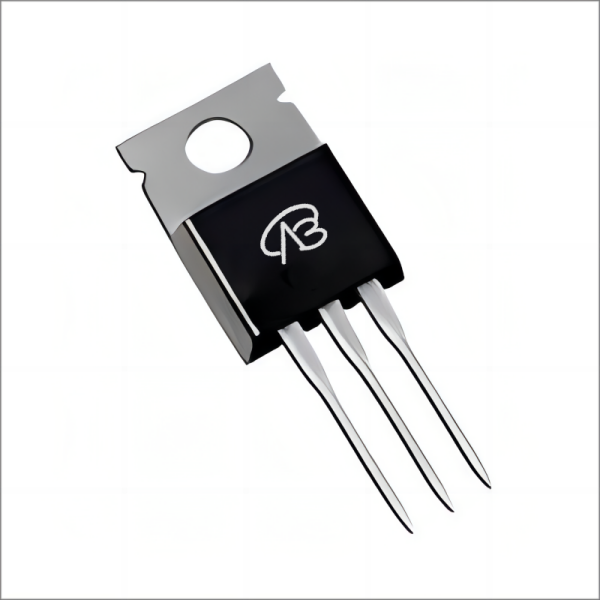
Comparative Analysis: FDP86363-F085 (80V N-Channel) vs. VBM1803
Analysis of the Original Model (FDP86363-F085) Core:
This is an 80V N-channel MOSFET from onsemi in a TO-220AB package. Its design core is to offer extremely low conduction loss and high current capability for automotive and power management applications. Key advantages include: a very low typical on-resistance (RDS(on)) of 2.4mΩ at 10V gate drive, a continuous drain current (Id) rating of 110A, and a typical total gate charge (Qg(tot)) of 131nC. It features UIS capability and is compliant with AEC-Q101 and RoHS standards, making it suitable for harsh automotive environments.
Compatibility and Differences of the Domestic Alternative (VBM1803):
VBsemi's VBM1803 is offered in a TO-220 package and serves as a functional pin-compatible alternative. The key parametric differences are: VBM1803 shares the same 80V drain-source voltage (Vdss) rating. It boasts a higher continuous drain current rating of 195A but has a slightly higher on-resistance of 3mΩ (at 10V Vgs) compared to the original's typical 2.4mΩ.
Key Application Areas:
Original Model FDP86363-F085: Its exceptional combination of ultra-low RDS(on) and high current rating makes it ideal for high-current switching in demanding 12V/24V automotive systems.
Automotive Engine Control & Powertrain Management: Used in modules requiring efficient high-current switching.
High-Current DC-DC Converters: Suitable for synchronous rectification or high-side switches in power supplies.
Alternative Model VBM1803: This model is an excellent alternative for applications where even higher continuous current capability (195A) is the priority, and a marginal increase in conduction loss (from 2.4mΩ to 3mΩ) is acceptable. It is well-suited for upgrading designs or as a cost-effective, high-current solution in automotive and industrial power stages.
Comparative Analysis: FCP099N60E (600V SuperFET II) vs. VBM16R32S
This comparison shifts focus to high-voltage switching applications, where the design pursuit is optimizing the trade-off between conduction loss and switching performance at elevated voltages.
Analysis of the Original Model (FCP099N60E) Core:
This 600V N-channel SuperFET II MOSFET from onsemi utilizes charge balance technology. Its core advantages are:
Excellent Conduction Performance: Achieves a low on-resistance of 87mΩ at 10V gate drive for a 37A rated device.
Optimized Switching Characteristics: As part of the "Easy-Drive" series, it offers slightly slower rise/fall times to help manage EMI and simplify design, making it ideal for applications where switching loss is not the primary constraint but EMI control is beneficial.
High Voltage Ruggedness: Features good dv/dt capability and avalanche energy rating, suitable for hard-switching topologies.
Compatibility and Differences of the Domestic Alternative (VBM16R32S):
VBsemi's VBM16R32S is a direct competitor in the 600V space. It uses a Super Junction Multi-EPI process. The parametric comparison shows:
Highly Comparable Performance: It matches the original closely with a 600V Vdss rating and an on-resistance of 85mΩ (at 10V Vgs), essentially identical to the FCP099N60E's 87mΩ.
Current Rating: The VBM16R32S has a slightly lower continuous current rating of 32A compared to the original's 37A.
Key Application Areas:
Original Model FCP099N60E: Its balanced performance makes it a strong choice for 600V applications where ease of design and EMI management are important.
Switch-Mode Power Supplies (SMPS): PFC stages, flyback, or forward converters.
Motor Drives: Inverters for industrial motor control.
Lighting: High-voltage LED drivers.
Alternative Model VBM16R32S: This model presents a compelling "performance-matched" alternative. With virtually identical on-resistance and voltage rating, it is highly suitable for direct replacement in many 600V switching applications, particularly where the full 37A current of the original is not fully utilized, offering a cost-effective and readily available solution.
Conclusion:
In summary, this analysis reveals two distinct selection pathways for high-power applications:
For 80V, high-current automotive and power applications, the original FDP86363-F085 sets a high benchmark with its ultra-low 2.4mΩ RDS(on) and 110A current rating, making it a top-tier choice for engine control and powertrain modules. Its domestic alternative, the VBM1803, offers a compelling value proposition by providing a significantly higher 195A current rating in a compatible package, making it ideal for designs prioritizing maximum current headroom or seeking a cost-optimized upgrade.
For 600V, high-voltage switching applications, the original FCP099N60E (SuperFET II Easy-Drive) provides an excellent balance of low conduction loss and simplified, lower-EMI switching. The domestic alternative VBM16R32S achieves remarkable parametric parity, matching its key specifications like 600V rating and ~85mΩ RDS(on), establishing itself as a viable and competitive direct replacement for a wide range of power supply and motor drive circuits.
The core conclusion is that selection hinges on precise requirement matching. In the context of supply chain diversification, these domestic alternatives not only provide reliable backup options but also offer competitive or enhanced performance in specific parameters (like current for VBM1803), giving engineers greater flexibility and resilience in design trade-offs and cost optimization. Understanding the design philosophy and parametric implications of each device is key to unlocking its full potential in your circuit.

Download PDF document
 Download now


