 中文
中文 English
MOSFET Selection for High-Power & Compact Switching: FDP61N20, FDMC3612 vs. China Alternatives VBM1202N, VBQF1101M
Number of views:9999
 Back to previous page
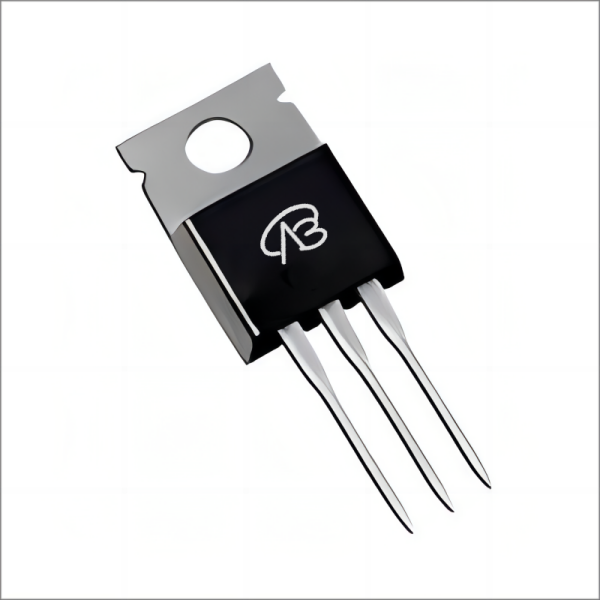
Comparative Analysis: FDP61N20 (N-channel) vs. VBM1202N
Analysis of the Original Model (FDP61N20) Core:
This is a 200V N-channel MOSFET from onsemi, in a standard TO-220 package. It is part of the UniFET™ series based on planar stripe and DMOS technology. Its design core is to deliver high voltage capability, low conduction loss, and robust switching performance in high-power conversion. Key advantages include: a high continuous drain current of 61A, a moderate on-resistance of 41mΩ at 10V gate drive, and enhanced avalanche energy rating. It is engineered for applications requiring high voltage blocking and efficient power handling.
Compatibility and Differences of the Domestic Alternative (VBM1202N):
VBsemi's VBM1202N is a direct pin-to-pin compatible alternative in the same TO-220 package. The key differences are in electrical performance: VBM1202N offers a significantly lower on-resistance of 17mΩ at 10V (versus 41mΩ) and a higher continuous current rating of 80A (versus 61A), while maintaining the same 200V voltage rating. This represents a substantial improvement in conduction loss and current-handling capability.
Key Application Areas:
Original Model FDP61N20: Ideal for high-voltage, high-current switching applications where robustness and proven performance are key. Typical uses include:
Power Factor Correction (PFC) stages in SMPS.
Flat Panel Display (FPD) TV power supplies.
ATX power supplies and electronic lamp ballasts.
Switching power converters requiring 200V breakdown.
Alternative Model VBM1202N: Suited for the same high-power applications as FDP61N20 but where lower conduction loss, higher current capacity, and improved thermal performance are desired. It is an excellent upgrade or replacement for designs seeking higher efficiency and power density.
Comparative Analysis: FDMC3612 (N-channel) vs. VBQF1101M
This comparison focuses on a lower-voltage, compact MOSFET designed for space-constrained, efficiency-sensitive applications.
Analysis of the Original Model (FDMC3612) Core:
This is a 100V N-channel MOSFET from onsemi, in a compact Power-33 (PowerDI®3333-8) package. It utilizes advanced PowerTrench® technology to minimize on-resistance while maintaining good switching performance. Its core advantages are: a balance of 100V voltage rating, 12A continuous current, and an on-resistance of 110mΩ at 10V gate drive (3.3A condition noted). The package offers a good trade-off between size and thermal dissipation.
Compatibility and Differences of the Domestic Alternative (VBQF1101M):
VBsemi's VBQF1101M is offered in a DFN8 (3x3) package, which is similarly compact. Electrically, it is a comparable alternative with a 100V rating. Key parameter differences: VBQF1101M has a lower continuous current rating of 4A (vs. 12A) and specifies on-resistance at two gate voltages: 150mΩ at 4.5V and 130mΩ at 10V. This makes it suitable for lower-current applications within the same voltage class.
Key Application Areas:
Original Model FDMC3612: Its combination of 100V rating, 12A current, and low on-resistance in a small package makes it ideal for:
Synchronous rectification in DC-DC converters (e.g., 48V/24V intermediate bus converters).
Motor drive circuits for small motors.
Power management in telecom, computing, and industrial boards where space and efficiency are concerns.
Alternative Model VBQF1101M: Best suited for compact 100V applications where the full 12A current of the original is not required. Its very small DFN package and lower current rating make it a fit for:
Low-side switches in moderate-power DC-DC circuits.
Load switching and power distribution in space-constrained modules.
Applications where gate drive voltage may be lower (e.g., 4.5V logic level driving).
Conclusion:
This analysis reveals two distinct selection pathways:
For high-voltage, high-current applications (200V class), the original FDP61N20 provides a reliable, robust solution for PFC, power supplies, and ballasts. Its domestic alternative VBM1202N presents a performance-enhanced option with significantly lower RDS(on) (17mΩ vs. 41mΩ) and higher current (80A vs. 61A), making it a superior choice for upgrades seeking higher efficiency and power handling in the same form factor.
For compact, medium-voltage applications (100V class), the original FDMC3612 offers an excellent balance of current (12A), voltage, and package size for synchronous rectification and motor drives. Its domestic alternative VBQF1101M serves as a space-optimized, lower-current alternative in a very small DFN package, suitable for designs where current demands are below 4A but 100V rating and miniaturization are critical.
The core takeaway is that selection hinges on precise requirement matching. Domestic alternatives like VBM1202N and VBQF1101M not only provide viable supply chain options but also offer targeted performance characteristics—from significant parameter upgrades to optimized size-current trade-offs—giving engineers greater flexibility in design optimization and cost management. Understanding each device's design intent and parameter implications is key to unlocking its full potential in your circuit.

Download PDF document
 Download now


