 中文
中文 English
MOSFET Selection for High-Power and High-Density Applications: FDP2D3N10C, NTMFS0D4N04XMT1G vs. China Alternatives VBM1103, VBQA1401
Number of views:9999
 Back to previous page
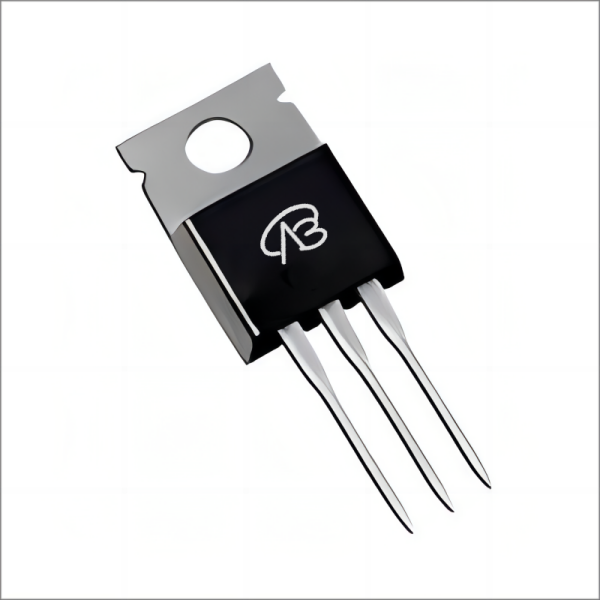
Comparative Analysis: FDP2D3N10C (N-channel, TO-220) vs. VBM1103
Analysis of the Original Model (FDP2D3N10C) Core:
This is a 100V N-channel MOSFET from onsemi in a standard TO-220 package. Its design core leverages onsemi's advanced PowerTrench process with shielded gate technology, optimized to minimize on-resistance while maintaining excellent switching performance and a superior body diode. Key advantages include an extremely high continuous drain current rating of 222A and a very low on-resistance of 2.3mΩ (measured at 10V, 100A), enabling efficient power handling with low conduction losses in high-current paths. Its robust 214W power dissipation rating ensures reliable operation in demanding thermal environments.
Compatibility and Differences of the Domestic Alternative (VBM1103):
VBsemi's VBM1103 is a direct pin-to-pin compatible alternative in the TO-220 package. The key differences lie in the electrical parameters: while it shares the same 100V voltage rating, its continuous current rating is 180A, and its on-resistance is specified as 3mΩ (at 10V). This indicates the original model holds an advantage in ultimate current capability and slightly lower conduction loss.
Key Application Areas:
Original Model FDP2D3N10C: Ideal for high-current switching applications where minimizing conduction loss and maximizing current throughput are paramount. Typical uses include:
High-power DC-DC converters and voltage regulators.
Motor drives and inverters for industrial equipment.
Power distribution switches and solid-state relays.
Automotive and industrial systems requiring robust 100V switching.
Alternative Model VBM1103: A viable domestic alternative suitable for many high-current applications within its 180A rating, offering a cost-effective and supply-chain-resilient option for designs where the extreme margin of the original is not fully utilized.
Comparative Analysis: NTMFS0D4N04XMT1G (N-channel, SO-8FL) vs. VBQA1401
This comparison shifts focus to high-density, high-efficiency applications where an exceptional balance of ultra-low resistance, high current, and a compact footprint is required.
Analysis of the Original Model (NTMFS0D4N04XMT1G) Core:
This onsemi MOSFET in the SO-8FL package represents state-of-the-art power density. Its core advantage is an astonishingly low on-resistance of 0.42mΩ (at 10V) paired with an exceptionally high continuous current rating of 509A. This combination, achieved in a small surface-mount package, is designed to minimize conduction losses and thermal stress in space-constrained, high-current applications. The 197W power dissipation rating is remarkable for its size.
Compatibility and Differences of the Domestic Alternative (VBQA1401):
VBsemi's VBQA1401, in a DFN8(5x6) package, serves as a compact alternative. Its parameters are strong: a 40V rating, 100A continuous current, and a low on-resistance of 0.8mΩ (at 10V). While its current rating and on-resistance are not as extreme as the original's record-breaking specs, it offers a compelling performance package in a small form factor for many mainstream high-current, low-voltage applications.
Key Application Areas:
Original Model NTMFS0D4N04XMT1G: Targets the most demanding high-density, high-efficiency scenarios. Its near-perfect conduction characteristics make it ideal for:
Synchronous rectification in high-current, low-voltage DC-DC converters (e.g., for servers, GPUs, AI accelerators).
Point-of-load (POL) converters requiring maximum efficiency and minimal voltage drop.
High-performance computing and telecom infrastructure power supplies.
Alternative Model VBQA1401: An excellent domestic choice for applications requiring high current (up to 100A) and low loss in a compact footprint, such as:
High-efficiency DC-DC buck converters in 12V/24V intermediate bus architectures.
Motor drives for drones, robotics, or compact tools.
Power management in space-constrained networking and storage equipment.
Conclusion:
This analysis reveals two distinct selection paradigms based on application priorities:
For high-power, high-current applications where thermal performance and absolute current handling are critical, the original FDP2D3N10C, with its 222A rating and 2.3mΩ RDS(on), remains a top-tier choice for the most demanding 100V circuits. Its domestic alternative VBM1103 provides a robust, compatible solution for a wide range of high-current needs up to 180A.
For ultra-high-density, high-efficiency applications pushing the limits of current density, the original NTMFS0D4N04XMT1G is in a league of its own with its 509A/0.42mΩ specification in an SO-8FL package. For designs where this extreme performance is essential, it is unmatched. The domestic alternative VBQA1401 emerges as a highly capable and compact solution for mainstream high-current (100A), low-voltage switching needs, offering an excellent balance of performance, size, and supply chain flexibility.
The core takeaway is that selection is driven by specific application demands—whether peak current, minimal loss, power density, or cost. Domestic alternatives like VBM1103 and VBQA1401 not only provide reliable backup options but also deliver strong performance, giving engineers greater flexibility in design and sourcing strategies.

Download PDF document
 Download now


