 中文
中文 English
MOSFET Selection for High-Voltage and High-Current Applications: FDP20N50F, FDD6637 vs. China Alternatives VBM165R20S, VBE2309
Number of views:9999
 Back to previous page
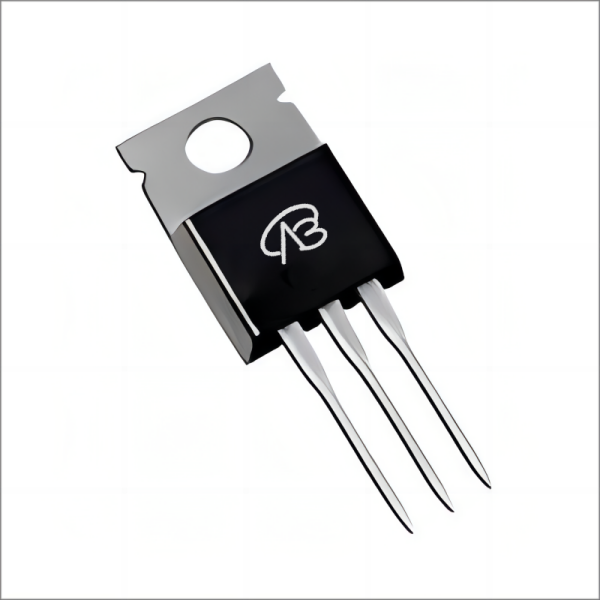
Comparative Analysis: FDP20N50F (N-channel) vs. VBM165R20S
Analysis of the Original Model (FDP20N50F) Core:
This is a 500V N-channel MOSFET from onsemi, in a standard TO-220 package. It is built on UniFET™ technology, combining planar stripe and DMOS processes. Its design core focuses on high-voltage switching with improved ruggedness and switching performance. Key advantages include a high avalanche energy rating and an optimized body diode with fast reverse recovery (trr < 100 ns) and high reverse dv/dt immunity (15 V/ns). This makes it suitable for applications where the body diode behavior is critical, potentially reducing external components. With a continuous drain current of 20A and an on-resistance of 260mΩ (at 10V, 10A), it balances voltage capability and conduction loss.
Compatibility and Differences of the Domestic Alternative (VBM165R20S):
VBsemi’s VBM165R20S is a direct pin-to-pin alternative in the same TO-220 package. The main differences are in electrical parameters: VBM165R20S offers a higher voltage rating (650V vs. 500V) and a significantly lower on-resistance of 160mΩ (at 10V). The continuous current rating remains 20A. This indicates a potential for lower conduction losses and a higher voltage safety margin in similar applications.
Key Application Areas:
Original Model FDP20N50F: Ideal for high-voltage switching applications where body diode performance is important. Typical uses include:
Power Factor Correction (PFC) circuits.
Switching power supplies for displays (FPD TV) and ATX systems.
Electronic lamp ballasts.
Alternative Model VBM165R20S: Suits applications requiring a higher voltage margin (up to 650V) and lower on-state loss. It is a strong candidate for upgrades in PFC, offline SMPS, and industrial power systems where enhanced efficiency and voltage ruggedness are desired.
Comparative Analysis: FDD6637 (P-channel) vs. VBE2309
Analysis of the Original Model (FDD6637) Core:
This is a 35V P-channel MOSFET from onsemi, in a TO-252 (DPAK) package. It utilizes PowerTrench® technology, focusing on achieving very low on-resistance for high-current applications. Its core advantage is an extremely low RDS(on) of 18mΩ (at 4.5V, 11A), coupled with a high continuous drain current of 55A. This makes it excellent for minimizing conduction losses in high-current load switching or power path management.
Compatibility and Differences of the Domestic Alternative (VBE2309):
VBsemi’s VBE2309 is a direct pin-to-pin alternative in the TO-252 package. It represents a significant "performance-enhanced" option. Key parameters show substantial improvement: a similar voltage rating (-30V), a much lower on-resistance of 11mΩ (at 4.5V) or 9mΩ (at 10V), and a higher continuous current rating of -60A. This translates to potentially lower power dissipation and higher current handling capability.
Key Application Areas:
Original Model FDD6637: Excellent for space-constrained, high-current switching applications where low forward voltage drop is critical. Typical uses include:
High-side load switches in computing, automotive, or power distribution.
Battery management and power path control in high-current systems.
Motor drive control circuits.
Alternative Model VBE2309: Ideal for upgraded scenarios demanding the lowest possible conduction loss and maximum current capacity. It is perfect for next-generation high-efficiency power switches, high-current DC-DC converters, and advanced motor drives where thermal performance and efficiency are paramount.
Conclusion
This analysis reveals two distinct selection strategies:
For high-voltage N-channel switching (500V range), the original FDP20N50F offers robust performance with a fast-recovery body diode, making it reliable for PFC and power supply applications. Its domestic alternative, VBM165R20S, provides a compelling upgrade path with a higher 650V rating and lower 160mΩ on-resistance, suitable for designs needing extra voltage headroom and reduced conduction loss.
For high-current P-channel load switching, the original FDD6637 sets a high standard with its 18mΩ on-resistance and 55A current in a compact DPAK package. The domestic alternative VBE2309 pushes the boundaries further with an ultra-low 9mΩ (10V) and 60A capability, representing a top-tier choice for maximizing efficiency in demanding high-current applications.
The core takeaway is that selection depends on precise requirement matching. Domestic alternatives like VBM165R20S and VBE2309 not only provide reliable compatibility but also offer performance enhancements in key parameters, giving engineers valuable options for optimizing efficiency, cost, and supply chain resilience.

Download PDF document
 Download now


