 中文
中文 English
MOSFET Selection for High-Power and Automotive Applications: FDP020N06B-F102, FDWS86380-F085 vs. China Alternatives VBM1602, VBGQA1810
Number of views:9999
 Back to previous page
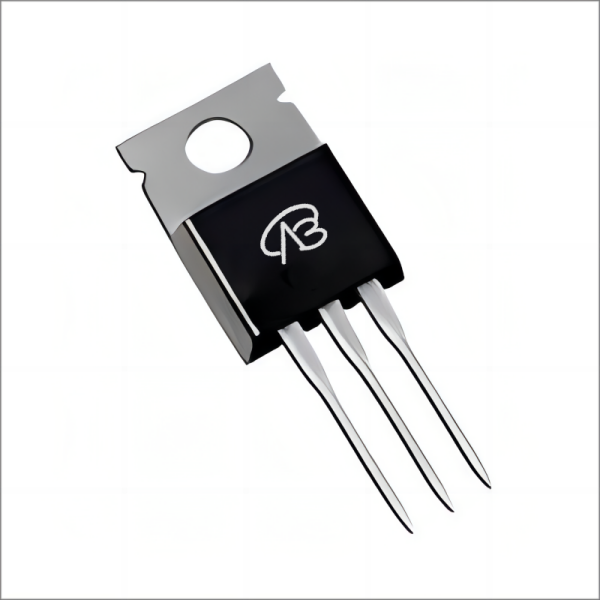
Comparative Analysis: FDP020N06B-F102 (N-channel) vs. VBM1602
Analysis of the Original Model (FDP020N06B-F102) Core:
This is a 60V N-channel MOSFET from onsemi, housed in the standard TO-220 package. Its design core, utilizing advanced PowerTrench technology, focuses on minimizing conduction loss while maintaining excellent switching performance for high-current applications. Key advantages include an extremely low on-resistance of 1.65mΩ (measured at 10V, 100A) and a massive continuous drain current rating of 313A, making it a powerhouse for handling severe current loads.
Compatibility and Differences of the Domestic Alternative (VBM1602):
VBsemi's VBM1602 is offered in the same TO-220 package, providing direct pin-to-pin compatibility. The key differences lie in the electrical parameters: while both are rated for 60V, the VBM1602 has a slightly higher on-resistance of 2.1mΩ (@10V) and a lower continuous current rating of 270A compared to the original. However, it maintains a very competitive high-current performance profile.
Key Application Areas:
Original Model FDP020N06B-F102: Its ultra-low RDS(on) and exceptional current capability (313A) make it ideal for high-power, high-current switching where conduction loss is paramount.
High-Current DC-DC Converters: Serving as the main switch in high-power server PSUs, telecom rectifiers, or industrial power supplies.
Motor Drives and Inverters: For driving large brushless DC (BLDC) motors or in inverter stages for high-power tools and industrial equipment.
Battery Management Systems (BMS): As a discharge control switch in high-current lithium battery packs for EVs or energy storage.
Alternative Model VBM1602: A robust domestic alternative suitable for applications requiring high-current handling (up to 270A) with a good balance of performance and cost. It is an excellent choice for upgrading or designing high-power systems where the extreme margin of the original is not fully utilized.
Comparative Analysis: FDWS86380-F085 (N-channel) vs. VBGQA1810
This comparison shifts focus to automotive-grade MOSFETs, where reliability, switching efficiency, and package suitability for automated assembly are critical.
Analysis of the Original Model (FDWS86380-F085) Core:
This is an 80V N-channel MOSFET from onsemi in a Power-56 package. Its design core is tailored for automotive engine control and powertrain management, emphasizing a balance of low on-resistance (11.3mΩ @10V, 50A), fast switching (Qg(tot) ~20nC), and ruggedness (UIS capability). It is AEC-Q101 qualified and features a solderable side flank for Automated Optical Inspection (AOI), aligning with stringent automotive manufacturing requirements.
Compatibility and Differences of the Domestic Alternative (VBGQA1810):
VBsemi's VBGQA1810 uses a compact DFN8(5x6) package, which is different from the Power-56 footprint. Electrically, it is a strong performance match: rated for the same 80V, with a slightly better on-resistance of 9.5mΩ (@10V) and a comparable continuous current rating of 58A. Its gate threshold voltage is also lower (1.7V vs. typical ~2-4V), which can be beneficial for low-voltage drive scenarios.
Key Application Areas:
Original Model FDWS86380-F085: Its automotive qualification and optimized parameters make it a preferred choice for demanding automotive environments.
Automotive Engine & Powertrain Control: For solenoid drivers, fuel injector drivers, and transmission control modules.
Automotive DC-DC Converters: In 48V mild-hybrid systems or other in-vehicle power conversion units.
Alternative Model VBGQA1810: This domestic alternative offers superior on-resistance and current rating in a more compact DFN package. It is well-suited for:
Space-constrained Automotive Applications: Where similar electrical performance is needed but board area is limited.
High-Efficiency Power Switches: In industrial or communication equipment requiring an 80V, ~50A switch with low conduction loss. (Note: Direct footprint compatibility is not provided; a board redesign is required).
Conclusion
In summary, this analysis reveals two distinct selection pathways based on application priorities:
For ultra-high-current applications (300A+ range) where minimizing conduction loss is critical, the original FDP020N06B-F102 with its benchmark 1.65mΩ RDS(on) and 313A rating holds a significant performance advantage. Its domestic alternative VBM1602, while offering slightly reduced specs, provides a highly capable and cost-effective solution for many high-power designs up to 270A, ensuring supply chain resilience.
For automotive and robust medium-power applications around 50-60A, the AEC-Q101 qualified FDWS86380-F085 offers a proven, manufacturing-friendly solution in the Power-56 package. The domestic alternative VBGQA1810 presents an interesting trade-off: it delivers superior electrical performance (9.5mΩ, 58A) in a smaller DFN package but requires a PCB layout change and may need verification for specific automotive-grade reliability requirements beyond basic parameters.
The core conclusion is that selection depends on precise requirement matching. Domestic alternatives like VBM1602 and VBGQA1810 not only provide viable backup options but also demonstrate competitive or even enhanced performance in key parameters, offering engineers greater flexibility in design optimization, cost control, and supply chain management. Understanding the specific demands of your application—be it peak current, thermal dissipation, automotive qualification, or board space—is essential to leverage the full value of these components.

Download PDF document
 Download now


