 中文
中文 English
MOSFET Selection for Low-Power Signal Switching: FDN359AN, 2N7000-D26Z vs. China Alternatives VB1330, VBR9N602K
Number of views:9999
 Back to previous page
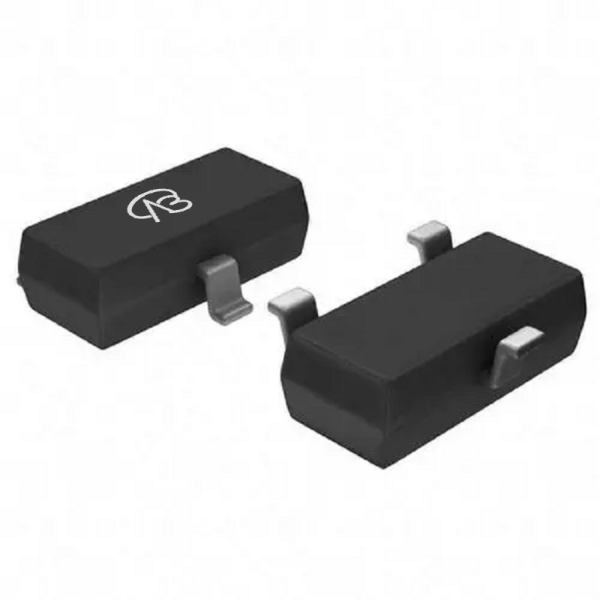
Comparative Analysis: FDN359AN (N-channel) vs. VB1330
Analysis of the Original Model (FDN359AN) Core:
This is a 30V N-channel logic-level MOSFET from onsemi, in a compact SOT-23 package. Its design core, utilizing advanced PowerTrench technology, focuses on minimizing on-resistance while maintaining excellent switching performance. Key advantages include: a low on-resistance of 60mΩ at a 4.5V gate drive, a continuous drain current of 2.7A, and suitability for fast switching in low-voltage applications.
Compatibility and Differences of the Domestic Alternative (VB1330):
VBsemi's VB1330 is also in an SOT23-3 package and is a direct pin-to-pin compatible alternative. It shows significant performance enhancement in key parameters: a similar 30V voltage rating, but a higher continuous current of 6.5A and a substantially lower on-resistance of 33mΩ@4.5V (30mΩ@10V).
Key Application Areas:
Original Model FDN359AN: Ideal for low-voltage, battery-powered applications requiring low conduction loss and fast switching, such as:
- Load switching and power management in portable electronics.
- Signal routing and level shifting in low-power digital circuits.
- As a switch in DC-DC converter modules for point-of-load regulation.
Alternative Model VB1330: With its lower RDS(on) and higher current capability, it is better suited for upgraded scenarios demanding higher efficiency and more robust current handling within the same voltage range, such as more demanding load switches or higher-current low-side switches.
Comparative Analysis: 2N7000-D26Z (N-channel) vs. VBR9N602K
Analysis of the Original Model (2N7000-D26Z) Core:
This is a classic 60V N-channel small-signal MOSFET from onsemi in a TO-92 package. Built with high-cell-density DMOS technology, it aims for robust and reliable switching with minimal on-resistance for its category. Key parameters include a 60V drain-source voltage, 200mA continuous current (with pulse capability up to 2A), and an on-resistance of 5Ω at 10V gate drive. It is a go-to component for low-voltage, low-current switching.
Compatibility and Differences of the Domestic Alternative (VBR9N602K):
VBsemi's VBR9N602K comes in a TO92 package, offering pin-to-pin compatibility. The parameters are closely matched: same 60V voltage rating, a slightly higher continuous current of 0.45A, and a comparable on-resistance of 2000mΩ@10V (2400mΩ@4.5V). It provides a reliable direct functional alternative.
Key Application Areas:
Original Model 2N7000-D26Z: Perfect for classic low-power signal switching and isolation applications, such as:
- Driving small relays, LEDs, or other low-current peripherals in microcontroller circuits.
- Signal level translation and interfacing.
- General-purpose switching in consumer electronics and industrial control where current demands are below 400mA.
Alternative Model VBR9N602K: Serves as a reliable domestic drop-in replacement for the 2N7000 in its traditional application spaces, ensuring supply chain diversification without redesign.
Conclusion
This analysis reveals two distinct replacement strategies:
For the FDN359AN, the domestic alternative VB1330 is not just a compatible replacement but a performance-enhanced upgrade, offering significantly lower RDS(on) and higher current capability for designs seeking greater efficiency and power handling in a similar footprint.
For the 2N7000-D26Z, the domestic alternative VBR9N602K acts as a direct and reliable functional substitute, with closely matched electrical parameters, ensuring seamless replacement in classic low-power switching roles.
The core takeaway is that selection depends on precise requirement matching. In the landscape of supply chain diversification, domestic alternatives like VB1330 and VBR9N602K provide viable, and sometimes superior, options. They offer engineers greater flexibility and resilience in design, balancing performance, cost, and component availability for low-power signal switching applications.

Download PDF document
 Download now


