 中文
中文 English
MOSFET Selection for Low-Voltage Power Management: FDN306P, FDC8884 vs. China Alternatives VB2240, VB7322
Number of views:9999
 Back to previous page
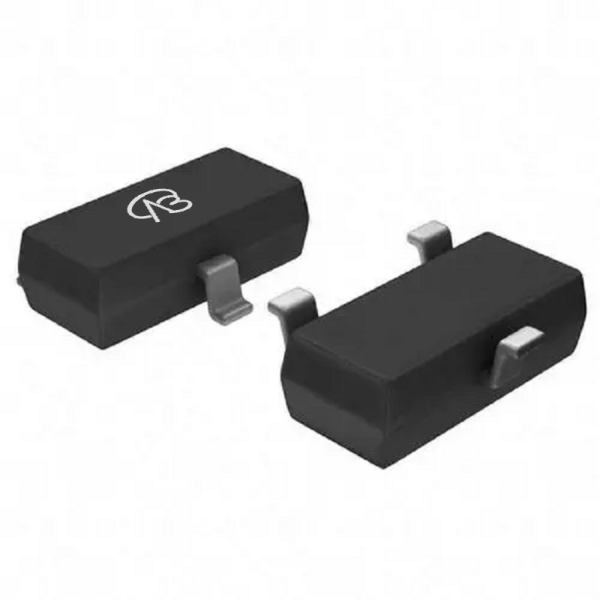
Comparative Analysis: FDN306P (P-channel) vs. VB2240
Analysis of the Original Model (FDN306P) Core:
This is a 12V P-channel MOSFET from onsemi, packaged in the compact SOT-23. Its design core is optimized for battery management and low-voltage applications using an advanced low-voltage PowerTrench process. Key advantages include a specified gate drive voltage as low as 1.8V, with an on-resistance (RDS(on)) of 80mΩ at 1.8V, and a continuous drain current (Id) of 2.6A. It is particularly suitable for space-constrained, battery-powered devices requiring efficient power switching.
Compatibility and Differences of the Domestic Alternative (VB2240):
VBsemi's VB2240 is also housed in an SOT23-3 package and serves as a direct pin-to-pin compatible alternative. The main differences are in electrical parameters: VB2240 offers a higher voltage rating (-20V) and significantly lower on-resistance—46mΩ at 2.5V and 34mΩ at 4.5V—compared to the original. However, its continuous current rating is -5A, which is higher than the FDN306P's 2.6A.
Key Application Areas:
Original Model FDN306P: Ideal for low-voltage (e.g., 1.8V-3.3V) battery management systems, load switching in portable electronics, IoT devices, and power rail control where ultra-low gate drive voltage is essential.
Alternative Model VB2240: Better suited for applications requiring a higher voltage margin (up to -20V), lower conduction loss (lower RDS(on)), and moderate current switching (up to -5A), such as in more robust power path management or DC-DC conversion in handheld devices.
Comparative Analysis: FDC8884 (N-channel) vs. VB7322
Analysis of the Original Model (FDC8884) Core:
This 30V N-channel MOSFET from onsemi uses the SuperSOT-6 package and is built on an advanced Power Trench® process optimized for low RDS(on) and good switching performance. Its core advantages are a low on-resistance of 23mΩ at 10V gate drive and a continuous drain current of 8A, making it efficient for power management tasks in intermediate current ranges.
Compatibility and Differences of the Domestic Alternative (VB7322):
VBsemi's VB7322 comes in an SOT23-6 package and is a functional alternative. While it shares the same 30V voltage rating, its key parameters show some variation: it has a slightly higher on-resistance (27mΩ at 4.5V and 26mΩ at 10V) and a lower continuous current rating of 6A compared to the FDC8884's 8A.
Key Application Areas:
Original Model FDC8884: Excellent for applications like synchronous rectification in DC-DC converters (e.g., 12V/24V systems), motor drives for small fans or pumps, and load switches in computing or communication equipment where 8A current capability and low RDS(on) are needed.
Alternative Model VB7322: A suitable alternative for similar 30V systems where the current requirement is within 6A. It offers a good balance of performance and cost for applications like power management in consumer electronics, peripheral switching, or lower-current motor control.
Conclusion:
This comparison outlines two distinct selection paths:
For low-voltage P-channel applications critical in battery-powered devices, the original FDN306P, with its 1.8V specified gate drive and SOT-23 footprint, remains a strong choice for ultra-low-voltage switching. Its domestic alternative, VB2240, offers a compelling upgrade with a higher voltage rating, significantly lower on-resistance, and higher current capability, making it excellent for designs needing improved efficiency and margin.
For 30V N-channel applications focused on efficiency in the medium-current range, the original FDC8884 provides a robust solution with its 23mΩ RDS(on) and 8A current in a SuperSOT-6 package. The domestic alternative VB7322, while having a slightly higher RDS(on) and lower current rating (6A), presents a viable, cost-effective option for applications where full 8A capability is not required.
The core takeaway is that selection depends on precise requirement matching. In the context of supply chain diversification, domestic alternatives like VB2240 and VB7322 not only provide reliable backup options but also offer specific parameter advantages, giving engineers greater flexibility in design trade-offs and cost optimization. Understanding each device's design philosophy and parameter implications is key to leveraging its full value in your circuit.

Download PDF document
 Download now


