 中文
中文 English
MOSFET Selection for Power Applications: FDD9509L-F085, FDPF2D3N10C vs. China Alternatives VBE2406, VBGMB1103
Number of views:9999
 Back to previous page
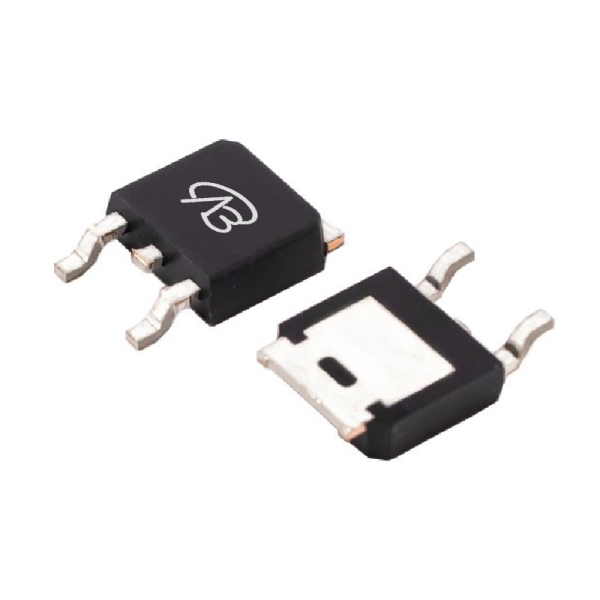
Comparative Analysis: FDD9509L-F085 (P-channel) vs. VBE2406
Analysis of the Original Model (FDD9509L-F085) Core:
This is a -40V P-channel MOSFET from onsemi, packaged in DPAK (TO-252). Its design focuses on high-current handling and low conduction loss in a compact power package. Key advantages include a very low on-resistance of 4.4 mΩ (typical) and a continuous drain current rating of -100 A, supported by a power dissipation capability of 150 W. It uses PowerTrench technology to optimize RDS(on) and switching performance.
Compatibility and Differences of the Domestic Alternative (VBE2406):
VBsemi’s VBE2406 is also offered in TO-252 and serves as a pin-to-pin compatible alternative. Electrically, it matches the voltage rating (-40 V) and offers a similar continuous current (-90 A). The on-resistance is slightly higher at 6.8 mΩ @ 10 V compared to the original’s 4.4 mΩ, but remains competitive for many high-current applications.
Key Application Areas:
Original Model FDD9509L-F085: Ideal for high-current switching in medium-power systems, such as:
- High-side switches in 12 V/24 V DC-DC converters.
- Motor drives and solenoid drivers.
- Power distribution and load switching in automotive or industrial boards.
Alternative Model VBE2406: Suitable for applications requiring a -40 V P-channel MOSFET with high current capability (up to -90 A) and a cost-effective, supply-chain-resilient option. It fits well in power management circuits where slightly higher RDS(on) is acceptable.
Comparative Analysis: FDPF2D3N10C (N-channel) vs. VBGMB1103
Analysis of the Original Model (FDPF2D3N10C) Core:
This N-channel MOSFET from onsemi is designed for very low conduction loss and high current capability. It features a 100 V drain-source voltage, an impressive continuous current rating of 222 A, and an ultra-low on-resistance of 2.3 mΩ @ 10 V. The device uses advanced PowerTrench with shielded gate technology, offering optimized RDS(on) and excellent switching performance with a soft body diode.
Compatibility and Differences of the Domestic Alternative (VBGMB1103):
VBsemi’s VBGMB1103 is provided in TO-220F package and is a functional alternative. It matches the voltage rating (100 V) but has a lower continuous current rating of 80 A. The on-resistance is slightly higher at 2.9 mΩ @ 10 V. Despite the reduced current capability, it remains suitable for many medium-to-high-power applications where full 222 A is not required.
Key Application Areas:
Original Model FDPF2D3N10C: Excels in high-power, high-efficiency applications, such as:
- Synchronous rectification in high-current DC-DC converters (e.g., server, telecom power supplies).
- Motor drives for industrial equipment or electric vehicles.
- Inverter and power stage designs requiring minimal conduction loss.
Alternative Model VBGMB1103: A practical choice for applications needing 100 V rating and low RDS(on) at a lower current level (up to 80 A). It is well-suited for motor drives, switching power supplies, and other circuits where the extreme current of the original is not necessary.
Conclusion
This comparison highlights two distinct selection paths:
For P-channel high-current applications, the original FDD9509L-F085 offers outstanding performance with 4.4 mΩ RDS(on) and -100 A current capability, making it ideal for demanding power switches. The domestic alternative VBE2406 provides a compatible, cost-effective solution with slightly higher RDS(on) but still high current (-90 A), suitable for many real-world designs.
For N-channel ultra-low-loss applications, the original FDPF2D3N10C stands out with its 2.3 mΩ RDS(on) and 222 A current rating, targeting the highest efficiency in high-power systems. The domestic alternative VBGMB1103 offers a balanced option with 2.9 mΩ RDS(on) and 80 A current, fitting well in applications that do not require the extreme current of the original.
The core insight is that selection depends on precise requirement matching. Domestic alternatives not only provide supply chain diversification but also deliver competitive performance in key parameters, giving engineers more flexibility in design trade-offs and cost control. Understanding each device’s design philosophy and parameter implications is essential to maximize its value in your circuit.

Download PDF document
 Download now


