 中文
中文 English
MOSFET Selection for High-Efficiency Power Conversion: FDD8880, NTTFS5C466NLTAG vs. China Alternatives VBE1307, VBQF1405
Number of views:9999
 Back to previous page
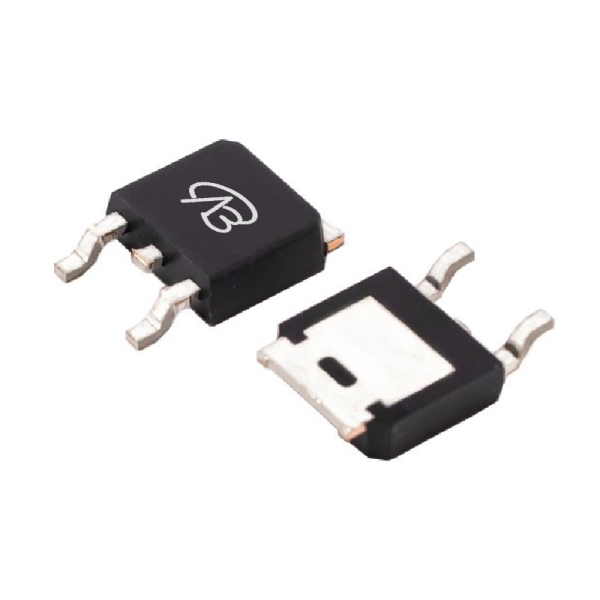
Comparative Analysis: FDD8880 (N-channel) vs. VBE1307
Analysis of the Original Model (FDD8880) Core:
This is a 30V N-channel MOSFET from onsemi, in a TO-252AA package. It is engineered to maximize total efficiency in DC/DC converters. Key advantages include a low on-resistance of 12mΩ at 4.5V gate drive and a high continuous drain current rating of 89A. It is optimized for low gate charge, low RDS(ON), and fast switching, making it suitable for both synchronous and traditional PWM controller topologies.
Compatibility and Differences of the Domestic Alternative (VBE1307):
VBsemi's VBE1307 is a direct alternative in a TO-252 package. It shows enhanced performance in key areas: a lower on-resistance of 6mΩ at 4.5V (and 5mΩ at 10V) and a robust continuous current rating of 80A at the same 30V voltage rating. This represents a significant reduction in conduction loss compared to the original.
Key Application Areas:
Original Model FDD8880: Ideal for high-current DC/DC conversion where efficiency is critical, such as in server power supplies, high-performance computing VRMs, and automotive power systems using synchronous rectification.
Alternative Model VBE1307: Suited for upgrade scenarios demanding lower conduction losses and high current handling (up to 80A) in 30V systems, offering a performance-enhanced drop-in replacement.
Comparative Analysis: NTTFS5C466NLTAG (N-channel) vs. VBQF1405
Analysis of the Original Model (NTTFS5C466NLTAG) Core:
This is a 40V N-channel MOSFET from onsemi, featuring a compact WDFN-8-EP (3.3x3.3mm) package. Its design focuses on minimizing size while maintaining performance. Key features include a low on-resistance of 6.1mΩ at 10V, a continuous current of 51A, and low capacitance to reduce drive losses. It is optimized for space-constrained, high-efficiency applications.
Compatibility and Differences of the Domestic Alternative (VBQF1405):
VBsemi's VBQF1405 uses a compatible DFN8(3x3) package. It offers a superior on-resistance of 4.5mΩ at 10V and a continuous current rating of 40A at the same 40V rating. While the current rating is slightly lower, the significantly reduced RDS(on) translates to lower conduction losses and improved thermal performance in many scenarios.
Key Application Areas:
Original Model NTTFS5C466NLTAG: Perfect for compact designs requiring high efficiency and power density, such as point-of-load (POL) converters, USB-PD adapters, and motor drives in portable or space-limited equipment.
Alternative Model VBQF1405: An excellent choice for applications prioritizing ultra-low conduction loss (4.5mΩ) within a 40V, ~40A range, offering a high-performance alternative in the same compact footprint for DC-DC conversion and motor control.
Conclusion:
This comparison outlines two distinct selection pathways:
For high-current 30V applications, the original FDD8880 offers robust 89A capability, while its domestic alternative VBE1307 provides a compelling upgrade with significantly lower on-resistance (6mΩ vs. 12mΩ) for enhanced efficiency.
For compact 40V applications, the original NTTFS5C466NLTAG delivers excellent power density, and the domestic alternative VBQF1405 pushes performance further with an ultra-low 4.5mΩ RDS(on), ideal for minimizing losses.
The core takeaway is precise requirement matching. Domestic alternatives like VBE1307 and VBQF1405 not only offer reliable compatibility but also present opportunities for performance gains and supply chain resilience, giving engineers greater flexibility in design and cost optimization.

Download PDF document
 Download now


