 中文
中文 English
MOSFET Selection for High-Power and High-Frequency Applications: FDD86567-F085, FDMC86320 vs. China Alternatives VBGE1603, VBGQF1810
 Back to previous page
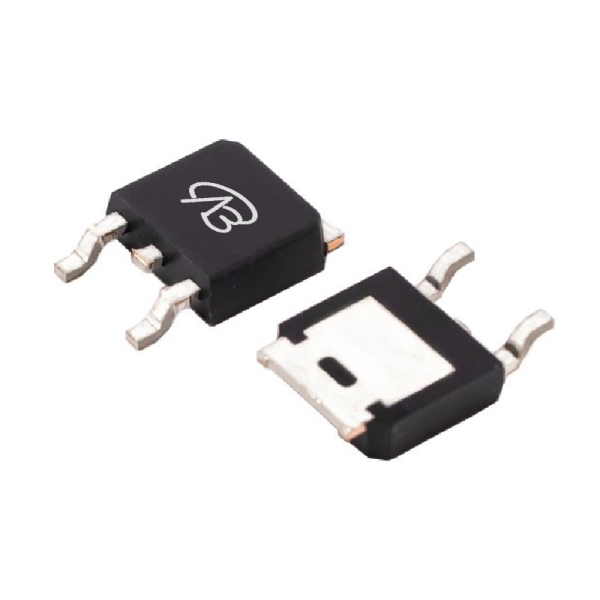
In the design of automotive and high-efficiency power systems, selecting a MOSFET that delivers robust performance, reliability, and thermal efficiency is a critical engineering challenge. It involves a careful balance among current handling, switching efficiency, package thermal capability, and supply chain stability. This article uses two highly representative MOSFETs, the high-current FDD86567-F085 (N-channel) and the high-frequency optimized FDMC86320 (N-channel), as benchmarks. We will deeply analyze their design cores and application scenarios, and provide a comparative evaluation of two domestic alternative solutions, VBGE1603 and VBGQF1810. By clarifying their parameter differences and performance orientations, we aim to provide a clear selection map to help you find the most suitable power switching solution in the complex component landscape.
Comparative Analysis: FDD86567-F085 (N-channel) vs. VBGE1603
Analysis of the Original Model (FDD86567-F085) Core:
This is a 60V N-channel MOSFET from onsemi, in a DPAK (TO-252) package. Its design core is to provide extremely high current capability with low conduction loss in automotive and high-power applications. Key advantages include: a very low typical on-resistance of 2.6mΩ (at VGS=10V, ID=80A), a continuous drain current rating of 100A, and a total gate charge (Qg(tot)) of 63nC. It features UIS capability and is AEC-Q101 qualified, ensuring high reliability for automotive environments.
Compatibility and Differences of the Domestic Alternative (VBGE1603):
VBsemi's VBGE1603 is offered in the same TO-252 package, providing a pin-to-pin compatible alternative. The key parameters show a competitive profile: it matches the 60V voltage rating and offers a slightly higher continuous current rating of 120A. Its on-resistance is 3.4mΩ at 10V gate drive, which is slightly higher than the original's typical 2.6mΩ but remains in a very low range. It utilizes SGT (Shielded Gate Trench) technology for good switching performance.
Key Application Areas:
Original Model FDD86567-F085: Its exceptional current handling (100A) and ultra-low RDS(on) make it ideal for high-current automotive and industrial switches.
Automotive Engine Control & Powertrain Management: Acts as a main switch in motor drivers, solenoid drivers, or battery management systems.
High-Current DC-DC Converters: Suitable for the high-side or low-side switch in synchronous buck/boost converters requiring very low conduction loss.
Power Distribution Units (PDUs): Used in high-current load switching applications.
Alternative Model VBGE1603: Serves as a powerful domestic alternative for the same high-current applications. Its 120A current rating and 3.4mΩ RDS(on) make it suitable for upgrades or direct replacements in systems where its slightly higher RDS(on) is acceptable within the thermal design, offering a reliable and potentially cost-effective solution.
Comparative Analysis: FDMC86320 (N-channel) vs. VBGQF1810
This N-channel MOSFET is optimized for high-frequency switching efficiency in compact power converters.
Analysis of the Original Model (FDMC86320) Core:
This 80V N-channel MOSFET from onsemi uses a compact WDFN-8 (3.3x3.3) package. Its design pursuit is the optimal balance of 'low gate charge, low RDS(on), and fast switching' to maximize DC/DC converter efficiency and minimize switching node noise. Core advantages include: an on-resistance of 11.7mΩ at 10V gate drive, a continuous drain current of 10.7A (22A at Tc), and optimization for low Qg and fast body diode reverse recovery.
Compatibility and Differences of the Domestic Alternative (VBGQF1810):
VBsemi's VBGQF1810 uses a compatible DFN8(3x3) package. It represents a significant "performance-enhanced" alternative. It matches the 80V voltage rating but offers dramatically higher continuous current capability (51A vs. 10.7A) and a lower on-resistance of 9.5mΩ at 10V gate drive. This combination suggests potentially lower conduction loss and a higher current margin for similar or more demanding applications.
Key Application Areas:
Original Model FDMC86320: Its optimized switching characteristics make it an excellent choice for high-frequency, efficiency-critical power converters.
Synchronous DC-DC Converters: Ideal as the control or sync FET in high-frequency buck/boost converters for computing, telecom, or industrial power supplies.
POL (Point-of-Load) Converters: Where fast switching and compact size are paramount.
Motor Drive Inverters: For driving smaller brushless DC (BLDC) motors in compact spaces.
Alternative Model VBGQF1810: Is highly suitable for applications requiring an upgrade in current capability and conduction performance within the same compact footprint. Its 51A rating and 9.5mΩ RDS(on) make it a compelling choice for next-generation, higher-power-density DC-DC converters or motor drives where the original model's current limit might be a constraint.
Conclusion
In summary, this analysis reveals two distinct selection paths based on application priority:
For high-current, high-reliability automotive and power applications, the original model FDD86567-F085, with its ultra-low 2.6mΩ typical RDS(on) and 100A current rating in a robust DPAK package, sets a high benchmark. Its domestic alternative VBGE1603 provides a compatible, high-current (120A) option with slightly higher RDS(on), serving as a viable alternative or upgrade where current capability is the primary driver.
For high-frequency, compact DC/DC converter applications, the original model FDMC86320 offers a finely tuned balance of switching performance and on-resistance in a miniaturized package. The domestic alternative VBGQF1810 provides substantial "performance enhancement" in current (51A) and on-resistance (9.5mΩ), opening doors for higher power density designs within the same board space.
The core conclusion is that selection hinges on precise requirement matching. In the context of supply chain diversification, domestic alternatives like VBGE1603 and VBGQF1810 not only offer feasible backup options but also present opportunities for parameter surpassing, giving engineers greater flexibility and resilience in design trade-offs and cost control. Understanding the design philosophy and parameter implications of each device is key to unlocking its full potential in your circuit.

Download PDF document
 Download now


