 中文
中文 English
MOSFET Selection for High-Voltage Switching and High-Current Rectification: FDD7N25LZTM, NTMFS3D5N08XT1G vs. China Alternatives VBE1252M, VBGQA1803
Number of views:9999
 Back to previous page
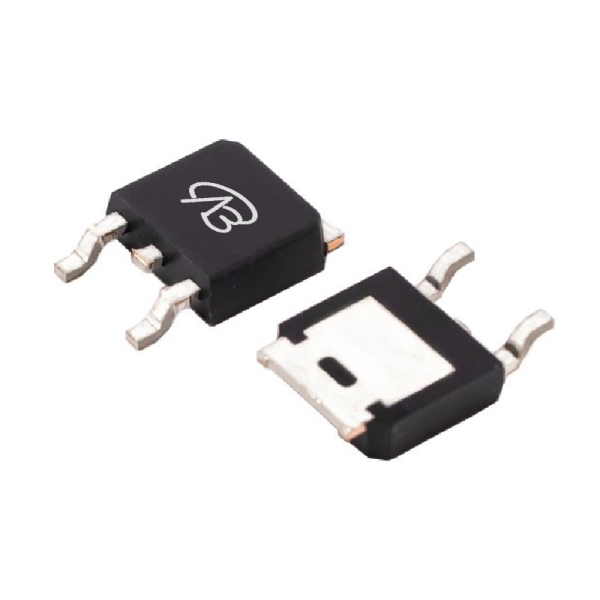
Comparative Analysis: FDD7N25LZTM (High-Voltage N-channel) vs. VBE1252M
Analysis of the Original Model (FDD7N25LZTM) Core:
This is a 250V N-channel MOSFET from onsemi, in a TO-252 (DPAK) package. As part of the UniFET™ series based on planar stripe and DMOS technology, its design core is to provide robust high-voltage switching. Key advantages include a high drain-source voltage (Vdss) of 250V, a continuous drain current (Id) of 6.2A, and features optimized for lower conduction resistance, improved switching performance, and higher avalanche energy strength.
Compatibility and Differences of the Domestic Alternative (VBE1252M):
VBsemi's VBE1252M is a direct package-compatible alternative in TO-252. The key differences are in electrical parameters: while both are 250V N-channel devices, the VBE1252M offers a significantly higher continuous current rating of 17A and a drastically lower on-resistance of 176mΩ @ 10V (compared to 450mΩ @ 5V for the original). This represents a major performance enhancement in current handling and conduction loss.
Key Application Areas:
Original Model FDD7N25LZTM: Its high voltage rating makes it suitable for switching power converter applications like Power Factor Correction (PFC), Flat Panel Display (FPD) TV power supplies, ATX power supplies, and electronic lamp ballasts.
Alternative Model VBE1252M: With its superior current capability and lower RDS(on), it is an excellent upgraded choice for the same high-voltage applications, potentially offering higher efficiency, lower thermal stress, and support for higher power levels within the same 250V systems.
Comparative Analysis: NTMFS3D5N08XT1G (High-Current N-channel) vs. VBGQA1803
Analysis of the Original Model (NTMFS3D5N08XT1G) Core:
This onsemi MOSFET in an SO-8FL package is engineered for high-current, high-efficiency power conversion. Its design pursuit is the ultimate minimization of losses in synchronous rectification. Core advantages are reflected in:
Exceptional Current Handling: A very high continuous drain current of 135A at 80V Vdss.
Ultra-Low Conduction Loss: An extremely low on-resistance of 3mΩ @ 10V.
Optimized Switching Characteristics: Features like low QRR (Reverse Recovery Charge) for a soft recovery body diode, and low Qg (Gate Charge) to minimize driving losses, make it ideal for high-frequency switching.
Compatibility and Differences of the Domestic Alternative (VBGQA1803):
VBsemi's VBGQA1803, in a DFN8(5x6) package, is a performance-competitive alternative. It matches the 80V voltage rating and pushes the boundaries further: offering a slightly higher continuous current of 140A and an impressively low on-resistance of 2.65mΩ @ 10V. This indicates potential for even lower conduction losses in similar applications.
Key Application Areas:
Original Model NTMFS3D5N08XT1G: Its ultra-low RDS(on) and high current capability make it an ideal choice for high-efficiency, high-current synchronous rectification in DC-DC and AC-DC converters, as well as a primary switch in isolated DC-DC converters.
Alternative Model VBGQA1803: With its marginally better current and resistance specs, it is perfectly suited for the same demanding applications in synchronous rectification and primary switching, providing a viable and potentially more efficient domestic alternative for next-generation power designs.
Conclusion
This analysis reveals two distinct selection paths with compelling domestic alternatives:
1. For high-voltage (250V) switching applications, the original FDD7N25LZTM provides reliable performance. Its domestic alternative VBE1252M offers a significant performance upgrade in current (17A vs. 6.2A) and on-resistance, making it a powerful choice for enhancing efficiency and power density in existing 250V designs like PFC and power supplies.
2. For high-current, low-voltage (80V) synchronous rectification applications, the original NTMFS3D5N08XT1G sets a high benchmark with 135A current and 3mΩ RDS(on). The domestic alternative VBGQA1803 competes closely, offering slightly superior specs (140A, 2.65mΩ), presenting a strong alternative for engineers seeking supply chain diversification without compromising on peak performance.
The core conclusion is that selection hinges on precise requirement matching. In the context of supply chain diversification, these domestic alternative models not only provide reliable backup options but also demonstrate competitive or superior performance in key parameters. This offers engineers greater flexibility and resilience in design trade-offs and cost control, empowering them to build more efficient and robust power systems.

Download PDF document
 Download now


