 中文
中文 English
MOSFET Selection for High-Power and Ultra-Portable Applications: FDBL0110N60, FDMA530PZ vs. China Alternatives VBGQT1601, VBQG2317
Number of views:9999
 Back to previous page
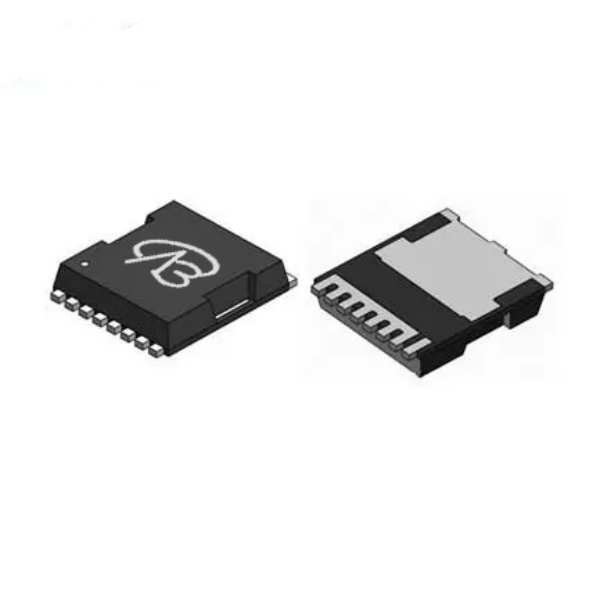
Comparative Analysis: FDBL0110N60 (N-channel) vs. VBGQT1601
Analysis of the Original Model (FDBL0110N60) Core:
This is a 60V N-channel MOSFET from onsemi in a TOLL (MO-299A) package, representing the pinnacle of high-current, low-loss design for demanding power stages. Its core advantages are an exceptionally low on-resistance of 1.1mΩ (at 10V, 80A) and an extremely high continuous drain current rating of 300A, supported by a massive 429W power dissipation capability. This combination is engineered to minimize conduction losses and handle immense power in applications like motor drives and high-density DC-DC converters.
Compatibility and Differences of the Domestic Alternative (VBGQT1601):
VBsemi's VBGQT1601 is also an N-channel MOSFET in a TOLL package, offering a direct pin-to-pin compatible alternative. It matches the original's voltage rating (60V) and gate threshold. The key differences lie in its enhanced electrical parameters: VBGQT1601 features a slightly lower on-resistance of 1mΩ (at 10V) and a higher continuous current rating of 340A. This represents a performance-upgraded alternative, promising potentially lower conduction loss and higher current headroom.
Key Application Areas:
Original Model FDBL0110N60: Ideal for high-power applications where minimizing conduction loss is paramount. Typical uses include:
High-current motor drives (e.g., industrial tools, eBikes).
Synchronous rectification in high-power server/telecom DC-DC converters.
Primary or secondary side switches in high-density power supplies.
Alternative Model VBGQT1601: Suited for the same high-power domains as the original but is an excellent choice for next-generation designs or upgrades requiring marginal improvements in efficiency (lower RDS(on)) and increased current capacity (340A), offering a performance-enhanced drop-in solution.
Comparative Analysis: FDMA530PZ (P-channel) vs. VBQG2317
Analysis of the Original Model (FDMA530PZ) Core:
This -30V P-channel MOSFET from onsemi uses a compact DFN-6-EP (2x2) package. Its design core is ultra-portable, space-constrained applications, specifically optimized for battery management and load switching in mobile devices. It offers a balanced performance with 35mΩ on-resistance (at 10V) and a 6.8A continuous current rating, and its MicroFET package provides excellent thermal performance for its tiny size, making it reliable for linear mode operation.
Compatibility and Differences of the Domestic Alternative (VBQG2317):
VBsemi's VBQG2317 is a P-channel MOSFET in an identical DFN6(2x2) package, ensuring direct pin-to-pin compatibility. The key parametric differences are notable: VBQG2317 matches the -30V voltage rating but offers a significantly lower on-resistance of 17mΩ (at 10V). However, its continuous current rating is -10A, which is higher than the original's 6.8A. This makes the alternative a compelling option where lower conduction loss within a similar voltage range is desired.
Key Application Areas:
Original Model FDMA530PZ: Perfectly tailored for space-critical, battery-powered portable electronics. Its primary applications are:
Load switches and power distribution in smartphones/tablets.
Charging switches in battery management systems (BMS).
Power rail isolation in ultra-portable IoT devices.
Alternative Model VBQG2317: Targets similar ultra-portable application scenarios but provides a clear advantage in efficiency due to its lower on-resistance. It is a strong alternative for designs where improving power path efficiency or needing slightly higher current capability (up to 10A) in a compact footprint is a priority.
Conclusion
In summary, this analysis reveals two distinct substitution strategies:
For high-power N-channel applications, the original FDBL0110N60 sets a high standard with its 1.1mΩ RDS(on) and 300A current capability. Its domestic alternative, VBGQT1601, not only serves as a fully compatible replacement but also offers a performance boost with 1mΩ RDS(on) and 340A current, making it an attractive upgrade path for enhancing efficiency and power handling.
For ultra-portable P-channel applications, the original FDMA530PZ is optimized for minimal space in devices like smartphones. Its domestic alternative, VBQG2317, maintains the same compact footprint while delivering superior efficiency through a much lower 17mΩ on-resistance, presenting a valuable option for reducing losses in next-generation portable designs.
The core takeaway is that selection is about precise requirement matching. In the context of supply chain diversification, these domestic alternatives provide not just reliable backups but also opportunities for parameter-specific enhancements, giving engineers greater flexibility in design optimization and cost management. Understanding the design intent and parametric trade-offs of each device is key to unlocking its full potential in your circuit.

Download PDF document
 Download now


