 中文
中文 English
MOSFET Selection for High-Voltage & Compact Power: FDB38N30U, NTLJD4116NT1G vs. China Alternatives VBL15R30S, VBQG3322
Number of views:9999
 Back to previous page
---
Comparative Analysis: FDB38N30U (High-Voltage N-channel) vs. VBL15R30S
Analysis of the Original Model (FDB38N30U) Core:
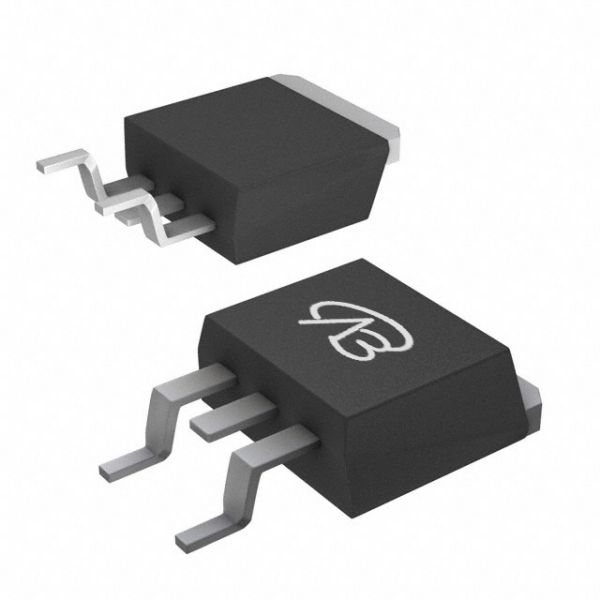
This is a 300V N-channel UniFET™ MOSFET from onsemi, in a D2PAK package. Its design core is to deliver high-voltage switching with superior body diode performance for improved system reliability. Key advantages are: High continuous drain current (38A), a robust 300V drain-source voltage rating, and an on-resistance of 103mΩ @10V. Its most distinctive feature is the advanced UniFET Ultra FRFET™ technology, offering exceptional body diode reverse recovery characteristics (trr < 50ns, reverse dv/dt immunity of 20V/ns). This allows it to eliminate extra components in applications requiring high diode performance.
Compatibility and Differences of the Domestic Alternative (VBL15R30S):
VBsemi's VBL15R30S is a high-voltage alternative in a TO-263 package. The main differences lie in the electrical parameters: VBL15R30S offers a significantly higher voltage rating (500V vs. 300V) and a similar continuous current rating (30A). Its on-resistance is moderately higher (140mΩ @10V). It utilizes SJ_Multi-EPI technology, targeting high-voltage, high-efficiency switching.
Key Application Areas:
Original Model FDB38N30U: Ideal for high-voltage switching applications where fast body diode recovery is critical to reduce losses and improve reliability. Typical applications include:
Power Factor Correction (PFC) circuits.
Switching power converters (e.g., for FPD TV power supplies, ATX power supplies).
Electronic lamp ballasts.
Alternative Model VBL15R30S: More suitable for applications requiring a higher voltage margin (up to 500V systems) with moderate current demands, such as higher-voltage off-line SMPS or industrial power systems where its SJ technology benefits efficiency.
---
Comparative Analysis: NTLJD4116NT1G (Dual N-channel) vs. VBQG3322
This dual N-channel MOSFET focuses on maximizing power density and efficiency in space-constrained, low-voltage applications.
Analysis of the Original Model (NTLJD4116NT1G) Core:
This onsemi component integrates two N-channel MOSFETs in a compact WDFN-6 (2x2mm) package. Its core advantages are:
Space-Saving Integration: Dual MOSFETs in an SC-88 compatible footprint with exposed pad for thermal performance.
Low On-Resistance: Offers one of the lowest RDS(on) solutions in a 2x2mm package (70mΩ @4.5V).
Logic-Level Capable: Rated for 1.5V gate drive, enabling use with low-voltage logic.
Low Profile: Height <0.8mm, suitable for ultra-thin designs.
Compatibility and Differences of the Domestic Alternative (VBQG3322):
VBsemi's VBQG3322 is a direct, pin-to-pin compatible alternative in a DFN6(2x2)-B package. It represents a "performance-enhanced" choice: It achieves significant improvement in key parameters: similar voltage rating (30V), but a higher continuous current per channel (5.8A vs. 4.6A) and a substantially lower on-resistance (26mΩ @4.5V vs. 70mΩ). This translates to lower conduction losses and higher current capability in the same footprint.
Key Application Areas:
Original Model NTLJD4116NT1G: An excellent choice for compact, low-voltage synchronous conversion and switching where board space is at a premium. Typical applications include:
DC-DC converters (buck and boost circuits) in portable devices.
Low-side load switches.
Power management in thin consumer electronics.
Alternative Model VBQG3322: Better suited for upgraded scenarios demanding higher efficiency and current capacity within the same miniature footprint. Ideal for next-generation, high-density DC-DC converters or applications where reducing conduction loss is critical.
---
Summary
This comparative analysis reveals two distinct selection paths:
For high-voltage switching applications where advanced body diode performance is key, the original FDB38N30U, with its 300V rating, 38A current capability, and superior Ultra FRFET™ characteristics, remains a strong choice for PFC and robust power converters. Its domestic alternative VBL15R30S offers a compelling option for designs requiring an even higher voltage rating (500V) and utilizes modern SJ technology, suitable for systems prioritizing voltage margin.
For space-constrained, low-voltage dual-MOSFET applications, the original NTLJD4116NT1G provides a proven, highly integrated solution with logic-level drive in a minuscule 2x2mm package. The domestic alternative VBQG3322 delivers notable "performance enhancement" in the same form factor, with significantly lower on-resistance and higher current rating, enabling more efficient and powerful compact designs.
The core conclusion is: Selection hinges on precise requirement matching. In the context of supply chain diversification, domestic alternatives not only provide viable backups but can offer parameter advancements—such as higher voltage ratings or lower RDS(on)—giving engineers greater flexibility and resilience in design trade-offs and cost control. Understanding each device's design philosophy and parameter implications is essential to maximize its value in your circuit.

Download PDF document
 Download now


