 中文
中文 English
MOSFET Selection for High-Power and Automotive Applications: FDB082N15A, NVMFS6H800NLWFT1G vs. China Alternatives VBGL11505, VBGQA1803
Number of views:9999
 Back to previous page
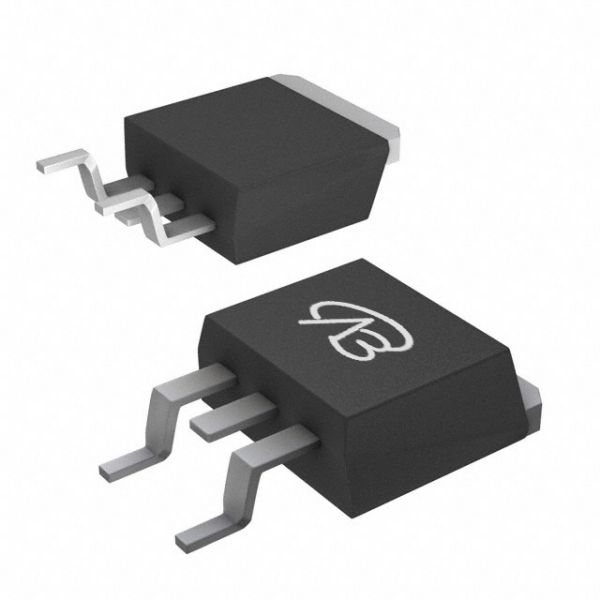
Comparative Analysis: FDB082N15A (N-channel) vs. VBGL11505
Analysis of the Original Model (FDB082N15A) Core:
This is a 150V N-channel MOSFET from onsemi, packaged in the robust D2PAK (TO-263). Its design core leverages the advanced PowerTrench process to minimize on-resistance while maintaining excellent switching performance. Key advantages include a high continuous drain current rating of 117A and a low on-resistance of 6.7mΩ (measured at 10V, 75A). This combination makes it a strong candidate for high-current applications requiring a high voltage blocking capability.
Compatibility and Differences of the Domestic Alternative (VBGL11505):
VBsemi's VBGL11505 is also offered in a TO-263 package, providing a form-factor compatible alternative. The key differences lie in the electrical parameters: while both are 150V, Single-N devices, the VBGL11505 offers a lower on-resistance of 5.6mΩ (@10V) and a slightly higher continuous current rating of 140A. This indicates a potential performance enhancement in conduction losses.
Key Application Areas:
Original Model FDB082N15A: Its high voltage (150V) and current (117A) capability make it well-suited for industrial power supplies, motor drives, and high-power DC-DC converters where robust performance is required.
Alternative Model VBGL11505: With its lower RDS(on) and higher current rating, it is positioned as a performance-enhanced alternative for similar high-power 150V applications, potentially offering lower conduction losses and improved thermal performance in designs like server power supplies, welding equipment, or high-current motor controllers.
Comparative Analysis: NVMFS6H800NLWFT1G (N-channel) vs. VBGQA1803
This comparison focuses on automotive-grade, high-current MOSFETs designed for compact and efficient layouts.
Analysis of the Original Model (NVMFS6H800NLWFT1G) Core:
This is an AEC-Q101 qualified, 80V N-channel MOSFET from onsemi, packaged in a DFN-5 (5.9x4.9mm) footprint with features like wettable flanks for enhanced optical inspection. Its design core prioritizes high power density and thermal performance in a minimal space for automotive applications. It boasts an exceptionally high continuous current of 224A and an ultra-low on-resistance of 1.9mΩ (@10V).
Compatibility and Differences of the Domestic Alternative (VBGQA1803):
VBsemi's VBGQA1803 uses a DFN8(5x6) package. While the footprint may differ, it serves as a functional alternative for compact, high-current 80V applications. Parametrically, it shares the same 80V rating but has a specified continuous current of 140A and an on-resistance of 2.65mΩ (@10V). It is described as an SGT (Shielded Gate Trench) MOSFET.
Key Application Areas:
Original Model NVMFS6H800NLWFT1G: Its automotive qualification (AEC-Q101, PPAP), ultra-low RDS(on), and very high current rating in a small package make it ideal for demanding automotive applications such as electric power steering (EPS), brake systems, 48V mild-hybrid systems, and high-current DC-DC converters within vehicles.
Alternative Model VBGQA1803: This model is suitable for compact, high-efficiency 80V applications where full automotive qualification may not be mandatory but high current density is required. Potential uses include high-power point-of-load converters, telecom power modules, or industrial motor drives where its SGT technology can offer good switching performance.
Summary
This analysis reveals two distinct selection scenarios:
1. For high-voltage (150V), high-current industrial applications, the original FDB082N15A offers proven performance with 117A capability and 6.7mΩ RDS(on). Its domestic alternative, VBGL11505, presents a compelling performance-enhanced option with lower resistance (5.6mΩ) and higher current (140A), potentially offering efficiency gains in next-generation designs.
2. For compact, high-current automotive or high-density 80V applications, the original NVMFS6H800NLWFT1G stands out with its AEC-Q101 certification, exceptional 224A current, and ultra-low 1.9mΩ RDS(on) in a tiny DFN package. The domestic alternative VBGQA1803 provides a viable solution for space-constrained 80V designs requiring high current (140A) and good efficiency, with its SGT technology, though with different package and current/on-resistance specifications.
Core Conclusion: Selection is not about absolute superiority but precise requirement matching. In the context of supply chain diversification, domestic alternatives like VBGL11505 and VBGQA1803 not only provide feasible backup options but also demonstrate competitive or enhanced performance in specific parameters. They offer engineers greater flexibility and resilience in design trade-offs, cost control, and performance optimization. A deep understanding of each device's design philosophy and parametric implications is essential to unlock its full potential within your circuit.

Download PDF document
 Download now


