 中文
中文 English
MOSFET Selection for High-Power and Automotive-Grade Applications: FDB075N15A, 2V7002WT1G vs. China Alternatives VBGL11505, VBK162K
Number of views:9999
 Back to previous page
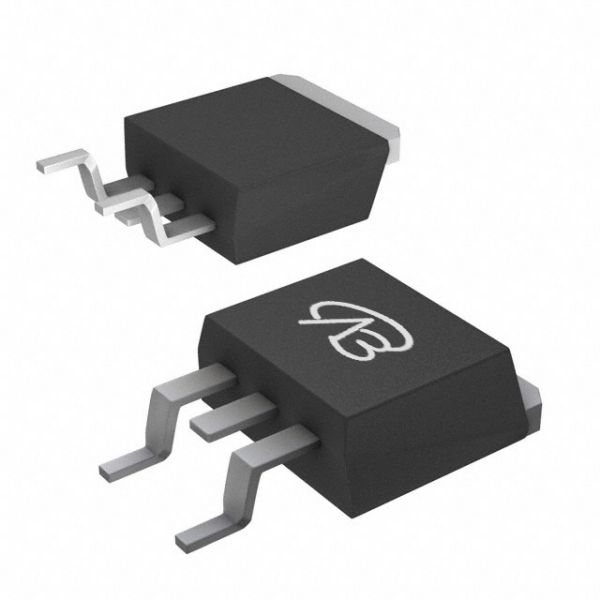
Comparative Analysis: FDB075N15A (High-Power N-channel) vs. VBGL11505
Analysis of the Original Model (FDB075N15A) Core:
This is a 150V N-channel MOSFET from onsemi, in a D2PAK (TO-263) package. Its design core leverages advanced PowerTrench® technology to minimize on-resistance while maintaining excellent switching performance. Key advantages include: a very low on-resistance of 6.25mΩ (measured at 10V, 100A), and a high continuous drain current rating of 130A. This makes it ideal for high-current switching applications where conduction loss is critical.
Compatibility and Differences of the Domestic Alternative (VBGL11505):
VBsemi's VBGL11505 is offered in a TO-263 package and serves as a functional alternative. The key differences in electrical parameters are: VBGL11505 features a comparable voltage rating (150V) and a slightly lower on-resistance of 5.6mΩ (@10V). Its continuous current rating is 140A, which is higher than the original model's 130A. This indicates an enhancement in both conduction performance and current handling capability.
Key Application Areas:
Original Model FDB075N15A: Its combination of high voltage (150V), very low RDS(on), and high current (130A) makes it suitable for demanding high-power applications.
Switching Power Supplies: Primary-side or synchronous rectification in server, telecom, and industrial SMPS.
Motor Drives & Inverters: For driving high-power brushless DC (BLDC) motors or in inverter stages.
High-Current DC-DC Converters: In power stages requiring minimal conduction loss.
Alternative Model VBGL11505: With its superior RDS(on) and current rating, it is an excellent upgrade choice for applications where maximizing efficiency and power density is paramount, potentially offering lower losses and higher throughput in similar high-power circuits.
Comparative Analysis: 2V7002WT1G (Automotive N-channel) vs. VBK162K
This comparison shifts focus to low-power, high-reliability automotive applications. The design pursuit here is "qualified reliability in a miniaturized footprint."
Analysis of the Original Model (2V7002WT1G) Core:
This is a 60V, 310mA N-channel MOSFET from onsemi in a compact SC-70 package. Its core advantages are:
Automotive Qualification: It is AEC-Q101 qualified and supports PPAP, making it suitable for automotive applications.
Space-Efficient Design: The SC-70 package is ideal for space-constrained boards.
Adequate Performance for Low-Power Switching: With an RDS(on) of 1.6Ω (@10V), it is designed for small-signal switching and load control.
Compatibility and Differences of the Domestic Alternative (VBK162K):
VBsemi's VBK162K is offered in an SC70-3 package and is a pin-to-pin compatible alternative. Key parameter comparisons:
Voltage & Current: Both are rated for 60V. VBK162K has a slightly lower continuous current rating of 0.3A (300mA) vs. the original's 310mA.
On-Resistance: VBK162K's RDS(on) is specified as 2000mΩ (2Ω) @10V, which is higher than the original's 1.6Ω. It also provides an RDS(on) of 4000mΩ (4Ω) @4.5V for low gate drive scenarios.
Technology: VBK162K utilizes Trench technology.
Key Application Areas:
Original Model 2V7002WT1G: Its AEC-Q101 certification and compact size make it ideal for automotive and other reliability-critical, low-power applications.
Automotive Load Switching: Controlling lights, sensors, or small solenoids.
Signal Level Switching & Protection: In battery management systems (BMS) or infotainment modules.
Portable/IoT Devices: For power gating in space-limited designs.
Alternative Model VBK162K: Serves as a viable commercial or industrial alternative for applications where full automotive qualification is not mandatory but a compact, cost-effective 60V switch is needed. It fits well in low-current switching roles within power management circuits.
Conclusion
In summary, this analysis reveals two distinct selection paths:
For high-power applications demanding low conduction loss, the original FDB075N15A, with its 6.25mΩ RDS(on) and 130A current capability, is a strong contender in industrial and server power systems. Its domestic alternative VBGL11505 presents a performance-enhanced option, offering lower RDS(on) (5.6mΩ) and higher current (140A), making it an attractive upgrade for designs prioritizing maximum efficiency and power handling.
For automotive-grade or compact low-power switching, the original 2V7002WT1G stands out with its AEC-Q101 certification, making it the default choice for qualified automotive designs. Its domestic alternative VBK162K provides a functionally compatible, cost-effective solution for commercial, industrial, or other applications where the specific automotive-grade certification is not required, but a small 60V MOSFET is needed.
The core conclusion is that selection depends on precise requirement matching. In the context of supply chain diversification, domestic alternatives not only provide feasible backup options but can also offer performance advantages or cost benefits in specific areas, giving engineers greater flexibility in design trade-offs and BOM optimization. Understanding the design focus and parameter implications of each device is key to leveraging its full value in the circuit.

Download PDF document
 Download now


