 中文
中文 English
MOSFET Selection for High-Power Switching Applications: FDA59N30, FDA28N50F vs. China Alternatives VBPB15R47S and VBP15R50S
Number of views:9999
 Back to previous page
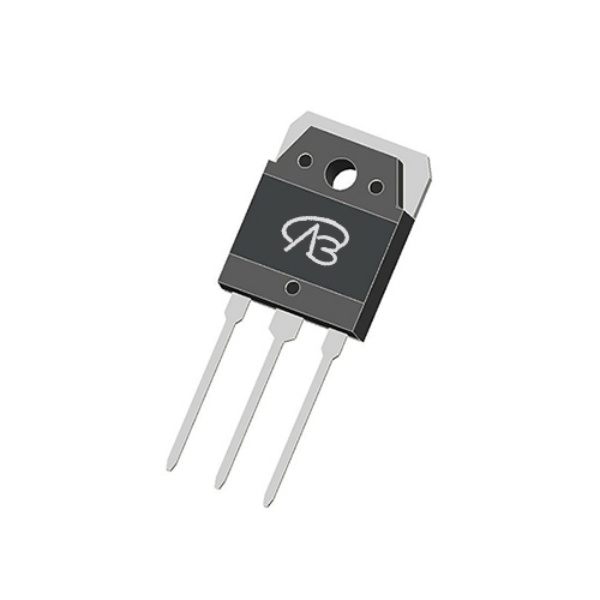
Comparative Analysis: FDA59N30 (N-channel) vs. VBPB15R47S
Analysis of the Original Model (FDA59N30) Core:
This is a 300V, 59A N-channel MOSFET from onsemi, utilizing a robust TO-3PN package. As part of the UniFET™ series based on planar stripe and DMOS technology, its design core focuses on reducing on-resistance while offering improved switching performance and high avalanche energy capability. Key advantages include a low on-resistance of 56mΩ (measured at 10V, 29.5A) and a high continuous drain current rating of 59A. It is engineered for high-efficiency power switching.
Compatibility and Differences of the Domestic Alternative (VBPB15R47S):
VBsemi's VBPB15R47S offers a direct footprint-compatible alternative in a TO3P package. The key differences lie in its electrical parameters: it features a significantly higher voltage rating of 500V compared to the original's 300V. Its continuous current rating is 47A, and the on-resistance is 60mΩ (@10V). While the current rating is moderately lower, the alternative provides a substantial margin in voltage withstand capability, making it suitable for higher voltage bus applications.
Key Application Areas:
Original Model FDA59N30: Its combination of 300V rating, very low on-resistance, and high current capability makes it ideal for high-current switching applications in medium-voltage systems.
Power Factor Correction (PFC): In 85-265VAC offline SMPS designs.
Switching Power Supplies: For ATX power supplies, Flat Panel Display (FPD) TV power boards.
Electronic Ballasts: For lighting applications.
Alternative Model VBPB15R47S: With its 500V rating, it is better suited for applications requiring a higher voltage safety margin or operating directly from rectified 380VAC lines, such as in some industrial SMPS, PFC stages, or motor drives, where the current demand is within 47A.
Comparative Analysis: FDA28N50F (N-channel) vs. VBP15R50S
This comparison focuses on 500V-class MOSFETs, where the original model emphasizes fast body diode recovery for critical bridge configurations.
Analysis of the Original Model (FDA28N50F) Core:
This is a 500V, 28A N-channel UniFET™ FRFET from onsemi in a TO-3PN package. Its core advantage is the engineered fast recovery body diode, with a reverse recovery time (trr) of less than 100ns and a high reverse dv/dt immunity of 15V/ns. This significantly reduces switching losses and noise in circuits where the MOSFET's intrinsic diode is utilized, such as in bridge topologies, improving system reliability and potentially eliminating the need for external snubbers or Schottky diodes.
Compatibility and Differences of the Domestic Alternative (VBP15R50S):
VBsemi's VBP15R50S is a pin-to-pin compatible alternative in a TO-247 package. It presents a compelling "performance-enhanced" profile in key parameters: it shares the same 500V voltage rating but offers a dramatically higher continuous current rating of 50A (vs. 28A) and a lower on-resistance of 80mΩ (@10V) compared to the original's 140mΩ. This translates to significantly reduced conduction losses and higher current handling capability.
Key Application Areas:
Original Model FDA28N50F: Its fast recovery body diode makes it the preferred choice for applications where the MOSFET's body diode conducts regularly, and switching efficiency is paramount.
Bridge Circuits: In PFC, half-bridge, or full-bridge converters (e.g., for server SMPS, telecom rectifiers).
Hard-Switching Topologies: Where diode reverse recovery losses are a major concern.
High-Frequency Switching Power Supplies: Such as those in FPD TV power and ATX supplies.
Alternative Model VBP15R50S: With its superior current capability (50A) and lower on-resistance, it is an excellent upgrade choice for applications demanding higher power density and lower conduction losses. It is well-suited for high-output-current DC-DC converters, motor drives, or as a robust switch in PFC stages where the ultra-fast diode characteristic is less critical than raw current handling.
Conclusion
In summary, this analysis reveals two distinct selection strategies for high-voltage power MOSFETs:
For 300V-class, high-current applications like PFC and ATX supplies, the original FDA59N30 offers an excellent balance of low 56mΩ on-resistance and high 59A current capability. Its domestic alternative VBPB15R47S provides a viable, footprint-compatible option with a higher 500V voltage rating, making it suitable for designs requiring that extra voltage margin, albeit with a slightly reduced current rating of 47A.
For 500V-class applications, the choice depends on the circuit topology. If fast body diode recovery is critical for efficiency and reliability in bridge circuits, the original FDA28N50F with its engineered FRFET characteristics is the specialized tool. For applications prioritizing maximum current capacity and minimal conduction loss, the domestic alternative VBP15R50S stands out as a powerful upgrade, offering 50A current rating and 80mΩ on-resistance in a compatible package.
The core takeaway is that selection is driven by precise application needs. In the context of supply chain diversification, domestic alternatives like VBPB15R47S and VBP15R50S not only provide reliable backup options but also offer compelling performance advantages in specific areas, granting engineers greater flexibility in design optimization and cost management. Understanding the specific demands of your power stage is key to unlocking the full value of these components.

Download PDF document
 Download now


