 中文
中文 English
MOSFET Selection for High-Power & Automotive Applications: FDA24N50, NVMFD5C478NLT1G vs. China Alternatives VBPB16R20S, VBGQA3402
Number of views:9999
 Back to previous page
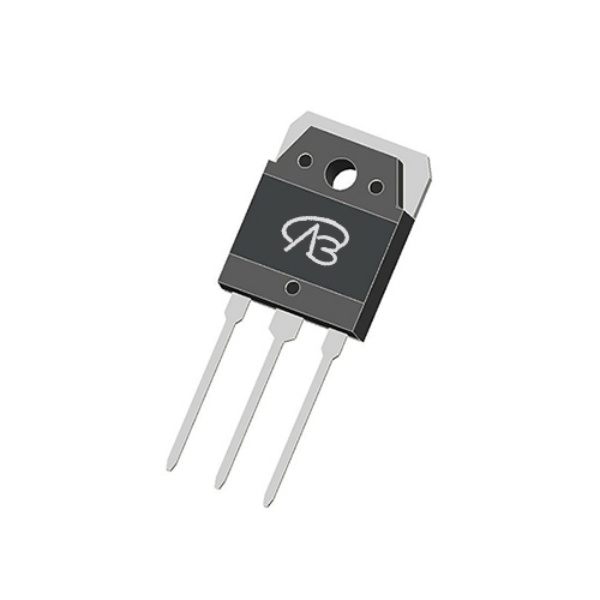
Comparative Analysis: FDA24N50 (N-channel) vs. VBPB16R20S
Analysis of the Original Model (FDA24N50) Core:
This is a 500V N-channel MOSFET from onsemi, in a robust TO-3PN package. Its design core is to provide reliable high-voltage switching and power handling. Key advantages include: a high drain-source voltage (Vdss) of 500V, a continuous drain current (Id) of 24A, and an on-resistance (RDS(on)) of 160mΩ at 10V gate drive. It is built for applications demanding durability and high voltage blocking.
Compatibility and Differences of the Domestic Alternative (VBPB16R20S):
VBsemi's VBPB16R20S is offered in a TO3P package and serves as a functional alternative for high-voltage scenarios. The main differences are in the electrical parameters: VBPB16R20S features a higher voltage rating (600V vs. 500V) and a slightly lower continuous current (20A vs. 24A). Its on-resistance is specified as 190mΩ at 10V, which is comparable, though the original part notes 160mΩ at 12A.
Key Application Areas:
Original Model FDA24N50: Its high voltage and current ratings make it suitable for industrial high-power switching, such as in SMPS (Switched-Mode Power Supplies) for servers/telecom, PFC (Power Factor Correction) stages, UPS systems, and motor drives operating around 400V bus lines.
Alternative Model VBPB16R20S: With its 600V rating, it is well-suited for applications requiring a higher voltage safety margin, such as in some industrial motor drives, lighting ballasts, or auxiliary power supplies where the current demand is within 20A.
Comparative Analysis: NVMFD5C478NLT1G (Dual N-channel) vs. VBGQA3402
This comparison shifts focus to compact, high-efficiency, and high-reliability automotive-grade designs.
Analysis of the Original Model (NVMFD5C478NLT1G) Core:
This is an AEC-Q101 qualified dual N-channel MOSFET from onsemi, in a space-saving DFN-8 (5x6) package with wettable flanks for enhanced optical inspection. Its design pursues high power density and thermal performance for automotive environments. Core advantages include: a 40V rating, a high continuous current of 29A per channel (in a dual configuration), a low on-resistance of 14.5mΩ at 10V, and excellent thermal characteristics from its package.
Compatibility and Differences of the Domestic Alternative (VBGQA3402):
VBsemi's VBGQA3402 is a dual N-channel MOSFET in a similar DFN8(5x6)-B package and represents a "performance-enhanced" alternative. It achieves significant surpassing in key parameters: the same 40V rating, but a dramatically higher continuous current of 90A (total or per channel, context dependent), and a much lower on-resistance of 2.2mΩ at 10V (vs. 14.5mΩ). This translates to potentially lower conduction losses and higher current-handling capability.
Key Application Areas:
Original Model NVMFD5C478NLT1G: Its automotive qualification, compact size, and balanced performance make it ideal for demanding automotive applications such as ECU (Engine Control Unit) power management, LED lighting drivers, solenoid/valve control, and other 12V/24V board-net systems requiring high reliability and efficiency.
Alternative Model VBGQA3402: With its ultra-low RDS(on) and very high current capability, it is suitable for upgraded scenarios requiring maximum efficiency and power density. This includes high-current DC-DC converters (e.g., for infotainment or ADAS systems), advanced motor control modules, or any application where minimizing conduction loss and thermal stress is paramount, potentially even beyond standard automotive requirements.
Conclusion
In summary, this analysis reveals two distinct selection paths:
For high-voltage, high-power industrial applications, the original model FDA24N50, with its 500V/24A capability and robust TO-3PN package, offers proven reliability for mains-connected systems. Its domestic alternative VBPB16R20S provides a viable option with a higher 600V rating, suitable for designs prioritizing voltage margin with slightly lower current needs.
For compact, high-efficiency automotive-grade applications, the original model NVMFD5C478NLT1G, with its AEC-Q101 qualification, good thermal DFN package, and balanced 40V/29A/14.5mΩ performance, is a trusted choice for automotive systems. The domestic alternative VBGQA3402 offers remarkable "performance enhancement" with its 2.2mΩ RDS(on) and 90A current rating, opening doors for next-generation designs demanding extreme efficiency and power density.
The core conclusion is: Selection is about precise requirement matching. In the context of supply chain diversification, domestic alternatives not only provide feasible backups but can also offer superior parameters in specific areas, giving engineers more flexible and resilient choices for design optimization and cost control. Understanding each device's design philosophy and parameter implications is key to unlocking its full value in the circuit.

Download PDF document
 Download now


