 中文
中文 English
MOSFET Selection for High-Voltage Power and Low-Voltage Logic Applications: FCPF360N65S3R0L-F154, FDV301N vs. China Alternatives VBMB16R10S, VB1240
Number of views:9999
 Back to previous page
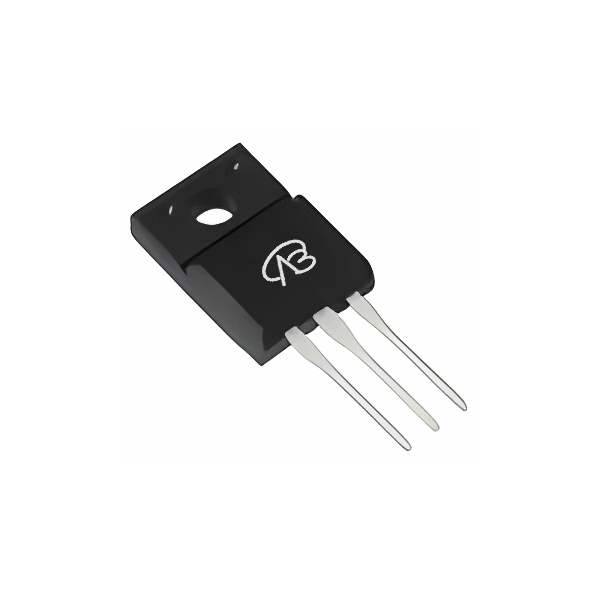
Comparative Analysis: FCPF360N65S3R0L-F154 (N-channel) vs. VBMB16R10S
Analysis of the Original Model (FCPF360N65S3R0L-F154) Core:
This is a 650V N-channel SUPERFET III MOSFET from onsemi in a TO-220F package. Its design core leverages advanced superjunction (SJ) and charge-balance technology to achieve excellent low on-resistance (360mΩ @10V) and low gate charge characteristics. This technology minimizes conduction losses, delivers superior switching performance, and withstands high dv/dt rates, making it easy to drive and helping to address EMI issues in designs.
Compatibility and Differences of the Domestic Alternative (VBMB16R10S):
VBsemi's VBMB16R10S is a direct pin-to-pin compatible alternative in a TO220F package. The key differences lie in the electrical parameters: VBMB16R10S has a slightly lower voltage rating (600V vs. 650V) and a higher on-resistance (450mΩ @10V vs. 360mΩ). Both have a continuous drain current rating of 10A. The domestic model utilizes a SJ_Multi-EPI process.
Key Application Areas:
Original Model FCPF360N65S3R0L-F154: Its high voltage rating and efficient superjunction technology make it ideal for high-voltage, medium-power switching applications requiring robust performance and good EMI characteristics. Typical applications include:
Switch-Mode Power Supplies (SMPS): Such as PFC stages, flyback, or forward converters in AC-DC power supplies.
Industrial Power Systems: Motor drives, inverter circuits, and UPS systems.
Lighting: LED driver circuits and electronic ballasts.
Alternative Model VBMB16R10S: Suitable as a cost-effective alternative in applications where the voltage requirement is within 600V and a slightly higher conduction loss is acceptable, such as in certain consumer or industrial SMPS designs.
Comparative Analysis: FDV301N (N-channel) vs. VB1240
Analysis of the Original Model (FDV301N) Core:
This is a 25V N-channel logic-level enhancement-mode MOSFET from onsemi in a compact SOT-23 package. It is produced using a high-cell-density DMOS process designed specifically to minimize on-resistance. Its core advantage is serving as a direct replacement for digital transistors in low-voltage applications, eliminating the need for bias resistors and simplifying design.
Compatibility and Differences of the Domestic Alternative (VB1240):
VBsemi's VB1240 is a pin-to-pin compatible alternative in an SOT23-3 package. It represents a significant "performance-enhanced" choice. While the voltage rating is slightly lower (20V vs. 25V), it offers dramatically better conduction performance: a much lower on-resistance (e.g., 28mΩ @4.5V vs. 5Ω @2.7V for the original) and a vastly higher continuous current rating (6A vs. 220mA). It utilizes a Trench process.
Key Application Areas:
Original Model FDV301N: Its ultra-low current rating and high on-resistance make it suitable only for very low-power signal switching, logic interface translation, or as a digital transistor replacement in microamp-level circuits.
Alternative Model VB1240: Is far more versatile and powerful. Its low on-resistance and high current capability make it an excellent choice for a wide range of low-voltage, higher-current switching applications, such as:
Load Switches: Power management for peripherals, modules, or USB ports in portable devices.
DC-DC Converters: As a synchronous rectifier or switch in low-voltage buck/boost circuits.
Battery-Powered Devices: For power path management or motor drive in applications using single or dual-cell Li-ion batteries.
Conclusion:
This comparative analysis reveals two distinct selection paths:
For high-voltage (650V) medium-power applications like SMPS and industrial systems, the original FCPF360N65S3R0L-F154 offers excellent efficiency and switching performance with its superjunction technology. Its domestic alternative VBMB16R10S provides a viable, cost-effective option for designs where 600V is sufficient and some parameter trade-off is acceptable.
For low-voltage logic-level/signal applications, the original FDV301N is highly specialized for micro-power signal switching. In stark contrast, the domestic alternative VB1240 is not a simple drop-in replacement but a major performance upgrade, transforming the application scope from micro-amp signal switching to amp-level power switching, making it suitable for a broad array of low-voltage power management tasks.
The core takeaway is that selection must be precisely requirement-driven. Domestic alternatives like VBMB16R10S and VB1240 provide not just supply chain resilience but also opportunities for cost optimization and, in the case of VB1240, significant performance enhancement, offering engineers greater flexibility in their design trade-offs.

Download PDF document
 Download now


