 中文
中文 English
MOSFET Selection for High-Voltage Power and Compact DC/DC: FCP400N80Z, FDC3612 vs. China Alternatives VBM18R12S, VB7101M
Number of views:9999
 Back to previous page
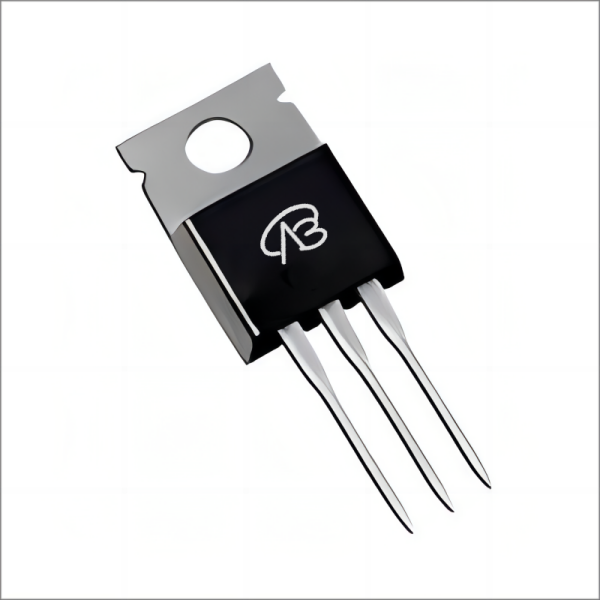
Comparative Analysis: FCP400N80Z (N-channel, 800V) vs. VBM18R12S
Analysis of the Original Model (FCP400N80Z) Core:
This is an 800V N-channel SuperFET II MOSFET from onsemi in a TO-220 package. Its design core leverages charge balance technology to achieve an excellent low on-resistance of 340mΩ (@10V, 5.5A) alongside superior low gate charge characteristics. This technology minimizes conduction loss and delivers outstanding switching performance, high dv/dt capability, and increased avalanche energy. An integrated gate-source ESD diode can withstand over 2kV HBM surge, enhancing reliability. It is engineered for high-efficiency, robust switching power supplies.
Key Application Areas:
Switch Mode Power Supplies (SMPS): Ideal for applications like audio amplifiers, laptop adapters, LED lighting drivers, ATX power supplies, and industrial power systems.
High-Voltage Power Conversion: Suitable for circuits requiring 800V breakdown voltage and continuous drain current up to 14A.
Compatibility and Differences of the Domestic Alternative (VBM18R12S):
VBsemi's VBM18R12S is a direct pin-to-pin compatible alternative in a TO-220 package. It is also an 800V N-channel MOSFET utilizing a Super Junction (SJ) Multi-EPI process. The key parameters are closely matched: a slightly higher on-resistance of 370mΩ (@10V) and a continuous drain current of 12A. It maintains a high gate-source voltage rating of ±30V and a low threshold voltage of 3.5V. This makes it a highly viable alternative for the same high-voltage applications, offering a reliable solution with a minor trade-off in RDS(on) and current rating.
Comparative Analysis: FDC3612 (N-channel, 100V) vs. VB7101M
Analysis of the Original Model (FDC3612) Core:
This is a 100V N-channel MOSFET from onsemi in a compact SuperSOT-6 package. It is specifically optimized to maximize total efficiency in DC/DC converters. Its design pursues an optimal balance of low gate charge, low on-resistance (135mΩ @6V, 2.5A), and fast switching speed. This combination is crucial for reducing both conduction and switching losses in synchronous and traditional PWM controller-based designs.
Key Application Areas:
Synchronous DC/DC Conversion: Perfect as a low-side switch in buck, boost, or buck-boost converters for computing, consumer electronics, and point-of-load (POL) modules.
Compact Power Management: Ideal for space-constrained applications requiring efficient power switching up to 2.6A continuous current.
Compatibility and Differences of the Domestic Alternative (VB7101M):
VBsemi's VB7101M offers a compelling "performance-enhanced" alternative in a SOT23-6 package. While the package differs, it serves similar circuit functions in compact designs. It features a superior on-resistance of just 95mΩ (@10V) and 105mΩ (@4.5V), along with a higher continuous current rating of 3.2A, all at the same 100V drain-source voltage. Built with a Trench process, it provides lower conduction loss and higher current capability, making it suitable for upgraded scenarios demanding higher efficiency and power density within a small footprint.
Conclusion:
This analysis reveals two distinct selection paths:
For high-voltage (800V) power supply applications like adapters and industrial SMPS, the original FCP400N80Z sets a high standard with its advanced SuperFET II technology, low 340mΩ RDS(on), and 14A current capability. Its domestic alternative VBM18R12S provides a robust, pin-to-pin compatible solution with very similar specifications (370mΩ, 12A), offering a reliable and resilient supply chain option for these demanding circuits.
For compact 100V DC/DC converter applications, the original FDC3612 excels with its optimized blend of low RDS(on) and fast switching in a SuperSOT-6 package. The domestic alternative VB7101M, in a SOT23-6 package, presents a significant "performance-plus" option, featuring markedly lower on-resistance (95mΩ vs. 135mΩ) and higher current (3.2A vs. 2.6A), enabling designs with lower losses and greater output capability.
The core takeaway is that selection hinges on precise requirement matching. Domestic alternatives like VBM18R12S and VB7101M not only provide viable backups but also offer competitive or enhanced parameters, giving engineers greater flexibility in design trade-offs, cost control, and supply chain diversification. Understanding each device's design philosophy and parameter implications is key to unlocking its full value in your circuit.

Download PDF document
 Download now


